


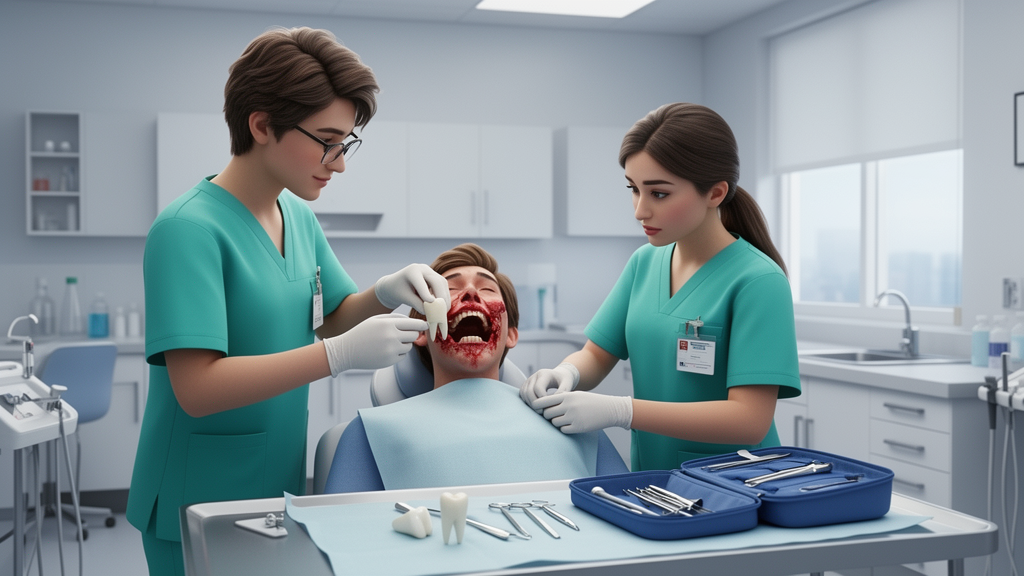
Sport-related dental trauma remains an underrecognized injury in physically active populations, and a new cross-sectional study suggests that the physicians of tomorrow may not be ready to handle one of its most time-critical emergencies. Researchers surveyed 291 medical students to assess their awareness, theoretical knowledge, and practical skills regarding the prevention and emergency management of permanent tooth avulsion, with particular emphasis on how these competencies might apply in sport-related settings. The results, published in BMC Medical Education as an open access research article, reveal a striking gap between what students know in principle and what they can actually do at the scene of an injury.
Awareness of mouthguard use as a preventive measure was the study’s brightest spot. Students rated their understanding of this primary prevention strategy highly, with a mean score of 4.31 out of 5, and this awareness increased significantly with the year of study (p = 0.0002). In other words, the longer students progressed through medical school, the better they recognized that mouthguards can help prevent dental injuries in the first place. The authors note that sport-related injuries remain a significant challenge in sports medicine, making this preventive awareness a relevant competency for future physicians who may encounter athletes at every level of competition.
Practical performance, however, told a very different story. When students were tested on the emergency management of an avulsed permanent tooth, only 17.9 percent of fourth-year students answered the practical questions correctly. The figures for fifth- and sixth-year students were barely better, at 25.3 percent and 25.0 percent respectively. Even as students approached graduation, roughly three-quarters of them failed the practical assessment items. The authors conclude that medical students demonstrated limited preparedness for the emergency management of permanent tooth avulsion, particularly regarding secondary prevention and the practical application of their knowledge.
Perhaps the most technically intriguing finding concerns the relationship between theoretical knowledge and practical skills. The association between the two was negligible and not statistically significant, meaning that knowing the theory did not predict performing the procedure. This dissociation matters because permanent tooth avulsion is an injury where emergency management decisions unfold in minutes, and the study’s findings suggest that medical students require enhanced education on the emergency management of permanent tooth avulsion, particularly in the practical application of their knowledge. A student who can recite the principles may still falter when asked to apply them.
The authors propose that simulation-based and scenario-driven methods may serve as effective educational strategies for closing this gap, although they are careful to state that the efficacy of such approaches requires assessment in future interventional studies. The current research was a cross-sectional survey using a validated questionnaire, so it captures a snapshot of student preparedness rather than testing whether any particular training intervention works. The study population consisted of medical students, and the questionnaire assessed primary prevention, theoretical knowledge, and practical skills, but the findings do not establish how practicing physicians would perform on the same measures.
As an early-view, peer-reviewed and accepted article carrying a permanent DOI, the study is citable now, though the version is subject to further edits before the final Version of Record replaces it. Within those constraints, the message is clear: mouthguard awareness among future physicians is high and rising, but the hands-on emergency skills for managing avulsed permanent teeth in sport-related settings remain limited, and the field now needs interventional research to determine whether simulation and scenario-based education can convert theoretical knowledge into reliable practical performance.
Subject of Research: Medical students' knowledge and preparedness for sport-related permanent tooth avulsion
Article Title: Sport-related permanent tooth avulsion as an underrecognized injury: knowledge and preparedness of medical students
Article References: Jastrzębski, B., Kamieńska, P., Kamieńska, W., Marushko, O., Marushko, O., & Pawlaczyk-Kamieńska, T. (2026). Sport-related permanent tooth avulsion as an underrecognized injury: knowledge and preparedness of medical students. BMC Medical Education. https://doi.org/10.1186/s12909-026-10628-6
Image Credits: AI Generated
DOI: 10.1186/s12909-026-10628-6
Keywords: dental trauma, tooth avulsion, sports medicine, medical education, mouthguards, cross-sectional survey, practical skills, simulation-based learning, BMC Medical Education, emergency management, Sport-related, permanent
Cite Scienmag News
Courtney Benton. (October 24, 2026). Medical Students Fall Short on Emergency Care for Knocked-Out Teeth in Sport. Scienmag. https://scienmag.com/medical-students-fall-short-on-emergency-care-for-knocked-out-teeth-in-sport/
Courtney Benton. "Medical Students Fall Short on Emergency Care for Knocked-Out Teeth in Sport." Scienmag, 24 October 2026, https://scienmag.com/medical-students-fall-short-on-emergency-care-for-knocked-out-teeth-in-sport/. Accessed 24 October 2026.
Courtney Benton. "Medical Students Fall Short on Emergency Care for Knocked-Out Teeth in Sport." Scienmag. October 24, 2026. https://scienmag.com/medical-students-fall-short-on-emergency-care-for-knocked-out-teeth-in-sport/


