


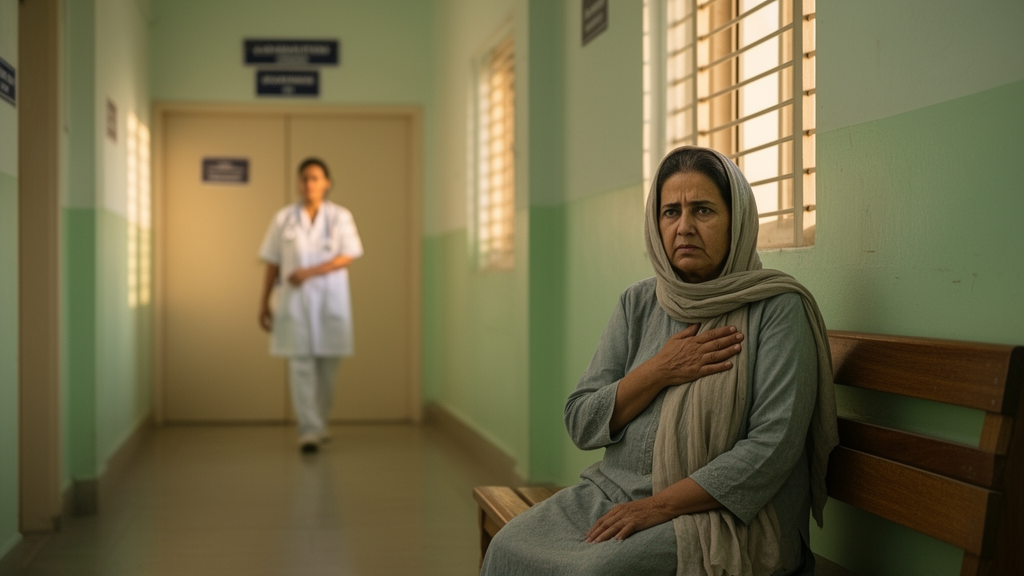
Women undergoing mastectomy in Pakistan face their most serious barriers to timely breast cancer care not inside hospitals but within their own families and communities, according to a qualitative study published in the International Journal for Equity in Health. The research, conducted by Tauheed Zahra, used critical phenomenology and drew on 12 in-depth interviews with women from two distinct life stages, early adulthood and later life, to examine how gender and age jointly shape experiences of breast cancer and surgical treatment.
The analysis identified three themes describing age- and gender-based inequalities in access to care. The first, described as moving from surveillance to neglect, concerns age-stratified gatekeeping and delayed diagnosis. The second, termed sacrificial femininity and internalized ageism, captures how women absorb and reproduce devaluing beliefs about their own worth. The third frames mastectomy as an age-stratified embodied threat, with the surgery’s meaning and consequences differing sharply across life stages.
A central finding concerns the role of men as financial and moral gatekeepers. Participants described how male family members controlled decisions about seeking care, limiting women’s access to health services. This control was reported to be especially pronounced for young married women, who were regarded within their families as reproductive assets, a framing that shaped whether and when their symptoms were taken seriously.
Older women in the study experienced a different pattern of disadvantage. Rather than facing overt restriction, they reported internalized ageism, viewing their own bodies as less worthy of care. This self-directed devaluation represents a distinct mechanism through which age and gender combine to postpone or prevent treatment-seeking among women in later life.
Notably, participants reported no age-based discrimination from healthcare providers themselves. Instead, their accounts pointed to pre-clinical family and community contexts as the decisive arenas where gendered ageism operates, determining who is permitted to seek care and at what point in the illness course. The study concludes that the most critical barriers to timely breast cancer treatment are not biomedical but social, cultural, and age-gendered, produced within households and social structures before patients ever reach the health system.
Subject of Research: Gendered ageism and access to mastectomy care in Pakistan
Article Title: Gendered ageism among women undergoing mastectomy across two life stages: early adulthood and later life in Pakistan
Article References: Zahra, T. (2026). Gendered ageism among women undergoing mastectomy across two life stages: early adulthood and later life in Pakistan. International Journal for Equity in Health, 25(1), Article 254. https://doi.org/10.1186/s12939-026-03082-9
Image Credits: AI Generated
DOI: 10.1186/s12939-026-03082-9
Keywords: gendered ageism, mastectomy, breast cancer, Pakistan, qualitative research, critical phenomenology, healthcare access, gatekeeping, internalized ageism, health equity, Gendered, ageism
Cite Scienmag News
Nathaniel Bowman. (October 23, 2026). Gendered ageism delays breast cancer care for mastectomy patients in Pakistan. Scienmag. https://scienmag.com/gendered-ageism-delays-breast-cancer-care-for-mastectomy-patients-in-pakistan/
Nathaniel Bowman. "Gendered ageism delays breast cancer care for mastectomy patients in Pakistan." Scienmag, 23 October 2026, https://scienmag.com/gendered-ageism-delays-breast-cancer-care-for-mastectomy-patients-in-pakistan/. Accessed 23 October 2026.
Nathaniel Bowman. "Gendered ageism delays breast cancer care for mastectomy patients in Pakistan." Scienmag. October 23, 2026. https://scienmag.com/gendered-ageism-delays-breast-cancer-care-for-mastectomy-patients-in-pakistan/


