

Friday, October 23, 2026
Science
No Result
View All Result
  • Login
  • HOME
  • SCIENCE NEWS
  • CONTACT US
  • HOME
  • SCIENCE NEWS
  • CONTACT US
No Result
View All Result
Scienmag
No Result
View All Result
Home Science News Mathematics

Brain scans reveal a shared spatial map for integers and fractions

October 23, 2026
in Mathematics
Cassandra Pierce
By Cassandra Pierce Scienmag Editorial Profile - Systems Neuroscience
Reading Time: 3 mins read
0
Brain scans reveal a shared spatial map for integers and fractions

Brain scans reveal a shared spatial map for integers and fractions

65
SHARES
587
VIEWS
Share on FacebookShare on Twitter
ADVERTISEMENT

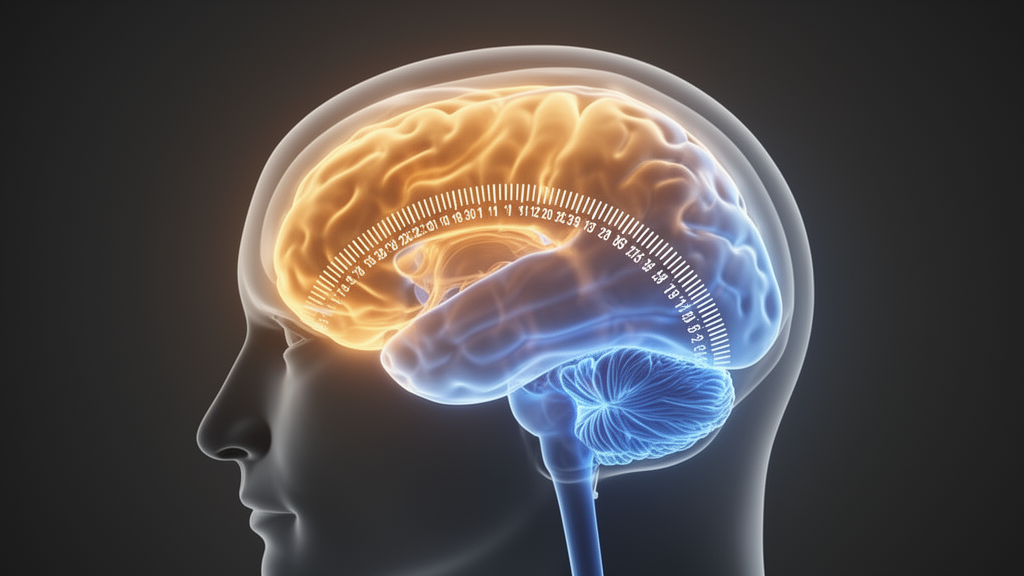
When people compare numbers, their brains appear to arrange numerical values along an organized spatial map, according to a brain-imaging study published on October 22nd in the open-access journal PLOS Biology. A team led by Stanislas Dehaene, Ph.D., and Daniela Valério, Ph.D., at the INSERM-CEA Cognitive Neuroimaging Unit (Unicog) in France used functional MRI to scan adults as they viewed integers and fractions, and found structured patterns of activity in a region long associated with numerical processing. The study addressed one of the central questions in neuroscience: how the brain represents complex, abstract concepts.

One influential theory holds that the brain groups related concepts together, with similar concepts represented by nearby patterns of neural activity. The network of these distances is often called a semantic map. Numbers offer an unusually clean test of this idea, because their values have a universally understood arrangement, from smaller to larger.

In the experiment, 20 native French speakers were shown a series of integers and fractions and asked whether each number was bigger or smaller than the previous one. While they performed this comparison task, the researchers measured their brain activity with functional MRI, tracking how patterns of activation changed as participants judged numbers of different sizes. The scans revealed an organized pattern of activity in the intraparietal sulcus, a region of the brain known to be involved in numerical processing.

As participants compared numbers, the activity patterns changed in a structured way, suggesting that this region contains a spatial map of numerical magnitude extending from smaller to larger values. Analyses of individual participants showed that integers and fractions were processed differently at the level of local activity patterns. However, when participants compared different types of numbers, the neural scans indicated that numerical magnitude was represented within a shared, organized system, bringing fractions and integers together along a common scale.

Participants made more errors when ordering numbers from low to high values when fractions were involved, and they responded more slowly when two fractions were close together in value. These performance effects are consistent with the idea that fractions, despite being processed distinctly, are placed on the same internal magnitude scale as whole numbers. "Our study shows that when we focus on the magnitude of numbers, the brain organizes quantities into a highly structured internal map," the authors said.

"This map brings fractions and integers together along a shared mental number line, allowing us to represent and compare different kinds of numbers within the same system. This organization may help us process quantities and make mathematical decisions more efficiently." The findings, reported in the paper "A cortical semantic Map integrates fractions and integers in the human brain," support the semantic map hypothesis for at least one class of abstract concepts, showing that the brain's representation of numerical magnitude is spatially structured rather than arbitrary.

The work was supported by the European Research Council under the MathBrain grant, and the authors declared no competing interests. Because the study involved a small group of 20 adults performing a single comparison task, the results describe how numerical magnitude was organized in this setting, and further work would be needed to extend the map's role to other mathematical operations.

Subject of Research: A functional MRI study of how the human intraparietal sulcus organizes integers and fractions into a shared spatial map of numerical magnitude

Article Title: Your brain maps out numbers, including integers and fractions

Article References: Your brain maps out numbers, including integers and fractions. Original publication (Bibliographic details unavailable.)

Image Credits: AI Generated

DOI: Not provided

Keywords: numerical cognition, semantic map, intraparietal sulcus, fMRI, fractions, integers, mental number line, PLOS Biology, cognitive neuroscience, number magnitude, Your, brain

Cite Scienmag News

Cassandra Pierce. (October 23, 2026). Brain scans reveal a shared spatial map for integers and fractions. Scienmag. https://scienmag.com/brain-scans-reveal-a-shared-spatial-map-for-integers-and-fractions/

Cassandra Pierce. "Brain scans reveal a shared spatial map for integers and fractions." Scienmag, 23 October 2026, https://scienmag.com/brain-scans-reveal-a-shared-spatial-map-for-integers-and-fractions/. Accessed 23 October 2026.

Cassandra Pierce. "Brain scans reveal a shared spatial map for integers and fractions." Scienmag. October 23, 2026. https://scienmag.com/brain-scans-reveal-a-shared-spatial-map-for-integers-and-fractions/


Tags: abstract concept processing in the brainbrainbrain regions involved in numerical processingbrain representation of numberscognitive neuroimaging of mathematical conceptscognitive neurosciencefMRIfractionsfunctional MRI in numerical studiesintegersintraparietal sulcusmental number lineneural basis of number comparisonneural organization of numerical valuesneuroscience of fractions and integersnumber magnitudenumerical cognitionPLOS Biologysemantic mapsemantic map of numerical conceptsshared neural coding for whole numbers and fractionsspatial mapping of integers and fractionsyour
Share26Tweet16
Previous Post

Research report: Identifying target symptoms for mixed anxiety and depressive disorder in treatment-seeking patients: network analysis and computer-simulated intervention

Next Post

Snowpack surveys reveal hidden patchwork of winter carbon emissions in Arctic tundra

Related Posts

AI Learns to Predict Heart Disease Across Hospitals Without Sharing Patient Data
Mathematics

AI Learns to Predict Heart Disease Across Hospitals Without Sharing Patient Data

October 23, 2026
Organic Supramolecular Lattice Built from Triptycene Shows Topological Edge States
Mathematics

Organic Supramolecular Lattice Built from Triptycene Shows Topological Edge States

October 23, 2026
Mathematical study proposes hesitant graph energy for business-location ranking
Mathematics

Mathematical study proposes hesitant graph energy for business-location ranking

October 22, 2026
Hybrid influence model improves spam webpage detection in web-network tests
Mathematics

Hybrid influence model improves spam webpage detection in web-network tests

October 22, 2026
Research report: Open-source tool helps researchers study unprocessed and processed pork and beef separately
Mathematics

Research report: Open-source tool helps researchers study unprocessed and processed pork and beef separately

October 21, 2026
Interface-aligned Chebyshev integral-tau methods for occupation-time and Parisian option pricing
Mathematics

Interface-aligned Chebyshev integral-tau methods for occupation-time and Parisian option pricing

October 21, 2026
Next Post
Snowpack surveys reveal hidden patchwork of winter carbon emissions in Arctic tundra

Snowpack surveys reveal hidden patchwork of winter carbon emissions in Arctic tundra

  • Mothers who receive childcare support from maternal grandparents show more optimized

    Mothers who receive childcare support from maternal grandparents show more parental warmth, finds NTU Singapore study

    27656 shares
    Share 11059 Tweet 6912
  • University of Seville Breaks 120-Year-Old Mystery, Revises a Key Einstein Concept

    1061 shares
    Share 424 Tweet 265
  • Bee body mass, pathogens and local climate influence heat tolerance

    682 shares
    Share 273 Tweet 171
  • Researchers record first-ever images and data of a shark experiencing a boat strike

    546 shares
    Share 218 Tweet 137
  • Groundbreaking Clinical Trial Reveals Lubiprostone Enhances Kidney Function

    531 shares
    Share 212 Tweet 133
Science

Embark on a thrilling journey of discovery with Scienmag.com—your ultimate source for cutting-edge breakthroughs. Immerse yourself in a world where curiosity knows no limits and tomorrow’s possibilities become today’s reality!

RECENT NEWS

  • Tapeworm Protein Dampens Immune Alarm to Limit Heart Reperfusion Injury in Mice
  • Date Pomace Waste Becomes a Growth Medium for Lion’s Mane and Turkey Tail Mushrooms
  • Past Biome Shifts Leave Little Mark on Today’s Vertebrate Diversity
  • Hidden Weather Regimes Reveal Chile’s Wet Winters Are Becoming Shorter

Categories

  • Agriculture
  • Anthropology
  • Archaeology
  • Athmospheric
  • Biology
  • Biotechnology
  • Blog
  • Bussines
  • Cancer
  • Chemistry
  • Climate
  • Earth Science
  • Editorial Policy
  • Marine
  • Mathematics
  • Medicine
  • Pediatry
  • Policy
  • Psychology & Psychiatry
  • Science Education
  • Science News
  • Social Science
  • Space
  • Technology and Engineering

Subscribe to Blog via Email

Enter your email address to subscribe to this blog and receive notifications of new posts by email.

Join 5,152 other subscribers

© 2025 Scienmag - Science Magazine

Welcome Back!

Login to your account below

Forgotten Password?

Retrieve your password

Please enter your username or email address to reset your password.

Log In
No Result
View All Result
  • HOME
  • SCIENCE NEWS
  • CONTACT US

© 2025 Scienmag - Science Magazine

Discover more from Science

Subscribe now to keep reading and get access to the full archive.

Continue reading