

Friday, October 23, 2026
Science
No Result
View All Result
  • Login
  • HOME
  • SCIENCE NEWS
  • CONTACT US
  • HOME
  • SCIENCE NEWS
  • CONTACT US
No Result
View All Result
Scienmag
No Result
View All Result
Home Science News Medicine

Smart Paper System Shows Promise for Maternal Health Records in The Gambia

October 23, 2026
in Medicine, Policy
Harold Sullivan
By Harold Sullivan Scienmag Editorial Profile - Maternal and Child Health
Reading Time: 3 mins read
0
Smart Paper System Shows Promise for Maternal Health Records in The Gambia

Smart Paper System Shows Promise for Maternal Health Records in The Gambia

65
SHARES
587
VIEWS
Share on FacebookShare on Twitter
ADVERTISEMENT

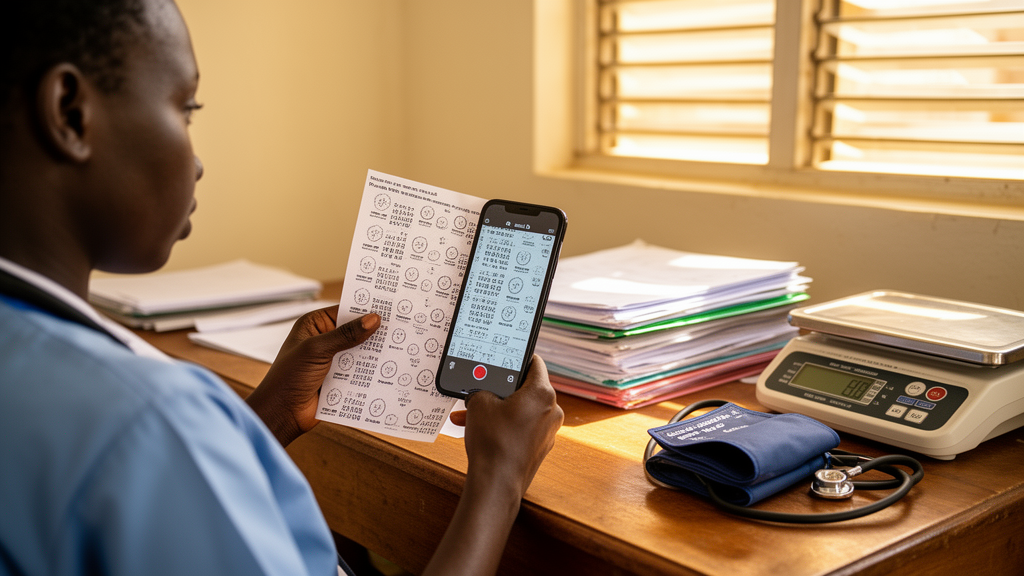
A hybrid paper-digital record system known as Smart Paper Technology (SPT) has been judged feasible and broadly acceptable by health workers piloting it in maternal and infant health services in The Gambia, according to a qualitative implementation study conducted between September and December 2024. The findings, drawn from two pilot facilities in the country’s Western Region, suggest that the approach could offer a practical route towards digitising health records in settings where fully electronic medical record systems remain out of reach.

Many low- and middle-income countries still depend on paper-based maternal and child health records that are frequently incomplete, fragmented and difficult to use for continuity of care and clinical decision-making. SPT is designed to bridge this gap: it retains the familiar paper forms that clinicians already use, but adds a digital layer in which completed documents are scanned and captured into an electronic system. The study team, guided by Rapid Assessment Procedures, evaluated the early implementation of the technology through 30 semi-structured interviews, four focus group discussions involving 30 participants, and non-participant observations across key service delivery areas. Participants included facility-level clinical, management and administrative staff, Ministry of Health personnel, and technical and implementing partners. The data were analysed thematically using NVivo 14.

Respondents identified several concrete advantages. Because SPT built on existing paper-based workflows, staff did not need to abandon routines they knew well, and the participatory introduction process reinforced this sense of continuity. Health workers also reported benefits in reporting, in retrieving patient information, and in linking maternal and infant records, a longstanding weakness of fragmented paper systems that can disrupt care across pregnancy, birth and infancy.

These gains, however, proved contingent on the surrounding implementation context. The study documented uneven training coverage among staff, periods of dual documentation in which paper and digital records had to be maintained in parallel, limited internet connectivity, scanning and data capture errors, storage constraints, and concerns about data governance. Rather than abandoning the system, staff responded with peer mentoring, remote troubleshooting and local workarounds, indicating a degree of organisational resilience that the authors note as important for early adoption.

Participants emphasised that successful scale-up would depend on sustained training, clear governance arrangements, adequate human and technical resources, and a phased transition towards government ownership. The researchers conclude that SPT offers a practical pathway towards digitisation in maternal and infant health services in low- and middle-income countries, but that its success hinges on strong organisational systems, workforce support and implementation processes responsive to the realities of routine service delivery. As a qualitative descriptive evaluation of two pilot facilities, the study captures early implementation experience rather than measuring clinical outcomes, and the authors frame their findings as evidence on feasibility and acceptability during the initial phase of deployment.

Subject of Research: Early implementation of Smart Paper Technology for maternal and newborn health records in The Gambia

Article Title: Smart Paper Technology for maternal and newborn health data in The Gambia: A qualitative study of early implementation

Article References: Nkereuwem, O., Prauseová, J., Ford, R., Jallow, A. O., Marena, M., Jarju, G., Fofana, S., Cham, M., Manjang, B., Kampmann, B., & Busza, J. (2026). Smart Paper Technology for maternal and newborn health data in The Gambia: A qualitative study of early implementation. PLOS Global Public Health, 6(10), e0006244. https://doi.org/10.1371/journal.pgph.0006244

Image Credits: AI Generated

DOI: 10.1371/journal.pgph.0006244

Keywords: Smart Paper Technology, The Gambia, maternal health, newborn health, health records, digitisation, implementation science, qualitative research, low- and middle-income countries, health information systems, Smart, Paper

Cite Scienmag News

Harold Sullivan. (October 23, 2026). Smart Paper System Shows Promise for Maternal Health Records in The Gambia. Scienmag. https://scienmag.com/smart-paper-system-shows-promise-for-maternal-health-records-in-the-gambia/

Harold Sullivan. "Smart Paper System Shows Promise for Maternal Health Records in The Gambia." Scienmag, 23 October 2026, https://scienmag.com/smart-paper-system-shows-promise-for-maternal-health-records-in-the-gambia/. Accessed 23 October 2026.

Harold Sullivan. "Smart Paper System Shows Promise for Maternal Health Records in The Gambia." Scienmag. October 23, 2026. https://scienmag.com/smart-paper-system-shows-promise-for-maternal-health-records-in-the-gambia/


Tags: clinical decision-making with digital health toolsdigitisationelectronic medical record implementation challengesfeasibility of digital health solutionshealth information systemshealth record management in resource-limited settingshealth recordshealth worker acceptance of new technologyhybrid paper-digital health recordsimplementation scienceimproving continuity of care through digital recordslow-and-middle-income countriesmaternal and infant health services in low-income countriesMaternal healthmaternal health data managementmaternal health record digitization in The Gambianewborn healthpaperpilot studies of health information systemsqualitative researchsmartSmart Paper TechnologySmart Paper Technology for healthcareThe Gambia
Share26Tweet16
Previous Post

Blood Clotting Abnormalities Linked to Poorer IVF Outcomes in Endometriosis

Next Post

Privacy-first federated model improves cross-enterprise labor risk prediction

Related Posts

Blood Clotting Abnormalities Linked to Poorer IVF Outcomes in Endometriosis
Medicine

Blood Clotting Abnormalities Linked to Poorer IVF Outcomes in Endometriosis

October 23, 2026
Heat Kills Unequally: Italian Study Maps the Social and Environmental Divide in Summer Mortality
Medicine

Heat Kills Unequally: Italian Study Maps the Social and Environmental Divide in Summer Mortality

October 23, 2026
Nurses and Nurse Leaders Want Digital Twin Wards — But They Prioritize Different Features
Medicine

Nurses and Nurse Leaders Want Digital Twin Wards — But They Prioritize Different Features

October 23, 2026
Suicidal thoughts, plans and attempts rose sharply among U.S. adults over 50 after COVID-19
Medicine

Suicidal thoughts, plans and attempts rose sharply among U.S. adults over 50 after COVID-19

October 23, 2026
Machine learning flags hidden anxiety in children with chronic abdominal pain
Medicine

Machine learning flags hidden anxiety in children with chronic abdominal pain

October 23, 2026
Breast Cancer Drug Analysis Flags Dementia Signals for Anastrozole in Women Over 50
Medicine

Breast Cancer Drug Analysis Flags Dementia Signals for Anastrozole in Women Over 50

October 23, 2026
Next Post
Privacy-first federated model improves cross-enterprise labor risk prediction

Privacy-first federated model improves cross-enterprise labor risk prediction

  • Mothers who receive childcare support from maternal grandparents show more optimized

    Mothers who receive childcare support from maternal grandparents show more parental warmth, finds NTU Singapore study

    27656 shares
    Share 11059 Tweet 6912
  • University of Seville Breaks 120-Year-Old Mystery, Revises a Key Einstein Concept

    1061 shares
    Share 424 Tweet 265
  • Bee body mass, pathogens and local climate influence heat tolerance

    682 shares
    Share 273 Tweet 171
  • Researchers record first-ever images and data of a shark experiencing a boat strike

    546 shares
    Share 218 Tweet 137
  • Groundbreaking Clinical Trial Reveals Lubiprostone Enhances Kidney Function

    531 shares
    Share 212 Tweet 133
Science

Embark on a thrilling journey of discovery with Scienmag.com—your ultimate source for cutting-edge breakthroughs. Immerse yourself in a world where curiosity knows no limits and tomorrow’s possibilities become today’s reality!

RECENT NEWS

  • Privacy-first federated model improves cross-enterprise labor risk prediction
  • Smart Paper System Shows Promise for Maternal Health Records in The Gambia
  • Blood Clotting Abnormalities Linked to Poorer IVF Outcomes in Endometriosis
  • Swedish sediment core separates Laacher See eruption from Younger Dryas cooling

Categories

  • Agriculture
  • Anthropology
  • Archaeology
  • Athmospheric
  • Biology
  • Biotechnology
  • Blog
  • Bussines
  • Cancer
  • Chemistry
  • Climate
  • Earth Science
  • Editorial Policy
  • Marine
  • Mathematics
  • Medicine
  • Pediatry
  • Policy
  • Psychology & Psychiatry
  • Science Education
  • Science News
  • Social Science
  • Space
  • Technology and Engineering

Subscribe to Blog via Email

Enter your email address to subscribe to this blog and receive notifications of new posts by email.

Join 5,152 other subscribers

© 2025 Scienmag - Science Magazine

Welcome Back!

Login to your account below

Forgotten Password?

Retrieve your password

Please enter your username or email address to reset your password.

Log In
No Result
View All Result
  • HOME
  • SCIENCE NEWS
  • CONTACT US

© 2025 Scienmag - Science Magazine

Discover more from Science

Subscribe now to keep reading and get access to the full archive.

Continue reading