


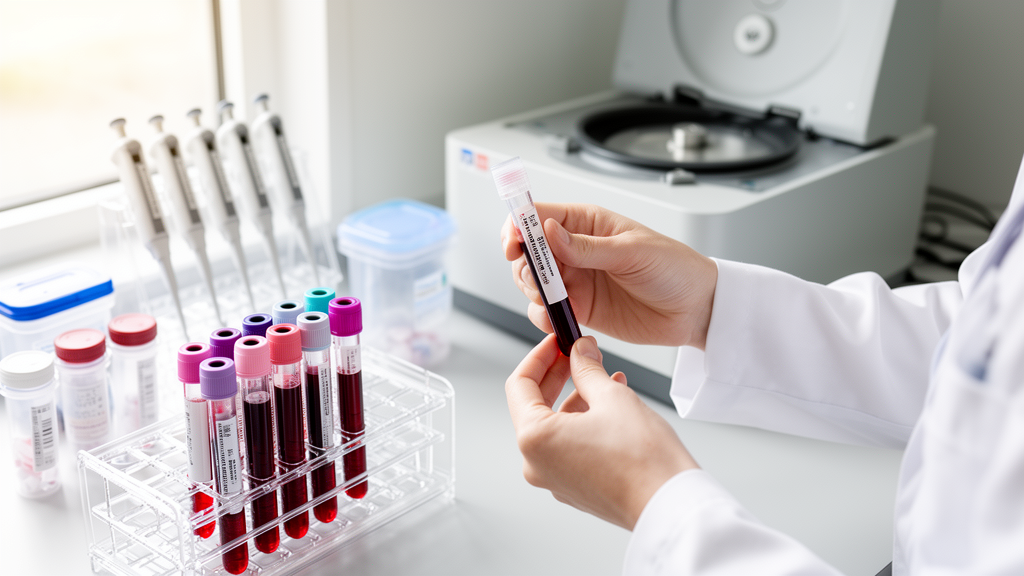
Blood samples detected chikungunya virus more consistently and for longer than saliva or urine in a longitudinal study of 53 hospitalized patients in Nanning, China, during the country’s largest recorded chikungunya outbreak in 2025. Researchers collected 506 body-fluid specimens and found that serum and plasma were positive in most samples, whereas positivity was substantially lower in saliva and urine. The findings indicate that blood was the more informative specimen type for assessing detection during acute illness, although the results are limited to a hospitalized cohort and should not automatically be applied to people with mild or asymptomatic infection.
Chikungunya virus is an acute mosquito-borne infection transmitted by Aedes mosquitoes. The study followed hospitalized patients with symptomatic disease and compared the probability of positive test results in serum, plasma, saliva and urine at different points after symptom onset. Serum had the highest observed positivity rate, at 81.20%, followed by plasma at 72.50%. Saliva was positive in 11.03% of samples and urine in 4.73%.
Investigators also compared cycle-threshold, or Ct, values between specimen types. During the first four days after symptoms began, median Ct values were lower in serum and plasma than in saliva and urine. The analysis therefore found stronger and more consistent detection in blood specimens early in illness. The study used these laboratory values to compare the timing of detection across specimen types; it did not use them to establish how much infectious virus was present in any sample.
A generalized estimating equations model was used to estimate how the probability of a positive result changed with the number of days since symptom onset. The sharpest decline occurred in saliva: its estimated probability of testing positive fell from 52.2% on day 1 to 0.7% by day 7. Blood positivity declined more gradually. Serum and plasma positivity rates were both above 85% on day 3 and were approximately 30% by day 7. Urine remained at a low positivity level throughout, and the number of days since symptom onset was not significantly associated with a positive urine result.
These are modeled probabilities based on the study’s observed specimens, rather than measurements of infectious virus or proof that a person remained contagious for the same duration. The models also describe the study population and sampling schedule, so the day-specific estimates should not be interpreted as universal values for every patient or every specimen collection method. The relatively low number of positive urine samples further limited the precision of conclusions about that fluid.
Parametric survival analysis provided additional estimates of the duration of detection. The median duration was 5.8 days in serum, with a 95% confidence interval of 4.8 to 6.9 days, and also 5.8 days in plasma, with a 95% confidence interval of 4.7 to 7.1 days. Saliva had a shorter median detection period of 3.5 days, with a 95% confidence interval of 3.0 to 4.1 days. Urine was excluded from this analysis because too few urine samples tested positive to support the model.
Taken together, the results show that blood specimens retained detectable chikungunya virus longer and with greater consistency than the non-blood fluids examined. Saliva performed better than urine for detecting the virus during the acute phase, but its modeled positivity fell quickly. The findings support blood as the preferred sample type for detecting chikungunya virus and estimating how long detection persisted in the body during the period studied. They do not establish the duration of viable virus, whether transmission could occur from any specimen, or whether the same patterns occur outside hospitalized patients.
The study was conducted in a single city during the 2025 outbreak, and its hospitalized population may not represent the wider range of chikungunya infections. Repeated specimens were available for 53 patients, but the analysis was limited to the body-fluid samples collected from that cohort and to the laboratory tests performed. Within those limits, the results provide a specimen-focused account of chikungunya detection dynamics during acute disease and identify differences between blood, saliva and urine that may help frame subsequent surveillance and public health control work.
Subject of Research: Longitudinal analysis of chikungunya virus detection and persistence in serum, plasma, saliva and urine among hospitalized patients in Nanning, China.
Article Title: Chikungunya virus dynamics and persistence in body fluids—Nanning, Guangxi Province, China, 2025
Article References: Chen, Y., Liang, C., Yin, L., Qin, J., Xu, H., Liang, X., & Xu, B. (2026). Chikungunya virus dynamics and persistence in body fluids—Nanning, Guangxi Province, China, 2025. BMC Infectious Diseases. https://doi.org/10.1186/s12879-026-14290-7
Image Credits: AI Generated
DOI: 10.1186/s12879-026-14290-7
Keywords: chikungunya virus, hospitalized patients, body fluids, blood specimens, saliva, urine, longitudinal study, Nanning, viral detection, China, Chikungunya, virus
Cite Scienmag News
Ophelia Keating. (October 22, 2026). Blood samples showed longer chikungunya detection in hospitalized patients. Scienmag. https://scienmag.com/blood-samples-showed-longer-chikungunya-detection-in-hospitalized-patients/
Ophelia Keating. "Blood samples showed longer chikungunya detection in hospitalized patients." Scienmag, 22 October 2026, https://scienmag.com/blood-samples-showed-longer-chikungunya-detection-in-hospitalized-patients/. Accessed 22 October 2026.
Ophelia Keating. "Blood samples showed longer chikungunya detection in hospitalized patients." Scienmag. October 22, 2026. https://scienmag.com/blood-samples-showed-longer-chikungunya-detection-in-hospitalized-patients/


