


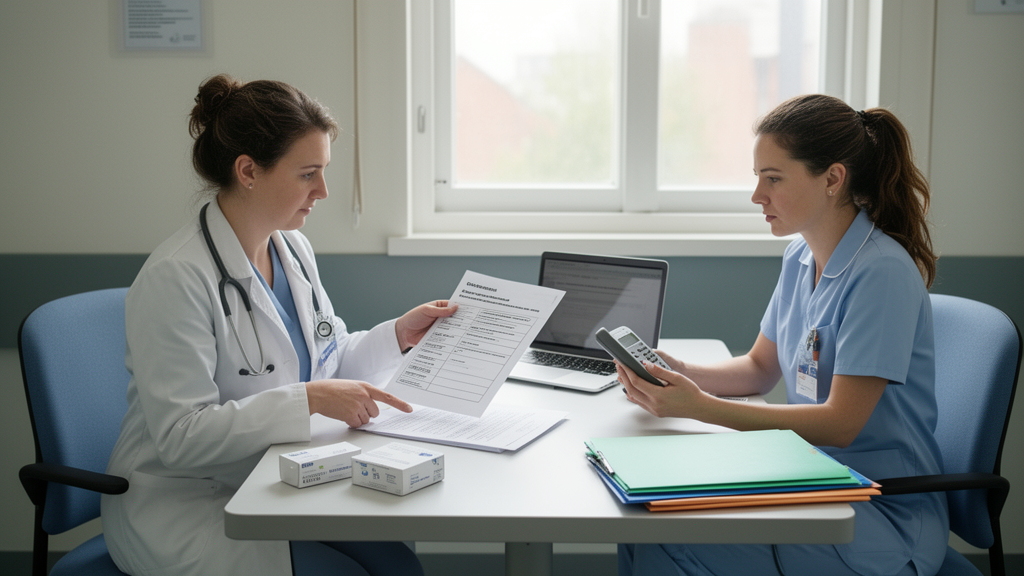
Follow-up after abnormal cervical cancer screening in Flanders, Belgium, is fragmented and depends heavily on individual healthcare providers’ initiative, according to a qualitative study involving 120 general practitioners and gynaecologists. Providers described delays mainly as a consequence of system-level problems, including inconsistent communication, unclear division of responsibilities, high workload and poorly integrated digital systems, rather than patient behaviour.
Researchers conducted 14 in-person, semi-structured group interviews between September and November 2025 with healthcare providers responsible for cervical cancer screening in Flanders. The interviews were audio-recorded, transcribed verbatim and analysed in MaxQDA through iterative thematic analysis. Analysts combined deductive coding using a multilevel framework with inductive insights, double-coded the material and resolved discrepancies through discussion. Data collection and analysis proceeded concurrently until saturation, after which the findings were validated with stakeholders.
Participants characterized follow-up after an abnormal Pap smear as a complex, multi-step pathway that is not consistently standardised. They reported uncertainty over responsibility at different stages, difficulties collaborating across disciplines and inadequate links between digital systems. Communication with patients was also inconsistent, while follow-up relied on individual provider initiative amid high workloads. By comparison, patient-related factors such as language barriers and limited health literacy played a secondary role in the delays described. The study also reported that 17.7% of women in Flanders do not receive adequate follow-up after an abnormal Pap smear, indicating the scale of the problem addressed by the interviews.
The findings point toward changes that providers believe could support timelier follow-up: standardised and proactive communication, clearer task allocation, better-integrated digital systems, optimisation of the existing reminder mechanism and enhanced patient education. The researchers also described a proposed “double safety net” combining provider oversight with informed patient involvement and greater primary-care engagement. These are recommendations arising from the qualitative analysis, not interventions tested by the study.
Because the evidence reflects the experiences of 120 Flemish healthcare providers rather than a population-wide measurement of every barrier, it cannot establish how frequently these problems occur across all clinics or quantify how much any proposed change would reduce delays. The study identifies organisational weaknesses as the dominant explanations reported for untimely follow-up and highlights the need for coordinated system-level responsibility. It does not demonstrate that standardisation or digital integration alone will produce better clinical outcomes.
Subject of Research: Healthcare-provider perspectives on organisational barriers to cervical cancer screening follow-up in Flanders, Belgium
Article Title: Untimely follow-up after cervical cancer screening: A qualitative study among healthcare providers in Flanders (Belgium)
Article References: Hendrickx, M., Kerckhaert, L.-A., Willems, S., Crutzen, R., Verbestel, V., & Vanthomme, K. (2026). Untimely follow-up after cervical cancer screening: A qualitative study among healthcare providers in Flanders (Belgium). PLOS One, 21(10), e0359860. https://doi.org/10.1371/journal.pone.0359860
Image Credits: AI Generated
DOI: 10.1371/journal.pone.0359860
Keywords: cervical cancer, cervical screening, abnormal Pap smear, follow-up care, healthcare systems, qualitative research, Flanders, Belgium, provider workload, digital health, Untimely, follow-up
Cite Scienmag News
Nathaniel Bowman. (October 22, 2026). Flemish providers identify system barriers to cervical screening follow-up. Scienmag. https://scienmag.com/flemish-providers-identify-system-barriers-to-cervical-screening-follow-up/
Nathaniel Bowman. "Flemish providers identify system barriers to cervical screening follow-up." Scienmag, 22 October 2026, https://scienmag.com/flemish-providers-identify-system-barriers-to-cervical-screening-follow-up/. Accessed 22 October 2026.
Nathaniel Bowman. "Flemish providers identify system barriers to cervical screening follow-up." Scienmag. October 22, 2026. https://scienmag.com/flemish-providers-identify-system-barriers-to-cervical-screening-follow-up/


