

Thursday, October 22, 2026
Science
No Result
View All Result
  • Login
  • HOME
  • SCIENCE NEWS
  • CONTACT US
  • HOME
  • SCIENCE NEWS
  • CONTACT US
No Result
View All Result
Scienmag
No Result
View All Result
Home Science News Medicine

Donepezil-linked network gains fade as cognition and hippocampus decline

October 22, 2026
in Medicine
Cassandra Pierce
By Cassandra Pierce Scienmag Editorial Profile - Systems Neuroscience
Reading Time: 3 mins read
0
Donepezil-linked network gains fade as cognition and hippocampus decline

Donepezil-linked network gains fade as cognition and hippocampus decline

65
SHARES
587
VIEWS
Share on FacebookShare on Twitter
ADVERTISEMENT

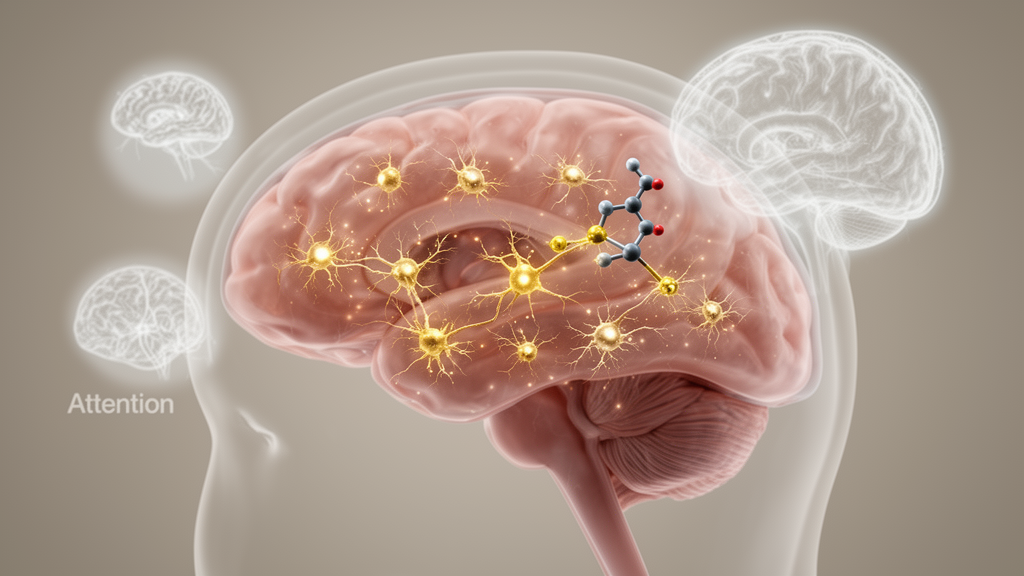
In a 36-month longitudinal study of people with mild cognitive impairment attributed to Alzheimer’s disease, continuous donepezil treatment was associated with an early improvement in global brain-network topology, but that gain stabilized rather than continuing to strengthen. Meanwhile, cognition and volume in the left hippocampus continued to decline, with deterioration accelerating between months 12 and 18. The results indicate that treatment-associated changes unfolded over time and did not amount to sustained protection across every measured outcome.

The researchers began with a cross-sectional analysis of 107 patients with Alzheimer’s-related mild cognitive impairment and 92 normal controls. At baseline, patients had atrophy in the left hippocampus, including several subfields, and widespread abnormalities in gray-matter structural covariance networks. This stage of the research established the abnormalities present before the longitudinal assessment, but its cross-sectional design did not establish what caused the differences between the groups.

For the longitudinal component, the investigators retrospectively enrolled 35 patients who had completed 36 months of continuous donepezil treatment. Linear and piecewise linear mixed-effects models quantified changes in cognitive performance, brain morphology and network-topology measures over that period. Because the study followed a treated cohort without an untreated or placebo comparison group, it could describe temporal patterns during treatment but could not confidently determine how much of those patterns was attributable to donepezil rather than the underlying illness or other influences.

Restricting the analysis to patients who completed treatment and follow-up may also limit how broadly the findings represent all people with Alzheimer’s-related mild cognitive impairment. Mini-Mental State Examination scores declined significantly during the 36 months. The volume of the left hippocampus and multiple hippocampal subfields also decreased significantly, and the models indicated that deterioration accelerated between months 12 and 18.

Thus, despite the early network improvement and enhancement of right-hippocampal nodal metrics, the study did not show that donepezil prevented the progressive loss of cognition or left-hippocampal volume. The authors characterized the long-term benefit as modest and found insufficient evidence for a sustained neuroprotective effect. Taken together, the findings portray a changing pattern rather than a uniform response to treatment.

Global topological measures improved initially and subsequently stabilized, while measures associated with the right hippocampus were significantly enhanced. Those results contrasted with continued cognitive decline and shrinking volume in the left hippocampus and its subfields. The study combines behavioral testing, brain-volume measurements and structural covariance network analysis, providing a multi-level account of change during continuous treatment.

Its retrospective, single-arm design and small longitudinal cohort constrain causal interpretation, so the observed network gains cannot be attributed to donepezil alone or interpreted as evidence that the underlying disease process was reversed.

Subject of Research: Longitudinal changes in cognition, hippocampal volume and structural covariance networks during donepezil treatment of Alzheimer’s-related mild cognitive impairment

Article Title: Dynamic long-term modulation of cognition, brain structure and covariance networks in mild cognitive impairment due to AD by donepezil: A 36-month longitudinal study

Article References: Chen, Y., Tong, Z., Wang, H., Xu, X., Chen, Q., Lu, J., Hu, Y., Zhang, X., Zhao, H., Chen, J., & Zhang, B. (2026). Dynamic long-term modulation of cognition, brain structure and covariance networks in mild cognitive impairment due to AD by donepezil: A 36-month longitudinal study. Journal of Neurology, 273(11), 677. https://doi.org/10.1007/s00415-026-14156-7

Image Credits: AI Generated

DOI: 10.1007/s00415-026-14156-7

Keywords: donepezil, Alzheimer’s disease, mild cognitive impairment, hippocampal atrophy, structural covariance networks, brain-network topology, longitudinal study, cognitive decline, neuroimaging, Dynamic, long-term, modulation

Cite Scienmag News

Cassandra Pierce. (October 22, 2026). Donepezil-linked network gains fade as cognition and hippocampus decline. Scienmag. https://scienmag.com/donepezil-linked-network-gains-fade-as-cognition-and-hippocampus-decline/

Cassandra Pierce. "Donepezil-linked network gains fade as cognition and hippocampus decline." Scienmag, 22 October 2026, https://scienmag.com/donepezil-linked-network-gains-fade-as-cognition-and-hippocampus-decline/. Accessed 22 October 2026.

Cassandra Pierce. "Donepezil-linked network gains fade as cognition and hippocampus decline." Scienmag. October 22, 2026. https://scienmag.com/donepezil-linked-network-gains-fade-as-cognition-and-hippocampus-decline/


Tags: Alzheimer's diseasebrain network topologybrain structural covariance networkscognitive declinedonepezildonepezil treatmentDynamicgray matter abnormalitieshippocampal atrophyhippocampus volume losslong-termlongitudinal neuroimaging studylongitudinal studyMild Cognitive Impairmentmodulationneurodegenerative disease progressionneuroimagingstructural covariance networkstreatment effects over time
Share26Tweet16
Previous Post

Retrospective polysomnography links modulators to apnea odds in children with cystic fibrosis

Next Post

Deep learning improves subject-adaptive P300 EEG decoding in computational study

Related Posts

Spain’s healthcare use shows persistent socioeconomic divides, survey analysis finds
Medicine

Spain’s healthcare use shows persistent socioeconomic divides, survey analysis finds

October 22, 2026
Deep learning improves subject-adaptive P300 EEG decoding in computational study
Medicine

Deep learning improves subject-adaptive P300 EEG decoding in computational study

October 22, 2026
Retrospective polysomnography links modulators to apnea odds in children with cystic fibrosis
Medicine

Retrospective polysomnography links modulators to apnea odds in children with cystic fibrosis

October 22, 2026
Molecular obesity therapies advance, but precision prescribing remains largely unproven
Medicine

Molecular obesity therapies advance, but precision prescribing remains largely unproven

October 22, 2026
Communicating neuropsychological assessment results: a qualitative study in Dutch memory clinic professionals
Medicine

Communicating neuropsychological assessment results: a qualitative study in Dutch memory clinic professionals

October 22, 2026
Scoping review maps outcome measures in 22 recovery college evaluations
Medicine

Scoping review maps outcome measures in 22 recovery college evaluations

October 22, 2026
Next Post
Deep learning improves subject-adaptive P300 EEG decoding in computational study

Deep learning improves subject-adaptive P300 EEG decoding in computational study

  • Mothers who receive childcare support from maternal grandparents show more optimized

    Mothers who receive childcare support from maternal grandparents show more parental warmth, finds NTU Singapore study

    27656 shares
    Share 11059 Tweet 6912
  • University of Seville Breaks 120-Year-Old Mystery, Revises a Key Einstein Concept

    1061 shares
    Share 424 Tweet 265
  • Bee body mass, pathogens and local climate influence heat tolerance

    682 shares
    Share 273 Tweet 171
  • Researchers record first-ever images and data of a shark experiencing a boat strike

    546 shares
    Share 218 Tweet 137
  • Groundbreaking Clinical Trial Reveals Lubiprostone Enhances Kidney Function

    531 shares
    Share 212 Tweet 133
Science

Embark on a thrilling journey of discovery with Scienmag.com—your ultimate source for cutting-edge breakthroughs. Immerse yourself in a world where curiosity knows no limits and tomorrow’s possibilities become today’s reality!

RECENT NEWS

  • Spain’s healthcare use shows persistent socioeconomic divides, survey analysis finds
  • Deep learning improves subject-adaptive P300 EEG decoding in computational study
  • Donepezil-linked network gains fade as cognition and hippocampus decline
  • Retrospective polysomnography links modulators to apnea odds in children with cystic fibrosis

Categories

  • Agriculture
  • Anthropology
  • Archaeology
  • Athmospheric
  • Biology
  • Biotechnology
  • Blog
  • Bussines
  • Cancer
  • Chemistry
  • Climate
  • Earth Science
  • Editorial Policy
  • Marine
  • Mathematics
  • Medicine
  • Pediatry
  • Policy
  • Psychology & Psychiatry
  • Science Education
  • Science News
  • Social Science
  • Space
  • Technology and Engineering

Subscribe to Blog via Email

Enter your email address to subscribe to this blog and receive notifications of new posts by email.

Join 5,151 other subscribers

© 2025 Scienmag - Science Magazine

Welcome Back!

Login to your account below

Forgotten Password?

Retrieve your password

Please enter your username or email address to reset your password.

Log In
No Result
View All Result
  • HOME
  • SCIENCE NEWS
  • CONTACT US

© 2025 Scienmag - Science Magazine

Discover more from Science

Subscribe now to keep reading and get access to the full archive.

Continue reading