


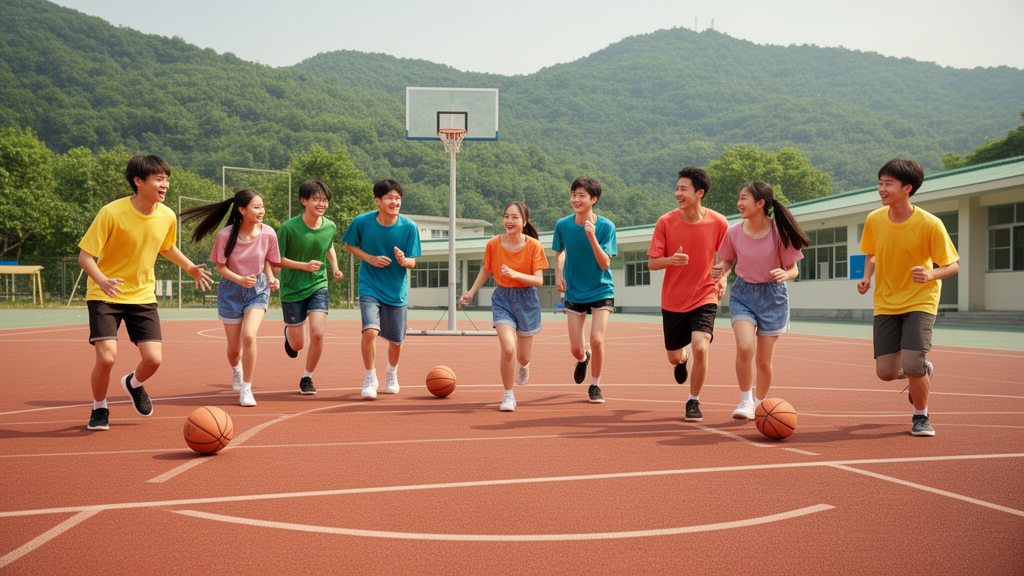
In a cross-sectional survey of 712 Yi junior high school students in Sichuan Province, China, higher physical activity was associated with higher self-esteem, but the relationship varied with levels of parental strictness. Researchers reported that the activity–self-esteem association was statistically significant among students whose parents displayed relatively low authoritarian parenting, whereas it was attenuated and no longer significant among those experiencing high parental strictness.
The study included students in grades 7–9 from 10 middle schools in Liangshan Yi Autonomous Prefecture. Physical activity was assessed with the Chinese version of the International Physical Activity Questionnaire short form, self-esteem was measured using the Rosenberg Self-Esteem Scale, and authoritarian parenting was evaluated through the harshness dimension of the Parenting Style Questionnaire. Sampling was conducted through cluster convenience sampling, and the analysis adjusted for gender and grade.
Physical activity and self-esteem had a positive correlation, with a reported correlation coefficient of 0.196 and a p-value below 0.01. Formal moderation analysis using Hayes’ PROCESS macro, Model 1, with 5,000 bootstrap samples found that parenting style significantly changed the strength of the relationship. The interaction term was B = −0.152, with p = 0.008, indicating that higher parental strictness weakened the positive association between activity and self-esteem.
Simple-slope analysis produced a clearer picture of that variation. When parental strictness was low, physical activity significantly predicted higher self-esteem, with B = 2.322 and p = 0.008. At high levels of parental strictness, the predicted association was attenuated, with B = −0.401 and p = 0.233, meaning it was not statistically significant. The pattern supports the authors’ conclusion that the observed relationship between physical activity and self-esteem was conditional on the family rearing environment, rather than uniform across all students.
Because the research was cross-sectional, it cannot establish whether physical activity raises self-esteem, whether students with greater self-esteem are more likely to be active, or whether other factors influence both behaviors and perceptions. The convenience-based recruitment of 10 schools also limits how broadly the results can be generalized beyond the sampled Yi adolescents in Liangshan. The findings identify an association and a moderating relationship, not a causal effect. The article was published as accepted research in BMC Psychology on 22 October 2026 and was described as an open-access version that remained subject to further editorial edits before the final Version of Record.
Subject of Research: Physical activity, self-esteem and authoritarian parenting among Yi junior high school students in Sichuan, China
Article Title: The impact of physical activity on self-esteem among Yi ethnic group secondary school students: the moderating role of authoritarian parenting
Article References: Wang, J., Zhang, X., Shao, Q., Shi, Y., & Wu, S. (2026). The impact of physical activity on self-esteem among Yi ethnic group secondary school students: the moderating role of authoritarian parenting. BMC Psychology. https://doi.org/10.1186/s40359-026-05253-3
Image Credits: AI Generated
DOI: 10.1186/s40359-026-05253-3
Keywords: physical activity, self-esteem, adolescent mental health, Yi adolescents, authoritarian parenting, parental strictness, cross-sectional study, Liangshan, China, impact, physical, activity
Cite Scienmag News
Glenn Wilkins. (October 22, 2026). Cross-sectional study links activity and self-esteem among Yi adolescents. Scienmag. https://scienmag.com/cross-sectional-study-links-activity-and-self-esteem-among-yi-adolescents/
Glenn Wilkins. "Cross-sectional study links activity and self-esteem among Yi adolescents." Scienmag, 22 October 2026, https://scienmag.com/cross-sectional-study-links-activity-and-self-esteem-among-yi-adolescents/. Accessed 22 October 2026.
Glenn Wilkins. "Cross-sectional study links activity and self-esteem among Yi adolescents." Scienmag. October 22, 2026. https://scienmag.com/cross-sectional-study-links-activity-and-self-esteem-among-yi-adolescents/


