


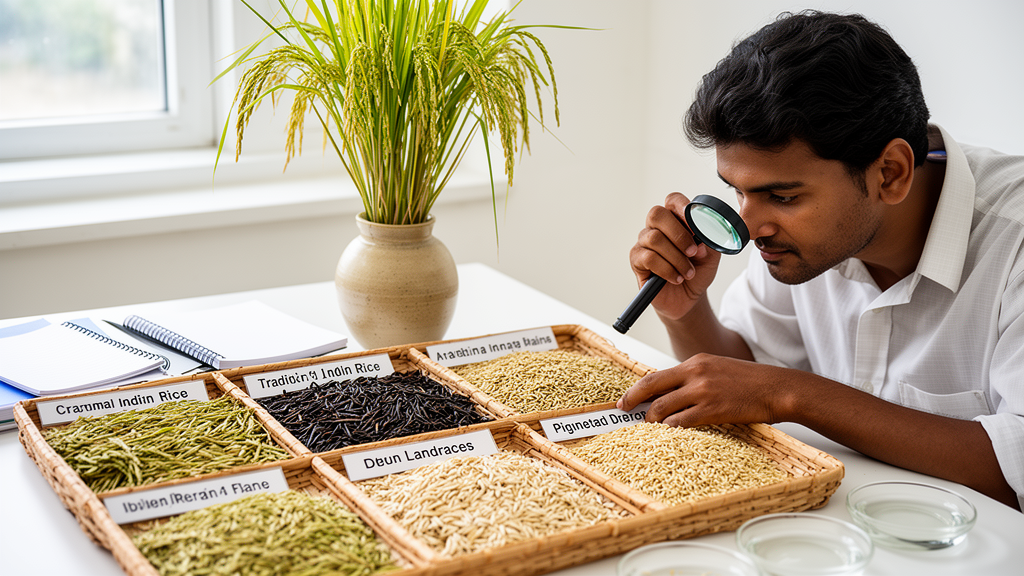
A 2026 review identifies starch structure, resistant starch, dietary fiber and bioactive phytochemicals as molecular and biochemical traits associated with low-glycemic-index rice, while highlighting the diversity found among Indian landraces. The review focuses especially on traditional cultivars such as Mappillai Samba, Karuppu Kavuni and Kattuyanam, which it reports contain relatively high levels of resistant starch, dietary fiber and bioactive compounds. These observations point to possible molecular foundations for developing rice with lower digestible starch, although the article synthesizes existing research rather than reporting a new experiment or clinical outcome.
Central to the review’s analysis is the waxy gene, Wx, which encodes granule-bound starch synthase I, or GBSSI, an enzyme involved in controlling amylose production. Functional alleles including Wxa and Wxlv are linked with higher amylose levels and lower starch digestibility. By connecting variation in starch composition to the rate at which starch can be hydrolyzed, the review presents the waxy locus as an important molecular target for rice breeding. Its scope is the review of genetic, biochemical and structural factors associated with low-GI traits, not a direct test of blood-glucose responses in people.
The food matrix adds another layer. Rice starch can interact with proteins, lipids and polyphenols to form starch–protein, starch–lipid and starch–polyphenol complexes. The review says that these interactions influence access by digestive enzymes and thereby affect starch hydrolysis and the kinetics of glucose release. Resistant starch, dietary fiber and secondary metabolites therefore cannot be considered separately from the physical organization of the grain. This integrated view helps explain why a low-GI phenotype may involve coordinated traits rather than a single molecular variable.
The review also examines compounds that may modulate carbohydrate-digesting enzymes. It describes anthocyanins and phytosterols such as stigmasterol as secondary metabolites that can inhibit the activities of α-amylase and α-glucosidase, enzymes involved in starch breakdown. In combination with differences in amylose, resistant starch and fiber, this biochemical activity offers mechanistic routes that may influence the rate of glucose appearance. The evidence presented in the review concerns molecular interactions and associations with starch digestibility; it does not establish a clinical benefit or quantify a blood-glucose effect in any human population.
Indian landrace diversity is presented as a potential source of traits for modern rice improvement. Genomics, quantitative trait locus mapping and gene editing are identified as tools for locating and combining useful characteristics. The review proposes that integrating these tools into breeding programs could support the creation of biofortified, low-glycemic rice with enhanced nutritional properties, contributing to broader goals of metabolic health and food security. Its main limitation is equally clear: the article reports no new data from the research described, and its conclusions depend on molecular, compositional and starch-digestibility traits rather than demonstrated clinical outcomes. The clearest result of the review is therefore a mechanistic map: diverse Indian rice landraces contain biochemical and genetic variation that could guide breeding for lower starch digestibility and lower glycemic index.
Subject of Research: Molecular and genetic factors associated with low-glycemic-index traits in Indian rice landraces
Article Title: Molecular mechanisms underlying low glycemic index in rice: Insights from Indian landrace diversity
Article References: K, J., S, U., S, M., M, U., R, R., & K, V. (2026). Molecular mechanisms underlying low glycemic index in rice: Insights from Indian landrace diversity. Molecular Biology Reports, 53(1), Article 1512. https://doi.org/10.1007/s11033-026-12702-0
Image Credits: AI Generated
DOI: 10.1007/s11033-026-12702-0
Keywords: low-glycemic rice, Indian landraces, waxy gene, resistant starch, amylose, starch digestibility, rice breeding, glycemic index, quantitative trait loci, gene editing, Molecular, mechanisms
Cite Scienmag News
Juliet Wilcox. (October 22, 2026). Review links Indian rice landrace diversity to low-glycemic traits. Scienmag. https://scienmag.com/review-links-indian-rice-landrace-diversity-to-low-glycemic-traits/
Juliet Wilcox. "Review links Indian rice landrace diversity to low-glycemic traits." Scienmag, 22 October 2026, https://scienmag.com/review-links-indian-rice-landrace-diversity-to-low-glycemic-traits/. Accessed 22 October 2026.
Juliet Wilcox. "Review links Indian rice landrace diversity to low-glycemic traits." Scienmag. October 22, 2026. https://scienmag.com/review-links-indian-rice-landrace-diversity-to-low-glycemic-traits/


