


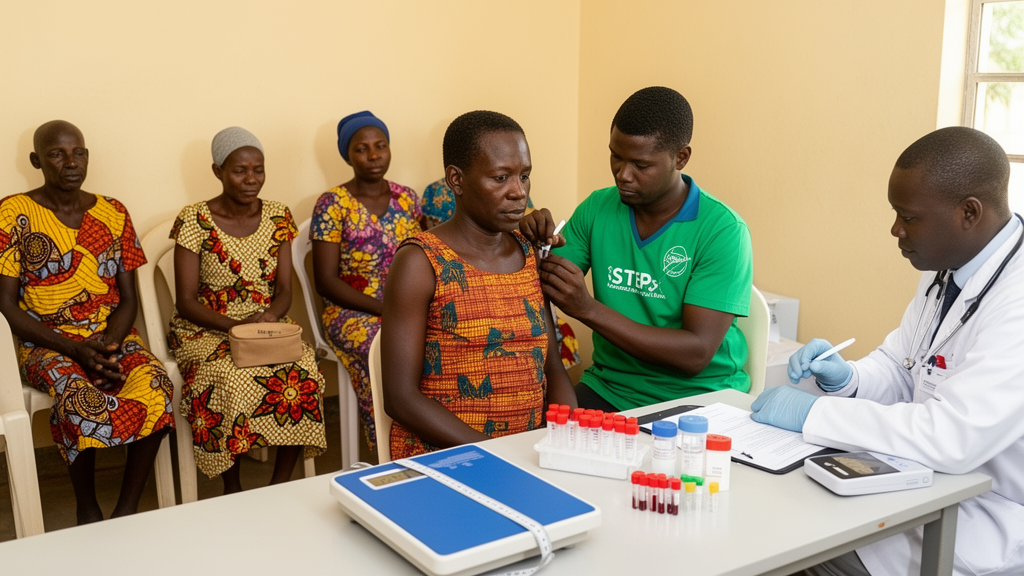
Rwandan adults aged 18 to 69 showed notable differences in raised total blood cholesterol across age, sex and place of residence in an analysis of the 2022 Rwanda STEPS survey. The study also found that adults classified as overweight or obese had 2.9 times the adjusted odds of raised total blood cholesterol compared with those in the normal BMI range, while older age, female sex and urban residence were significant contributors in the multivariable analysis. Researchers conducted a secondary analysis of data from 6,000 participants in the STEPS, or STEPS-wise Approach to Surveillance, national population-based survey.
The objective was to identify demographic, lifestyle and health-status factors associated with raised total blood cholesterol among adults aged 18 to 69. These were statistical associations in survey data, not evidence that any factor directly caused cholesterol elevation or that changing it would prevent cardiovascular disease. The analysis began with descriptive statistics summarizing participants’ characteristics.
Bivariate analyses then used weighted Pearson chi-square tests to examine associations between candidate variables and cholesterol status, classified as normal or raised. Variables meeting a significance threshold of p < 0.05 were eligible for inclusion in a weighted multivariable model, which assessed associations after adjustment for potential confounders. The reported prevalence of raised total blood cholesterol was higher among women than men, at 3.3% and 2.1%, respectively.
The researchers also reported notable variation by age and urban versus rural residence. In the adjusted analysis, urban residence, older age and female sex remained significantly associated with raised cholesterol. BMI had a clear quantitative association in the multivariable model.
Overweight and obese participants had 2.9 times the odds of raised total blood cholesterol compared with adults whose BMI was normal, with an adjusted odds ratio of 2.9 and a 95% confidence interval of 1.72–5.01. The association was significant at p < 0.001. This finding identifies a strong modeled correlate, but it does not determine whether elevated BMI preceded the cholesterol pattern or explains it through a specific biological pathway.
The survey analysis also found a significant relationship between fruit and vegetable consumption and cholesterol status. Reported intake relative to the World Health Organization-recommended amount was associated with raised total blood cholesterol at p < 0.001 in the bivariate analysis. The abstract does not state whether dietary intake remained significant after multivariable adjustment, nor does it report an adjusted estimate, confidence interval or detailed intake categories.
The result therefore should not be presented as an independently established multivariable predictor. The study background described rising cholesterol as a public health concern with implications for cardiovascular health, particularly in developing countries. It noted that the prevalence of raised total blood cholesterol in Rwanda was reported as 2.9% in 2017, with sex-specific figures of 5.6% for men and 7.4% for women aged 55 to 64.
Those earlier figures are historical context supplied by the authors; the current analysis does not itself demonstrate a continuous trend across surveys. As a secondary analysis of a population survey, the research identifies patterns across groups within the 2022 data rather than testing an intervention or tracing individual changes over time. Its findings indicate that raised cholesterol was not distributed uniformly among Rwandan adults: higher BMI, older age, female sex and urban residence were significant correlates in the adjusted model, while fruit and vegetable intake was associated with cholesterol status in the initial analysis.
Subject of Research: Population-level factors associated with raised total blood cholesterol among Rwandan adults
Article Title: Factors associated with raised total blood cholesterol among people aged 18 to 69 years: a secondary data analysis using Rwanda STEPS survey 2022
Article References: Uwamalayika, A., Gashaija, A., Ndagijimana, A., & Andegiorgish, A. K. (2026). Factors associated with raised total blood cholesterol among people aged 18 to 69 years: a secondary data analysis using Rwanda STEPS survey 2022. BMC Public Health. https://doi.org/10.1186/s12889-026-29738-3
Image Credits: AI Generated
DOI: 10.1186/s12889-026-29738-3
Keywords: Rwanda, raised cholesterol, STEPS survey, body mass index, fruit and vegetable intake, age, sex, urban residence, public health, secondary analysis, Factors, associated
Cite Scienmag News
Ophelia Keating. (October 22, 2026). Rwanda STEPS links raised cholesterol to BMI, age and sex. Scienmag. https://scienmag.com/rwanda-steps-links-raised-cholesterol-to-bmi-age-and-sex/
Ophelia Keating. "Rwanda STEPS links raised cholesterol to BMI, age and sex." Scienmag, 22 October 2026, https://scienmag.com/rwanda-steps-links-raised-cholesterol-to-bmi-age-and-sex/. Accessed 22 October 2026.
Ophelia Keating. "Rwanda STEPS links raised cholesterol to BMI, age and sex." Scienmag. October 22, 2026. https://scienmag.com/rwanda-steps-links-raised-cholesterol-to-bmi-age-and-sex/


