


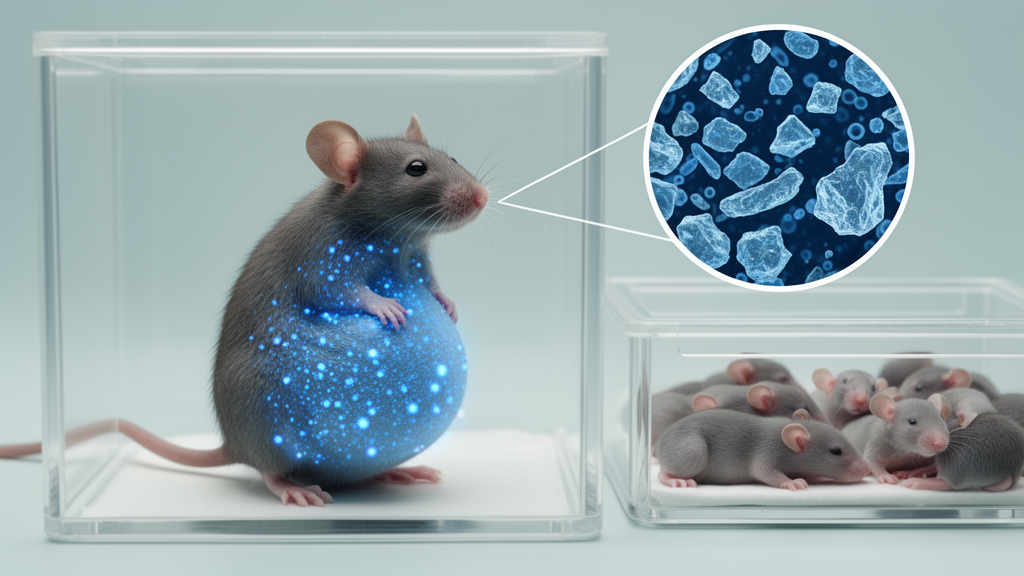
A critical review of research on aquatic organisms concludes that developmental or reproductive harm in offspring exposed through their parents does not by itself show that microplastic or nanoplastic particles passed directly from mother to offspring. The analysis, published in New Contaminants, found that direct evidence for maternal particle transfer remains limited and varies substantially among species. It proposes a classification system that distinguishes particles physically entering eggs or embryos from effects propagated across one or more unexposed generations through other biological mechanisms.
The distinction matters because parental exposure can influence offspring even when no plastic particles enter an egg or embryo. The review identifies possible pathways including damage to reproductive organs, altered egg quality and energy supply, hormonal disruption, oxidative stress, and changes in the parental gut microbiome. Embryos may also encounter particles externally after spawning, while mechanisms such as inflammation, mitochondrial stress, apoptosis, epigenetic changes and microbiome disturbances may connect parental exposure with later effects. Such associations do not establish that particles themselves were inherited.
Evidence is strongest in one studied system, the water flea Daphnia magna. Research examined by the review suggests that nanoparticles can reach embryos through the brood chamber and through an internal route running from the gut to the ovary and oocyte. One study estimated that approximately 88% of embryo exposure occurred through the brood chamber and about 12% was associated with internal transfer. In other aquatic animals, including rotifers, copepods, fish and bivalves, the available evidence is less conclusive. In fish, parental exposure has been associated with altered hatching, growth, heart rate, reproduction and behavior in offspring, but maternal particles have rarely been demonstrated directly within offspring tissues using multiple independent analytical methods.
To support stronger claims of maternal transfer, the authors recommend directly localizing particles inside eggs, embryos or offspring tissues with complementary analytical techniques. Experiments must also exclude surface contamination, leakage from fluorescent dyes and particles carried over in surrounding water, all of which can create misleading evidence that particles entered an organism. Studies reporting effects in generations that were not themselves exposed should additionally include clean-generation experiments. The authors also recommend using more environmentally realistic particles, improving particle identification, following unexposed generations and tracking reproductive outcomes from exposed parents through the growth and reproductive capacity of their descendants.
The review argues that environmental risk assessment should not focus solely on whether maternal transfer occurs. The broader ecological question is whether parental exposure ultimately reduces reproductive success, offspring fitness and population renewal, regardless of the route through which effects arise. This approach could make it possible to evaluate cross-generational toxicity without treating all observed effects as proof of inherited particles. The evidence supports concern about offspring effects following parental exposure, but the current literature does not yet establish how often direct maternal transfer occurs across aquatic species or how commonly it accounts for the reported developmental and reproductive changes.
Subject of Research: Evidence for maternal microplastic transfer and cross-generational effects in aquatic organisms
Article Title: Microplastics can affect the next generation without being passed directly from mother to offspring
Article References: Microplastics can affect the next generation without being passed directly from mother to offspring. Original publication (Bibliographic details unavailable.)
Image Credits: AI Generated
DOI: Not provided
Keywords: microplastics, nanoplastics, maternal transfer, aquatic organisms, Daphnia magna, cross-generational toxicity, environmental pollution, ecological risk, affect, next, generation, without
Cite Scienmag News
Drew Townsend. (October 21, 2026). Review separates maternal microplastic transfer from offspring harm. Scienmag. https://scienmag.com/review-separates-maternal-microplastic-transfer-from-offspring-harm/
Drew Townsend. "Review separates maternal microplastic transfer from offspring harm." Scienmag, 21 October 2026, https://scienmag.com/review-separates-maternal-microplastic-transfer-from-offspring-harm/. Accessed 21 October 2026.
Drew Townsend. "Review separates maternal microplastic transfer from offspring harm." Scienmag. October 21, 2026. https://scienmag.com/review-separates-maternal-microplastic-transfer-from-offspring-harm/


