


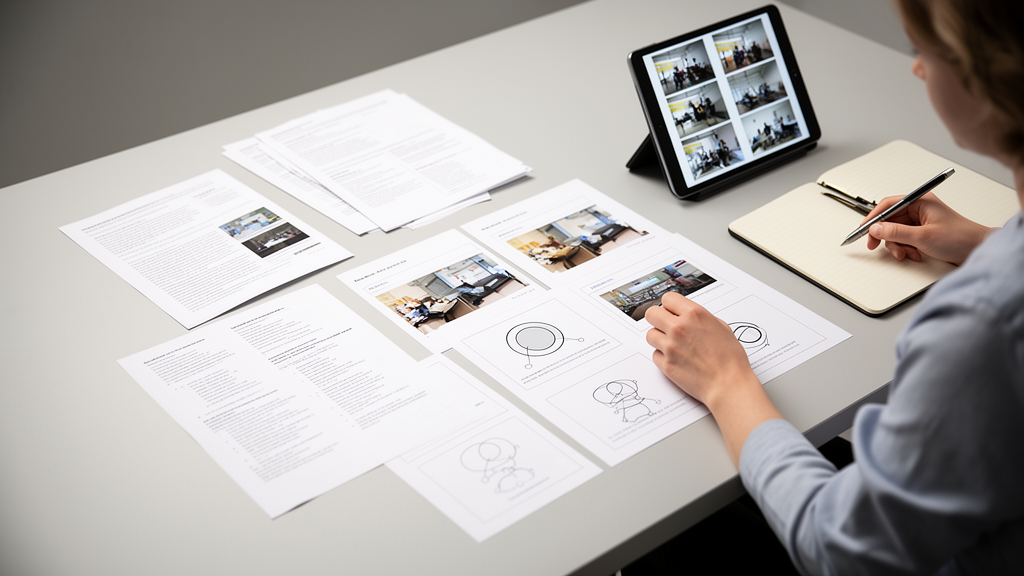
A systematic review of 43 studies found that Visual Thinking Strategies, an arts-based approach rooted in museum education and developmental psychology, were linked to reported improvements in observation, communication, empathy, tolerance of ambiguity and diagnostic reasoning among medical learners. The evidence suggests the approach may help develop several valued competencies, but the studies were generally limited in design, and only one reached the review’s highest reported level of outcome assessment.
The researchers followed PRISMA guidelines and searched MEDLINE, Scopus, ERIC and ProQuest Central through October 2024. From 1,866 references identified, they included 43 peer-reviewed original studies evaluating Visual Thinking Strategies as learning activities with medical learners and reporting qualitative or quantitative outcomes. The population spanned premedical students, medical students, residents, fellows, faculty and interprofessional learners. Studies limited to non-medical health professions or lacking evaluation were excluded. The reviewers extracted study characteristics, participant demographics, intervention design, outcomes and methodological rigor, while quantitative studies were assessed with the Medical Education Research Study Quality Instrument, or MERSQI.
Medical students were the largest learner group, appearing in 33% of the included studies, followed by residents at 28% and interprofessional students at 19%. Most studies were published between 2020 and 2024, accounting for 60% of the total, and 74% were conducted in the United States. The evidence base was dominated by single-institution, non-controlled interventional studies. MERSQI scores ranged from 7 to 15, which the review described as indicating moderate methodological quality. This combination of results supports interest in the approach while limiting confidence in broad conclusions about its effectiveness across medical-education settings.
Outcomes were primarily assessed at Kirkpatrick Level 1 in 47% of studies and Level 2 in 51%, with one study reaching Level 3. Quantitative research most frequently used Budner’s Tolerance of Ambiguity Scale and the Communication Skills and Attitudes Scale, together with other validated tools, while qualitative studies analyzed reflective narratives. Reported outcomes included enhanced observation, communication, empathy, tolerance of ambiguity and diagnostic reasoning. The review did not establish sustained effects on clinical practice or patient outcomes, because the prevailing study designs and limited higher-level assessment could not answer those questions. The authors therefore call for multi-site, longitudinal and higher-rigor research to determine whether the educational benefits persist and extend to clinical practice.
Subject of Research: Systematic review of Visual Thinking Strategies across medical education
Article Title: A systematic review of visual thinking strategies in medical education
Article References: Robertson, M. L., Kelly-Hedrick, M., Ike, J. D., Cohn, J., White, J., Moniz, T., Chisolm, M. S., & Walsh, A. L. (2026). A systematic review of visual thinking strategies in medical education. BMC Medical Education. https://doi.org/10.1186/s12909-026-10175-0
Image Credits: AI Generated
DOI: 10.1186/s12909-026-10175-0
Keywords: medical education, visual thinking strategies, arts-based learning, medical students, clinical reasoning, communication skills, empathy, tolerance of ambiguity, systematic review, medical humanities, systematic, review
Cite Scienmag News
Courtney Benton. (October 21, 2026). Systematic review finds promise and limits of visual thinking strategies. Scienmag. https://scienmag.com/systematic-review-finds-promise-and-limits-of-visual-thinking-strategies/
Courtney Benton. "Systematic review finds promise and limits of visual thinking strategies." Scienmag, 21 October 2026, https://scienmag.com/systematic-review-finds-promise-and-limits-of-visual-thinking-strategies/. Accessed 21 October 2026.
Courtney Benton. "Systematic review finds promise and limits of visual thinking strategies." Scienmag. October 21, 2026. https://scienmag.com/systematic-review-finds-promise-and-limits-of-visual-thinking-strategies/


