


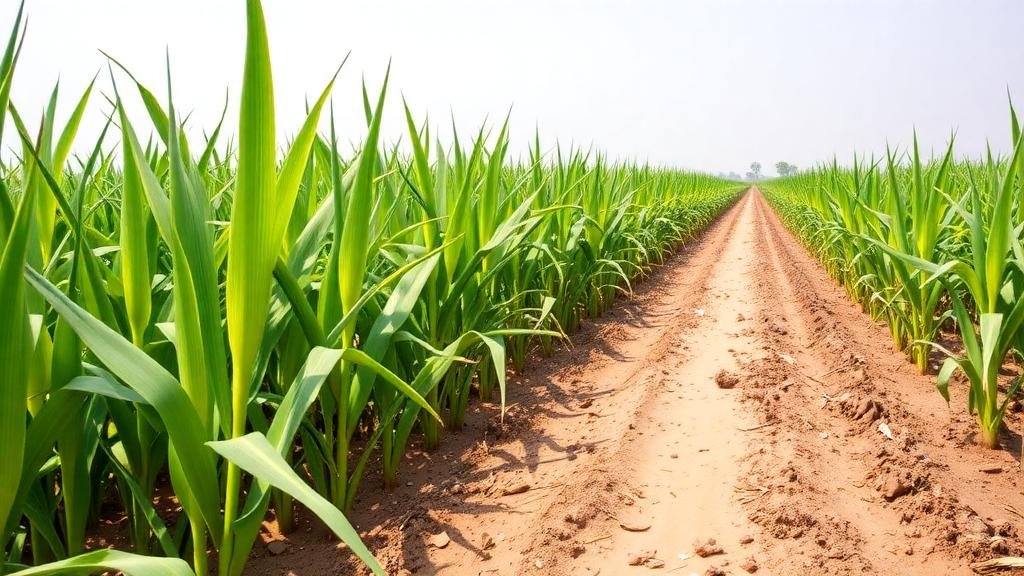
Plant growth-promoting rhizobacteria (PGPR) can improve root growth, nutrient acquisition and several physiological responses in drought-stressed sugarcane, but the evidence does not yet support treating them as a universal standalone solution. A critical review of available research concludes that benefits depend strongly on the bacterial strain, sugarcane genotype, soil, drought intensity and duration, crop stage, climate, inoculation method and surrounding microbial community. Laboratory, pot and greenhouse studies frequently report improvements in intermediate traits, while evidence linking individual mechanisms to stable cane and sugar yields under naturally occurring field drought remains limited.
Sugarcane is particularly exposed to water shortage because it has a long growth cycle, high biomass demand and substantial water and nutrient requirements. Prolonged deficit can suppress root development, photosynthesis, transpiration regulation, nitrogen uptake, stalk elongation and sucrose accumulation. The review cites yield reductions ranging from 30% to 60% under severe water deficit, with the magnitude varying by genotype and management. Drought also changes the rhizosphere itself: root architecture and exudation shift, nutrient diffusion slows, indigenous microbial communities reorganize and the carbon available to microbes changes. These dynamics determine whether introduced bacteria can establish and express their growth-promoting traits.
PGPR can act directly by producing phytohormones, mobilizing nutrients and altering root architecture. Candidate strains from genera including Bacillus, Azospirillum, Gluconacetobacter, Pseudomonas, Azotobacter, Rhizobium and Herbaspirillum have been associated with improved root biomass, chlorophyll content, water relations, nutrient uptake and antioxidant activity in sugarcane. Indole-3-acetic acid is among the mechanisms proposed to promote primary and lateral root development under water limitation, but the effective concentration range in sugarcane remains poorly defined. Excessive auxin can inhibit primary roots, while excessive abscisic acid can suppress growth and carbon assimilation. Evidence that bacterial hormone production directly causes drought tolerance in field-grown sugarcane is therefore limited.
Other direct mechanisms include phosphate, potassium, zinc, sulfur and silicon mobilization, as well as siderophore production and extracellular polymeric substances that may improve soil aggregation and water retention around roots. Under moderate water deficit, experiments have associated phosphate-solubilizing inoculation with increases of 8–18% in cane yield and improved sucrose content when microbes were combined with 75–100% of the recommended phosphorus fertilizer dose. These are condition-specific observations, not general effect estimates. Laboratory evidence also exists for zinc and silicate mobilization, yet direct demonstrations in drought-stressed sugarcane that these processes raise plant nutrient status, improve physiology and increase yield remain sparse.
Indirect mechanisms may also buffer drought stress. ACC deaminase cleaves 1-aminocyclopropane-1-carboxylate, the precursor of ethylene, and can reduce stress-induced ethylene that otherwise inhibits root elongation. Some sugarcane-associated Pseudomonas and Azospirillum strains have been linked with greater root growth, relative water content, chlorophyll retention and antioxidant-enzyme activity through this pathway, although activity is strain-specific and depends on microbial metabolism and colonization. Siderophores can improve iron acquisition and restrict pathogen growth by reducing iron availability. Biological nitrogen fixation by diazotrophs can contribute to nitrogen supply, but its contribution varies and commonly declines as drought intensifies. Field quantification of biological nitrogen fixation in drought-stressed sugarcane using isotopic techniques remains limited, and plant nitrogen status, yield and water-use efficiency have rarely been linked in the same experiments.
Pathogen suppression is a possible additional benefit, but it should be separated from direct drought tolerance. PGPR such as Bacillus, Pseudomonas and Streptomyces can inhibit important sugarcane pathogens, including Colletotrichum falcatum, Ceratocystis paradoxa and Sporisorium scitamineum, through antibiotics, siderophores, lytic enzymes, volatile compounds or induced systemic resistance. However, most studies of induced resistance come from other plants, and few experiments combine drought, pathogen challenge and inoculation in sugarcane. Biocontrol observed under adequate moisture cannot be assumed to persist when water shortage suppresses microbial metabolism, changes root exudation and alters plant–pathogen interactions. The review therefore treats disease suppression as a complementary, context-dependent possibility rather than a demonstrated cause of drought resilience.
Consortia are not automatically more effective than single strains. A consortium of two Bacillus megaterium strains, JTB1 and MT22, improved root development, biomass, antioxidant responses and photosynthetic gene expression in a pot experiment under differing water availability, but it did not consistently outperform the individual strains. This illustrates why a combination of potentially complementary traits cannot be assumed to be synergistic. The review distinguishes additive effects from true synergy, which requires the combined response to exceed the sum of individual effects. Factorial comparisons are needed to determine whether traits such as auxin production, ACC deaminase activity, nutrient mobilization and exopolysaccharide production interact beneficially or compete for limited microbial resources.
Translation from controlled environments to farms remains the central obstacle. The review reports that controlled experiments often show 20–60% improvements in plant-growth parameters after PGPR inoculation, whereas field trials commonly produce gains of 5–25% or inconsistent outcomes. These ranges summarize heterogeneous studies rather than a pooled meta-analysis. Sandy soils can change moisture rapidly and support weaker colonization than clay-rich soils, while pH, organic matter, mineralogy and indigenous communities alter nutrient availability and competitive pressure. Moderate drought may permit microbial establishment and nutrient mobilization; severe, prolonged drought can suppress root activity, exudation, microbial movement, nutrient diffusion and metabolite production. Inoculant persistence is rarely measured directly, making it difficult to distinguish biological failure from poor establishment.
Moving PGPR into reliable production will require standardized, multi-location and multi-season trials that follow plants from drought onset through peak stress and rewatering. Measurements should jointly track microbial survival and colonization, root exudation, soil moisture, pH, texture, organic matter, nutrient availability, plant physiology, water-use efficiency, cane yield and sucrose yield. Inoculation timing and severity thresholds should be tested across genotypes and soils, while neutral and negative results should be reported alongside benefits. Commercialization also depends on formulation stability, shelf life, compatibility with fertilizers and agrochemicals, industrial-scale quality control and cost–benefit analysis for a high-volume crop with often narrow margins. The review’s central conclusion is that PGPR are a promising component of integrated drought management, but not yet a universally reliable or independently validated route to resilient sugarcane production.
Subject of Research: Evaluation of plant growth-promoting rhizobacteria for drought resilience and nutrient acquisition in sugarcane
Article Title: Plant growth-promoting rhizobacteria as a soil-based strategy to improve nutrient acquisition and drought tolerance in sugarcane
Article References: Srivastava, A. K., Tiwari, R., Shukla, S. K., Srivastava, S., Srivastava, P., Srivastava, A., Jaiswal, V. P., & Tiwari, R. K. (2026). Plant growth-promoting rhizobacteria as a soil-based strategy to improve nutrient acquisition and drought tolerance in sugarcane. Discover Soil, 3(1), Article 173. https://doi.org/10.1007/s44378-026-00331-9
Image Credits: AI Generated
DOI: 10.1007/s44378-026-00331-9
Keywords: sugarcane, drought stress, plant growth-promoting rhizobacteria, rhizosphere, nutrient acquisition, microbial inoculants, soil microbiology, field validation, drought management, Plant, growth-promoting, rhizobacteria
Cite Scienmag News
Alan Morgan. (October 21, 2026). Review: PGPR show context-dependent drought relief in sugarcane. Scienmag. https://scienmag.com/review-pgpr-show-context-dependent-drought-relief-in-sugarcane/
Alan Morgan. "Review: PGPR show context-dependent drought relief in sugarcane." Scienmag, 21 October 2026, https://scienmag.com/review-pgpr-show-context-dependent-drought-relief-in-sugarcane/. Accessed 21 October 2026.
Alan Morgan. "Review: PGPR show context-dependent drought relief in sugarcane." Scienmag. October 21, 2026. https://scienmag.com/review-pgpr-show-context-dependent-drought-relief-in-sugarcane/


