


Researchers at the National Institute of Information and Communications Technology (NICT) have unveiled groundbreaking findings regarding the human brain’s ability to represent numerical quantities. Utilizing functional magnetic resonance imaging (fMRI) technology, scientists conducted a comprehensive analysis that reveals how various regions of the cerebral cortex respond to numerical information, providing insights into how numerical processing occurs in the brain. This innovative research, led by HAYASHI Masamichi in collaboration with graduate student KIDO Teruaki from the University of Tokyo and professor YOTSUMOTO Yuko, marks a significant leap in our understanding of numerical cognition.
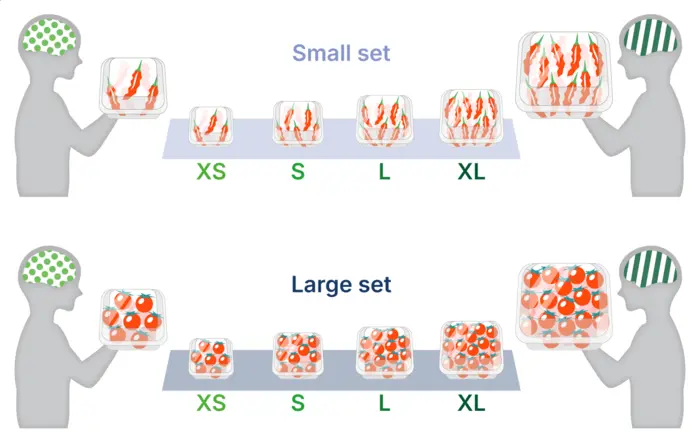
The study focuses on the brain’s flexibility in representing numerical quantity. Traditional understanding dictates that certain brain regions respond to specific numbers, but this research introduces the concept of relative numerical representation, where brain responses vary according to the contextual situation rather than fixed absolute values. This fascinating shift opens new avenues for exploring other magnitude-related concepts such as size and time. By demonstrating that the brain responds to relative quantities—like “extra-small,” “small,” “large,” and “extra-large”—the team provides compelling evidence that our understanding of numerical cognition needs a paradigm shift.
Through rigorous methodology involving fMRI scans, participants engaged with black-and-white dot patterns displaying different numerical ranges over three days. The fMRI results illuminated that despite significant variations in the numbers presented, certain regions of the brain displayed consistent activity patterns. For instance, the brain reacted similarly to an extra-small quantity within both a large and small set. This finding consolidated the idea that neural responses can adapt based on the numeric context, thus demonstrating the brain’s efficiency in processing numerical information and conserving its resources.
Furthermore, the analysis revealed a hierarchical nature within the visual processing pathway: initial sensory regions encoded numerical values absolutely, while higher-order areas—transitioning from the parietal lobe to the frontal cortex—gradually adapted to represent numerical values in relative terms. This hierarchical transition emphasizes the brain’s remarkable ability to flexibly encode numerical magnitude, facilitating more nuanced cognitive functions.
The implications of such findings extend beyond mere numerical representation. The research suggests a broader cognitive scope where similar neural mechanisms might govern the processing of other quantitative concepts. Such inquiries could enhance our comprehension of how we perceive and interpret events in our surroundings, paving the way for future investigations that marry neuroscience with cognitive psychology. This connection presents ample potential for interdisciplinary collaboration in advancing our understanding of human cognition.
The study’s findings also shed light on cognitive efficiency, hinting at evolutionary adaptations that allow our brain to handle the complexities of quantity without an overwhelming number of dedicated neurons. If the brain operated solely on absolute values, it would necessitate an immense neural architecture to accommodate an infinite range of numbers—a scenario both impractical and biologically unfeasible. The revelations from this research suggest that flexible neural encoding is not only beneficial but perhaps essential for efficient cognitive functioning.
Given that numerical information pervades various domains of life, from scientific discourse to everyday decision-making, the significance of effectively communicating numerical ideas cannot be understated. By unlocking the mechanisms behind numerical processing in the brain, we can better understand the nuances of communication itself, potentially enhancing how we convey complex information and make informed decisions.
The research was formally published on January 6, 2025, in the prestigious journal "Nature Communications," signaling its contribution to the scientific community and its potential impact on future studies. The implications of the study could reach far and wide, influencing educational strategies and methodologies focusing on numeral education and cognitive training.
Moving forward, it is essential for follow-up studies to explore whether similar relative representation mechanisms apply to other quantities, such as spatial dimensions or temporal frameworks. By delving into these correlations, we can deepen our understanding of human cognition’s vast landscape and expand the relevance of neural mechanisms to a broader spectrum of human experiences. As we inch closer to unveiling the intricacies of our brain’s processing capabilities, it becomes increasingly evident that our neural architecture is finely tuned, adapting to the contexts in which we find ourselves.
Given the rapid advancements in neuroimaging technology and analytical techniques over recent years, the potential for new discoveries in cognitive neuroscience remains significant. Researchers are now better equipped than ever to explore the depths of the human mind and unravel the complexities that reside within. Understanding how we process, perceive, and relate to various forms of magnitude could be one of the most consequential frontiers in neuroscience, meriting further exploration and study.
In conclusion, the ongoing research into numerical representation within the brain not only elevates our understanding of cognition but also inspires a paradigm shift in various scientific fields, from psychology to artificial intelligence. Equipping ourselves with this knowledge enables us to enhance our educational approaches, improve communication strategies, and contribute to a deeper understanding of the cognitive processes that underpin our daily lives.
Keywords
Neuroscience, Functional neuroimaging, Functional magnetic resonance imaging.
Cite Scienmag News
Cassandra Pierce. (March 25, 2025). Exploring the Brain’s Adaptive Mechanisms for Representing a Variety of Numbers. Scienmag. https://scienmag.com/exploring-the-brains-adaptive-mechanisms-for-representing-a-variety-of-numbers/
Cassandra Pierce. "Exploring the Brain’s Adaptive Mechanisms for Representing a Variety of Numbers." Scienmag, 25 March 2025, https://scienmag.com/exploring-the-brains-adaptive-mechanisms-for-representing-a-variety-of-numbers/. Accessed 1 September 2026.
Cassandra Pierce. "Exploring the Brain’s Adaptive Mechanisms for Representing a Variety of Numbers." Scienmag. March 25, 2025. https://scienmag.com/exploring-the-brains-adaptive-mechanisms-for-representing-a-variety-of-numbers/


