


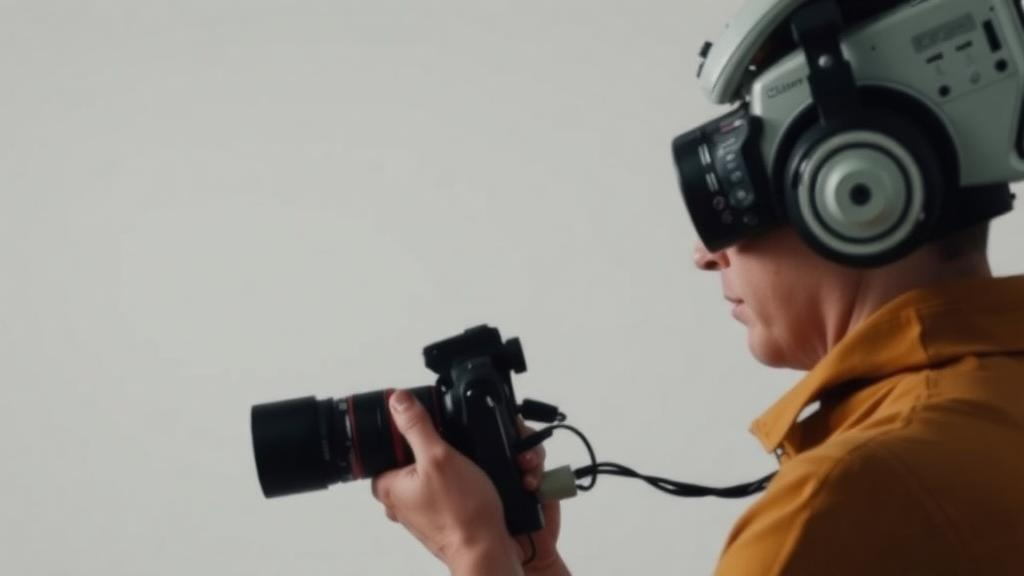
Generative artificial intelligence has created a two-sided crisis for photojournalism: synthetic images can be mistaken for records of events that never happened, while genuine photographs can be dismissed as fabricated simply because viewers know such technology exists. A new conceptual analysis proposes the Layered Visual Trust Model, or LVTM, to diagnose how these competing failures arise. The framework organizes a journalistic image into five interdependent layers—referential relation, production process, provenance and traceability, institutional warrant, and audience interpretation—and argues that no single visual cue, authentication system, or institutional badge can establish trust on its own. Its authors emphasize that the model is a diagnostic framework derived from theory and two illustrative cases, not an empirically validated theory or a predictor of individual belief.
The model begins with a distinction that is easy to lose in the fast-moving debate over deepfakes: a photograph’s pixels are not the same thing as the claim made with that photograph. The authors define a “journalistic visual claim” as the image together with its caption, headline, placement, timing, spatial framing, and the proposition advanced by the surrounding report. Veracity concerns whether that entire claim accurately represents the relevant event, including the people, place, date, scale, and any implication about prevalence. Authenticity instead concerns whether the asset and its stated production history are genuine, while provenance is the inspectable record of who or what created it, what transformations occurred, and which parties attested to those facts. Credibility is an audience member’s judgment that the material is believable; trust is a broader willingness to rely on journalists, publishers, platforms, and verification systems despite uncertainty.
These distinctions explain why the same file can carry different evidential value in different contexts. An untouched photograph may be authentic yet become misleading through a false date, selective crop, or placement beside a headline that overstates what the scene shows. A synthetic illustration can be procedurally acceptable if its generated status is disclosed and its role is clear, although an attractive image may still make a false accompanying claim easier to imagine. Cryptographically signed history can strengthen confidence that a camera captured a particular scene, but it cannot prove that the caption is correct, that the scene was not staged, or that the visible crowd represented an entire event. Conversely, an image without credentials is not automatically false: metadata can be stripped during platform processing, copied through screenshots, or originate from a camera that does not support credential technology.
The LVTM’s five layers trace an evidential chain from the depicted world to public judgment. At the referential layer, verification asks whether the full image-caption-report proposition is supported by independent photographs or video, eyewitness accounts, geolocation, chronology, public records, and evidence about representativeness. At the production layer, investigators establish whether a work was captured, corrected, enhanced, reconstructed, illustrated, or fabricated, and whether the published asset differs materially from the captured scene. The provenance layer asks whether creation and editing histories can be inspected through mechanisms such as C2PA manifests, Content Credentials, signed camera files, original files, and edit logs. The institutional layer identifies the photographers, editors, agencies, fact-checkers, and other actors willing to explain what was checked and who bears responsibility for errors. The audience layer examines how platform framing, source reputation, comments, political identity, prior knowledge, and visual realism affect acceptance or rejection.
To demonstrate the model’s diagnostic reach, the authors selected two maximum-contrast episodes from U.S. political news rather than conducting a representative survey. In March 2023, synthetic images depicting Donald Trump being arrested circulated as news-like scenes while attention centered on a possible indictment. The creator said the images had been generated with Midjourney and initially presented as parody, but reposts stripped away that context and emphasized their resemblance to spot-news photography. No corresponding arrest occurred, and no accountable newsroom originated the images. Because expectations about an imminent indictment made the invented scenes narratively plausible, the authors characterize the episode as false acceptance: surface realism and contextual expectation substituted for missing evidence at the referential, production, and institutional layers.
The contrasting episode occurred in August 2024, when an authentic photograph of a crowd at a Harris-Walz campaign event in Michigan was falsely accused of being AI-generated. Reuters compared the disputed image with its own photographs and other records of the event; the campaign identified the staff photographer; and a forensic analyst found no indications of AI generation. A follow-up assertion about the crowd’s supposed absence from reflections on the campaign plane was also rebutted with additional photographs and an explanation involving distance, viewing angle, and telephoto compression. Independent evidence supported the bounded claim that the photographed crowd and event existed, although broader assertions about the rally’s size, unanimity, or character would still require separate evidence. Here, partisan suspicion and misread optical features encouraged false rejection: interpretive distrust overrode convergent referential and institutional support.
Technical repair systems are central to the proposed framework, but the analysis treats them as one component rather than a solution. C2PA, a cross-industry standards initiative, specifies cryptographically signed, tamper-evident assertions about an asset’s origin, editing, participating tools, and signers; its user-facing Content Credentials can be attached to media or linked through recoverable manifests. Camera-based signing can begin the chain of custody at capture, as demonstrated by the Leica M11-P, which was promoted as the first commercial camera able to attach Content Credentials. Yet credentials are not universal, and their value depends on confidence in the signer, device, and account. They can establish production facts without settling semantic truth, while missing credentials can reflect unsupported devices or platform processing rather than deception.
The authors also examine professional and legal controls. The 2026 World Press Photo Contest requires camera-made entries and prohibits synthetic images and generative fill, using identifiable photographers, original files, captions, and review procedures to define an acceptable documentary process. European Union rules under Article 50 of the Artificial Intelligence Act, applicable from August 2, 2026, add obligations for machine-readable marking of certain AI-generated or manipulated content and disclosure of deepfakes in relevant contexts. Research cited in the article suggests that provenance labels can increase trust in digital news platforms across several Western countries, but also that label design matters: a generic “AI” badge may fail to distinguish deception, illustration, or ordinary editing. Disclosure therefore needs to state what is known, what was certified, what remains uncertain, and what independent evidence supports the associated claim.
Governance responsibilities differ by layer. News organizations must corroborate the event, caption, crop, scale, and representativeness; retain originals and edit histories; distinguish correction, enhancement, reconstruction, illustration, and fabrication; and issue corrections that identify the exact layer that failed. Platforms should preserve and validate credentials through uploads, transcoding, and reposting, display publisher and signer identities, retain caption context, and resist collapsing all provenance information into a binary badge. Regulators and standards bodies should support interoperable disclosure, privacy, source protection, accessibility, independent audits, and due process, rather than making credentials a compulsory passport that automatically delegitimizes evidence from older or unsupported devices. Audiences, meanwhile, need to reconstruct evidential chains rather than merely hunt for visual defects: who first published an image, what proposition it advances, whether the event and its claimed scope are independently documented, and which organization stands behind the verification.
The comparison is deliberately illustrative and does not establish how often false acceptance or false rejection occurs, their causal strength, or their effects across populations. The article contains no preregistered corpus, independent coding, inter-coder reliability assessment, audience experiment, or newsroom ethnography, and the five propositions derived from the model remain untested expectations. The framework may also behave differently across media systems, cultures, genres, and political contexts: institutional reputation may carry greater weight in high-trust environments, while official signatures can be distrusted or endanger sources where political repression is high. Future work would need distinct measures for each layer and trials across platforms, countries, and audience groups. Until then, the central conclusion is that visual trust is not a property hidden inside photographic appearance. It is a coordinated judgment that emerges when referential evidence, production transparency, technical traceability, accountable institutions, and contextual explanation reinforce one another.
Subject of Research: A conceptual framework for evaluating trust in AI-generated and authentic journalistic images
Article Title: From daguerreotype to deepfake: a layered model of visual trust in AI-era photojournalism
Article References: Ruiz San Miguel, F. J., Torres-Toukoumidis, A., Hinojosa-Becerra, M., & Marín-Gutiérrez, I. (2026). From daguerreotype to deepfake: a layered model of visual trust in AI-era photojournalism. Frontiers in Communication, 11, Article 1959537. https://doi.org/10.3389/fcomm.2026.1959537
Image Credits: AI Generated
DOI: 10.3389/fcomm.2026.1959537
Keywords: visual trust, generative AI, photojournalism, deepfakes, image provenance, C2PA, Content Credentials, misinformation, media literacy, news verification, daguerreotype, deepfake
Cite Scienmag News
Wayne Ward. (October 21, 2026). Layered Trust Model Confronts AI’s Double Threat to Photojournalism. Scienmag. https://scienmag.com/layered-trust-model-confronts-ais-double-threat-to-photojournalism/
Wayne Ward. "Layered Trust Model Confronts AI’s Double Threat to Photojournalism." Scienmag, 21 October 2026, https://scienmag.com/layered-trust-model-confronts-ais-double-threat-to-photojournalism/. Accessed 21 October 2026.
Wayne Ward. "Layered Trust Model Confronts AI’s Double Threat to Photojournalism." Scienmag. October 21, 2026. https://scienmag.com/layered-trust-model-confronts-ais-double-threat-to-photojournalism/


