

Wednesday, October 21, 2026
Science
No Result
View All Result
  • Login
  • HOME
  • SCIENCE NEWS
  • CONTACT US
  • HOME
  • SCIENCE NEWS
  • CONTACT US
No Result
View All Result
Scienmag
No Result
View All Result
Home Science News Social Science

Qualitative study identifies barriers to family reintegration among Tanzanian orphanage children

October 21, 2026
in Social Science
Courtney Benton
By Courtney Benton Scienmag Editorial Profile - Science and Technology Policy
Reading Time: 3 mins read
0
Qualitative study identifies barriers to family reintegration among Tanzanian orphanage children

Qualitative study identifies barriers to family reintegration among Tanzanian orphanage children

65
SHARES
587
VIEWS
Share on FacebookShare on Twitter
ADVERTISEMENT

A qualitative study of selected orphanages in Tanzania’s Dar es Salaam Region found that most participating children were ready to reintegrate into families, while a minority faced barriers that made reintegration difficult. Researchers identified sibling affection and family bonds, educational and career aspirations, and the wish to secure inheritance rights as motivations for returning home. Perceived threats from relatives, unresolved trauma linked to maltreatment, differences between orphanage and family lifestyles, and bureaucratic procedures were reported as obstacles.

The study, published in SN Social Sciences in 2026, examined psychosocial factors associated with orphaned children’s readiness for family reintegration. It used a qualitative multiple-case design that combined unstructured interviews, focus group discussions and thematic analysis. Purposive sampling recruited 49 participants: 42 orphaned children and seven directors of orphanages. This design was intended to explore participants’ experiences and perspectives rather than estimate the prevalence of readiness across Tanzania’s orphaned population.

Love and bonds with siblings emerged as a central influence on children’s willingness to reunite with their families. Educational support was another important motivation, with some participants connecting reintegration with opportunities to pursue their education. Career aspirations also shaped their views of family life. In addition, some children wanted to return to secure basic rights, including the right to inherit property. The findings indicate that children’s reasons for seeking reintegration were not limited to leaving an orphanage; they also included hopes for education, professional development and participation in family life.

The study did not portray reintegration as uniformly desirable or uncomplicated. Some children perceived threats from family members, while others continued to experience unresolved traumatic concerns associated with maltreatment they had encountered in family settings. Differences between the lifestyles children had known in orphanages and those expected in families were also identified as obstacles. The supplied findings do not describe specific institutional routines or explain precisely how lifestyle adjustment affected individual children, so the role of these factors remains confined to the themes reported by participants.

Administrative requirements presented a further practical barrier. The study reports that bureaucratic procedures complicated reintegration for some children, although the abstract does not identify the specific documents, offices or agencies involved. Based on these findings, the authors concluded that parenting education and counselling services are vital for preparing children mentally and physically for family reintegration and for their psychosocial wellbeing. This conclusion is a recommendation from the study’s authors rather than evidence that a tested support programme improved outcomes. The research was confined to selected orphanages in one Tanzanian region, and the supplied evidence does not establish whether the findings apply to all orphaned children, whether particular support services improve long-term adjustment, or whether outcomes differed among individual children.

Subject of Research: Psychosocial factors shaping orphaned children’s readiness for family reintegration in Tanzania

Article Title: Orphans’ readiness for reintegrating into families: psychosocial drives and obstacles from selected orphanages in Tanzania

Article References: Vedasto, V., & Mkongo, J. I. (2026). Orphans’ readiness for reintegrating into families: psychosocial drives and obstacles from selected orphanages in Tanzania. SN Social Sciences, 6(11), Article 568. https://doi.org/10.1007/s43545-026-01864-0

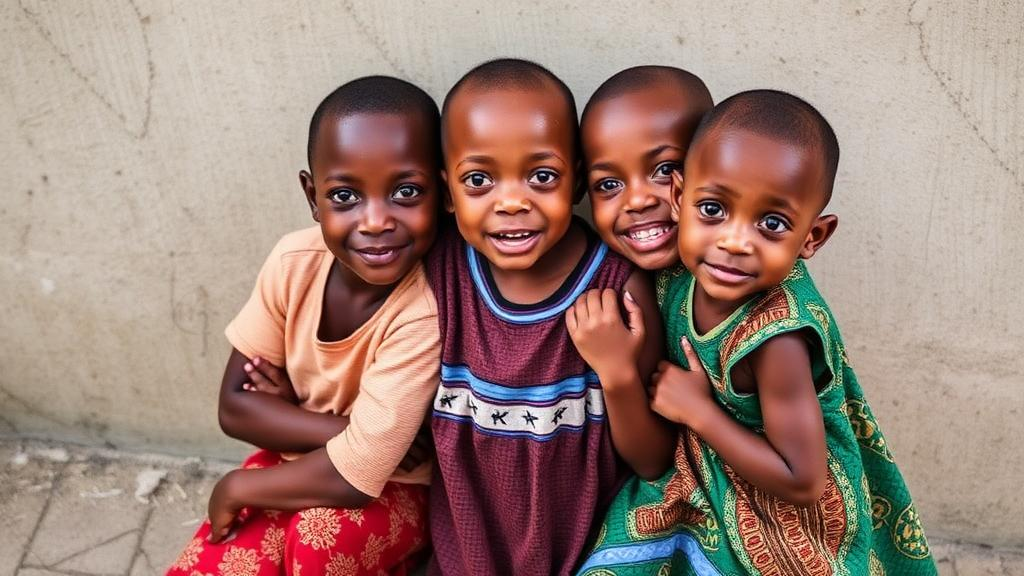
Image Credits: AI Generated

DOI: 10.1007/s43545-026-01864-0

Keywords: family reintegration, orphaned children, Tanzania, qualitative research, psychosocial support, sibling bonds, child trauma, family care, counselling, parental education, Orphans, readiness

Cite Scienmag News

Courtney Benton. (October 21, 2026). Qualitative study identifies barriers to family reintegration among Tanzanian orphanage children. Scienmag. https://scienmag.com/qualitative-study-identifies-barriers-to-family-reintegration-among-tanzanian-orphanage-children/


Courtney Benton. "Qualitative study identifies barriers to family reintegration among Tanzanian orphanage children." Scienmag, 21 October 2026, https://scienmag.com/qualitative-study-identifies-barriers-to-family-reintegration-among-tanzanian-orphanage-children/. Accessed 21 October 2026.

Courtney Benton. "Qualitative study identifies barriers to family reintegration among Tanzanian orphanage children." Scienmag. October 21, 2026. https://scienmag.com/qualitative-study-identifies-barriers-to-family-reintegration-among-tanzanian-orphanage-children/

Tags: bureaucratic obstacles in Tanzanian orphanage reintegrationchild traumacounsellingeducational aspirations of orphaned childrenfamily carefamily reintegrationfamily reunification motivations in Tanzaniainheritance rights and family reunificationOrphanage children reintegration barriersorphanage children’s perceptions of family lifeorphaned childrenOrphansparental educationpsychosocial factors in orphanage reintegrationpsychosocial supportqualitative researchqualitative study on orphanage childrenreadinesssibling bondssibling bonds and family motivation in TanzaniaTanzaniaTanzania orphanage reintegration policy challengesTanzanian family reunification challengestrauma and maltreatment barriers to family reintegration
Share26Tweet16
Previous Post

Retrospective study links postoperative recurrence to longer survival with osimertinib

Next Post

Norwegian home-care nurses describe leadership as invisible work

Related Posts

Coalition simulation links Pakistan migration policy outcomes to unequal influence
Social Science

Coalition simulation links Pakistan migration policy outcomes to unequal influence

October 21, 2026
Urban decline strains heritage conservation in Liaoning historic districts
Social Science

Urban decline strains heritage conservation in Liaoning historic districts

October 21, 2026
Sustainable development goals in the context of tribal development: a review and framework
Social Science

Sustainable development goals in the context of tribal development: a review and framework

October 21, 2026
Research report: From architecture to action: developing and validating the shared student success model (SSSM) for higher education institutions
Social Science

Research report: From architecture to action: developing and validating the shared student success model (SSSM) for higher education institutions

October 21, 2026
Closer to the Sea Is Not Always Happier: Tourist Emotions Along the Coast Follow a Nonlinear Path
Social Science

Qingdao travelogue study finds tourist emotions near coast are nonlinear

October 21, 2026
Climate Policy Uncertainty Pushes Chinese Firms Toward Green Mergers
Social Science

Climate policy uncertainty associated with more green M&A among Chinese listed firms

October 21, 2026
Next Post
Norwegian home-care nurses describe leadership as invisible work

Norwegian home-care nurses describe leadership as invisible work

  • Mothers who receive childcare support from maternal grandparents show more optimized

    Mothers who receive childcare support from maternal grandparents show more parental warmth, finds NTU Singapore study

    27656 shares
    Share 11059 Tweet 6912
  • University of Seville Breaks 120-Year-Old Mystery, Revises a Key Einstein Concept

    1061 shares
    Share 424 Tweet 265
  • Bee body mass, pathogens and local climate influence heat tolerance

    682 shares
    Share 273 Tweet 171
  • Researchers record first-ever images and data of a shark experiencing a boat strike

    546 shares
    Share 218 Tweet 137
  • Groundbreaking Clinical Trial Reveals Lubiprostone Enhances Kidney Function

    531 shares
    Share 212 Tweet 133
Science

Embark on a thrilling journey of discovery with Scienmag.com—your ultimate source for cutting-edge breakthroughs. Immerse yourself in a world where curiosity knows no limits and tomorrow’s possibilities become today’s reality!

RECENT NEWS

  • Norwegian home-care nurses describe leadership as invisible work
  • Qualitative study identifies barriers to family reintegration among Tanzanian orphanage children
  • Retrospective study links postoperative recurrence to longer survival with osimertinib
  • AMG-based real-time prosthetic hand control: Cross-subject evaluation and embedded implementation

Categories

  • Agriculture
  • Anthropology
  • Archaeology
  • Athmospheric
  • Biology
  • Biotechnology
  • Blog
  • Bussines
  • Cancer
  • Chemistry
  • Climate
  • Earth Science
  • Editorial Policy
  • Marine
  • Mathematics
  • Medicine
  • Pediatry
  • Policy
  • Psychology & Psychiatry
  • Science Education
  • Science News
  • Social Science
  • Space
  • Technology and Engineering

Subscribe to Blog via Email

Enter your email address to subscribe to this blog and receive notifications of new posts by email.

Join 5,150 other subscribers

© 2025 Scienmag - Science Magazine

Welcome Back!

Login to your account below

Forgotten Password?

Retrieve your password

Please enter your username or email address to reset your password.

Log In
No Result
View All Result
  • HOME
  • SCIENCE NEWS
  • CONTACT US

© 2025 Scienmag - Science Magazine

Discover more from Science

Subscribe now to keep reading and get access to the full archive.

Continue reading