

Wednesday, October 21, 2026
Science
No Result
View All Result
  • Login
  • HOME
  • SCIENCE NEWS
  • CONTACT US
  • HOME
  • SCIENCE NEWS
  • CONTACT US
No Result
View All Result
Scienmag
No Result
View All Result
Home Science News Biology

Single-larva study confirms Chironomus nuditarsis in Armenia’s Sevan Lake

October 21, 2026
in Biology, Science News
Gavin Prescott
By Gavin Prescott Scienmag Editorial Profile - Ecology and Ecosystem Dynamics
Reading Time: 3 mins read
0
One Tiny Larva in an Ancient Armenian Lake Rewrites the Map of a Hidden Insect Species

One Tiny Larva in an Ancient Armenian Lake Rewrites the Map of a Hidden Insect Species

65
SHARES
587
VIEWS
Share on FacebookShare on Twitter
ADVERTISEMENT

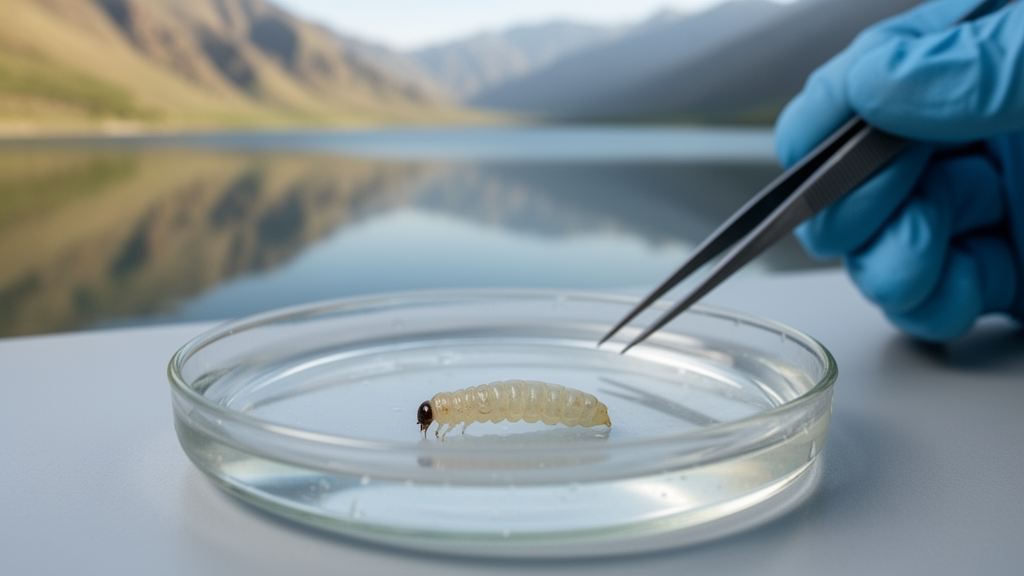
A single fourth-instar larva collected from Armenia’s Sevan Lake was identified as Chironomus nuditarsis Keyl, 1961 through combined morphological, cytogenetic and mitochondrial cytochrome c oxidase subunit I (COI) sequence analyses. The record brings the number of Chironomus species known from the lake to eight.

The specimen was recovered on October 10, 2019, from a macrozoobenthos sample in Artanish Bay, Gegharkunik Province. The sampling site was 1.3 metres deep and had black silty gravel sediments. Because no additional specimens of the species were collected, the researchers used the preserved larva for all three lines of evidence.

For the morphological examination, the head capsule was mounted in Fora-Berlese solution and assessed using established terminology for Chironomus larvae. The larva was about 15 mm long and had a yellow or light-brown head capsule with blurred gular-spot borders. Its basal antennal segment was cone-shaped, and the antenna blade extended beyond the fifth antennal segment. These features and the accompanying measurements corresponded to published descriptions of C. nuditarsis and differed from its sibling species C. curabilis.

Cytogenetic analysis identified a diploid chromosome number of 2n = 8 and the chromosome-arm combination AB CD EF G, designated the “thummi” cytocomplex. Balbiani rings were located in arms B and G, while the nucleolus occurred in arm G. The larva carried one zygotic combination of banding sequences, including ndtA1, ndtA2, ndtG1 and ndtG2, which the study described as characteristic of C. nuditarsis.

DNA extracted from the specimen produced a 658-base-pair COI sequence, which was deposited in GenBank as OR652398. Its estimated Kimura two-parameter distance from a C. nuditarsis sequence from the United Kingdom was 0.98%. The smallest distances were to sequences labelled C. curabilis: 0.49% for an Iranian sample and 0.73% for a sample from Russia’s Saratov region.

Bayesian analysis placed the Sevan sequence in a cluster containing C. nuditarsis and C. curabilis, associated with the Ch. plumosus group. A median-joining network based on 25 GenBank COI sequences for the two species contained 21 haplotypes shared by both named species. The Sevan haplotype was separated by three mutational steps from a C. curabilis sequence from Iran and a C. nuditarsis sequence from Germany.

The combined morphological, chromosome and molecular evidence supported identifying the Lake Sevan larva as C. nuditarsis. However, COI alone did not reliably separate C. nuditarsis from C. curabilis in the analyzed dataset, because sequences assigned to both species occurred in the same cluster and shared haplotypes. The authors also proposed that interspecific hybridization or mitochondrial introgression could contribute to this pattern.

The study was limited by its reliance on one larva, which cannot establish the species’ abundance, wider distribution or population structure within Sevan Lake. The chromosome data provided only a limited basis for tentatively comparing the specimen with northwestern Caucasian populations. The COI analysis also lacked sequences from Siberian populations, limiting comparisons across the species’ full range.

Despite those limitations, the taxonomic study demonstrated that a single chironomid larva can provide substantial identification evidence when morphology, cytogenetics and molecular analysis are combined. The authors noted that the inventory of Chironomus species in Sevan Lake remains incomplete and called for continued long-term investigation of the lake as environmental conditions change through warming and human activity.

Subject of Research: Taxonomic identification of a single Chironomus nuditarsis larva from Sevan Lake using morphology, karyotype and COI sequencing

Article Title: The first record of Chironomus nuditarsis Keyl, 1961 from Sevan Lake (Armenia) confirmed by morphology, karyotype and COI gene sequence

Article References: Bolshakov, V., Prokin, A., Ivanova, E., & Movergoz, E. (2024). The first record of Chironomus nuditarsis Keyl, 1961 from Sevan Lake (Armenia) confirmed by morphology, karyotype and COI gene sequence. Comparative Cytogenetics, 18, 123-141. https://doi.org/10.3897/compcytogen.18.126130

Image Credits: AI Generated

DOI: 10.3897/compcytogen.18.126130

Keywords: Chironomus nuditarsis, Sevan Lake, Armenia, chironomid taxonomy, polytene chromosomes, COI sequencing, phylogenetics, species identification, first, record, Chironomus, nuditarsis

Cite Scienmag News

Gavin Prescott. (October 21, 2026). Single-larva study confirms Chironomus nuditarsis in Armenia’s Sevan Lake. Scienmag. https://scienmag.com/single-larva-study-confirms-chironomus-nuditarsis-in-armenias-sevan-lake/

Gavin Prescott. "Single-larva study confirms Chironomus nuditarsis in Armenia’s Sevan Lake." Scienmag, 21 October 2026, https://scienmag.com/single-larva-study-confirms-chironomus-nuditarsis-in-armenias-sevan-lake/. Accessed 21 October 2026.

Gavin Prescott. "Single-larva study confirms Chironomus nuditarsis in Armenia’s Sevan Lake." Scienmag. October 21, 2026. https://scienmag.com/single-larva-study-confirms-chironomus-nuditarsis-in-armenias-sevan-lake/


Tags: Armeniachironomid taxonomyChironomusChironomus nuditarsisChironomus nuditarsis identification in Armenia's Sevan LakeChironomus species diversity in Eastern EuropeCOI sequencingcytogenetic features of Chironomus larvaeenvironmental monitoring using Chironomus larvaeFirstfreshwater macrozoobenthos biodiversityimplications for aquatic ecosystem health assessmentlarval morphology and cytogenetics of Chironomus speciesmitochondrial COI gene analysis in aquatic insectsmolecular techniques for insect species identificationnuditarsisphylogeneticspolytene chromosomesrecordsediment analysis in Sevan Lake habitatSevan Lakespecies identificationtaxonomy and distribution of Chir
Share26Tweet16
Previous Post

Late Jurassic Aspidorhynchus skulls preserve evidence of fish and crustacean prey

Next Post

Clinical protocol proposes Intralipid-based immunomodulation for selected reproductive failures, but evidence remains uncertain

Related Posts

Intralipid and Corticosteroids: New Clinical Protocols Target Immune-Driven Reproductive Failure
Medicine

Clinical protocol proposes Intralipid-based immunomodulation for selected reproductive failures, but evidence remains uncertain

October 21, 2026
Jurassic gut fossils reveal prey inside decapitated predator fish
Science News

Late Jurassic Aspidorhynchus skulls preserve evidence of fish and crustacean prey

October 21, 2026
Relict boreal forests of Kazakh Uplands revealed in first open-access vegetation dataset
Biology

Kazakh Uplands vegetation dataset documents 117 plots across forests, steppes and other habitats

October 21, 2026
DNA Barcodes Reveal Dozens of Spider Species New to Georgia and the Caucasus
Science News

CaBOL field survey adds 23 spider species to Georgia’s documented fauna

October 21, 2026
A South American Nightshade Is Quietly Colonizing Europe’s Disturbed Ground
Science News

Observational study links emerging non-native Solanum nitidibaccatum to ruderal community structure in Poland

October 21, 2026
New Crab Spider Species Discovered on Extinct Volcano in Georgia
Science News

A new Psammitis species (Araneae, Thomisidae) from an extinct volcano in Georgia with reevaluation of the generic position of Xysticus marmoratus Thorell, 1875

October 21, 2026
Next Post
Intralipid and Corticosteroids: New Clinical Protocols Target Immune-Driven Reproductive Failure

Clinical protocol proposes Intralipid-based immunomodulation for selected reproductive failures, but evidence remains uncertain

  • Mothers who receive childcare support from maternal grandparents show more optimized

    Mothers who receive childcare support from maternal grandparents show more parental warmth, finds NTU Singapore study

    27656 shares
    Share 11059 Tweet 6912
  • University of Seville Breaks 120-Year-Old Mystery, Revises a Key Einstein Concept

    1061 shares
    Share 424 Tweet 265
  • Bee body mass, pathogens and local climate influence heat tolerance

    682 shares
    Share 273 Tweet 171
  • Researchers record first-ever images and data of a shark experiencing a boat strike

    546 shares
    Share 218 Tweet 137
  • Groundbreaking Clinical Trial Reveals Lubiprostone Enhances Kidney Function

    531 shares
    Share 212 Tweet 133
Science

Embark on a thrilling journey of discovery with Scienmag.com—your ultimate source for cutting-edge breakthroughs. Immerse yourself in a world where curiosity knows no limits and tomorrow’s possibilities become today’s reality!

RECENT NEWS

  • Clinical protocol proposes Intralipid-based immunomodulation for selected reproductive failures, but evidence remains uncertain
  • Single-larva study confirms Chironomus nuditarsis in Armenia’s Sevan Lake
  • Late Jurassic Aspidorhynchus skulls preserve evidence of fish and crustacean prey
  • Kazakh Uplands vegetation dataset documents 117 plots across forests, steppes and other habitats

Categories

  • Agriculture
  • Anthropology
  • Archaeology
  • Athmospheric
  • Biology
  • Biotechnology
  • Blog
  • Bussines
  • Cancer
  • Chemistry
  • Climate
  • Earth Science
  • Editorial Policy
  • Marine
  • Mathematics
  • Medicine
  • Pediatry
  • Policy
  • Psychology & Psychiatry
  • Science Education
  • Science News
  • Social Science
  • Space
  • Technology and Engineering

Subscribe to Blog via Email

Enter your email address to subscribe to this blog and receive notifications of new posts by email.

Join 5,150 other subscribers

© 2025 Scienmag - Science Magazine

Welcome Back!

Login to your account below

Forgotten Password?

Retrieve your password

Please enter your username or email address to reset your password.

Log In
No Result
View All Result
  • HOME
  • SCIENCE NEWS
  • CONTACT US

© 2025 Scienmag - Science Magazine

Discover more from Science

Subscribe now to keep reading and get access to the full archive.

Continue reading