

Wednesday, October 21, 2026
Science
No Result
View All Result
  • Login
  • HOME
  • SCIENCE NEWS
  • CONTACT US
  • HOME
  • SCIENCE NEWS
  • CONTACT US
No Result
View All Result
Scienmag
No Result
View All Result
Home Science News Biology

Controlled study finds heat and drought reduce germination in two restricted-range Mexican poplars

October 21, 2026
in Biology, Science News
Drew Townsend
By Drew Townsend Scienmag Editorial Profile - Cell Biology
Reading Time: 3 mins read
0
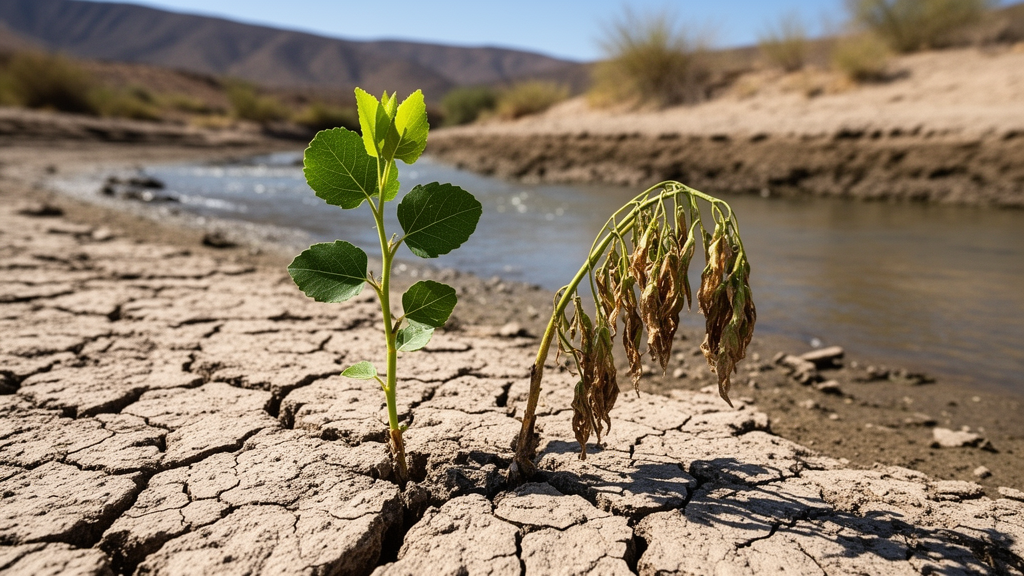
Heat and Drought Threaten Germination of Two Endangered Mexican Poplars

Heat and Drought Threaten Germination of Two Endangered Mexican Poplars

65
SHARES
587
VIEWS
Share on FacebookShare on Twitter
ADVERTISEMENT

Seeds of the Mexican poplars Populus luziarum and P. primaveralepensis germinated less successfully as temperatures rose and water availability declined in a controlled laboratory experiment. The study examined two restricted-range species, each with fewer than 250 mature individuals occupying less than 100 km².

Researchers collected mature catkins in October 2021 from at least 10 trees of each species along La Virgen and La Lobera streams in Jalisco, Mexico. They extracted 3,000 seeds per species and stored them in sealed glass bottles at 4 °C to reduce viability loss. The experiment tested 1,500 seeds per species.

Seeds were incubated at 24, 28 and 32 °C under five water potentials: 0, –0.07, –0.15, –0.3 and –0.6 megapascals. Each treatment included five replicates of 20 seeds in Petri dishes lined with cotton and moistened with 5 millilitres of the assigned solution. Polyethylene glycol solutions simulated increasingly dry soil conditions, while sealed dishes and a 12-hour photoperiod standardized incubation.

Germination was defined as radicle emergence and recorded hourly for 48 hours, although no additional germination occurred after 24 hours. Statistical analyses found effects of temperature, water potential and their interaction on germination percentage for both species. Under fully hydrated conditions at 24 °C, germination reached 90% for P. luziarum and 94% for P. primaveralepensis.

For P. primaveralepensis, germination was between 81% and 94% at 24 and 28 °C under water potentials from 0 to –0.15 MPa. At 32 °C, however, germination was significantly lower than at 24 and 28 °C specifically under the –0.15, –0.3 and –0.6 MPa treatments; the reduction did not apply across the full range of water potentials. The lowest value, 23%, occurred at –0.6 MPa and 32 °C.

Severe water stress produced average germination of 29% for P. luziarum at –0.6 MPa regardless of temperature. The species began germinating at the seventh hour under water potentials of 0 to –0.3 MPa and at the ninth hour at –0.6 MPa, independently of temperature. Water potential significantly affected its minimum germination time, whereas temperature did not.

For P. primaveralepensis, both temperature and water potential affected minimum germination time. Germination began within 1.44 hours at 0 and –0.07 MPa and took 3.08 hours at –0.6 MPa. Mean germination rate also responded to temperature, water potential and their interaction in both species.

The fastest mean rates occurred at 28 °C and 0 MPa: 0.0959 ± 0.001 hours⁻¹ for P. luziarum and 0.177 ± 0.009 hours⁻¹ for P. primavera lepensis. The experiment did not follow seedling establishment, survival, reproduction or population trajectories in the field. It therefore measured responses to controlled germination conditions and cannot establish that hotter, drier conditions will cause population declines.

The authors identify seedling development and survival under different water and heat stresses as priorities for future research. Their results indicate that projected warming and reduced moisture could negatively affect seed germination for these two Mexican poplars, although the laboratory experiment did not test field recruitment or reproduce the full effects of climate change.

Subject of Research: Effects of temperature and water potential on germination in two restricted-range Mexican Populus species

Article Title: High temperatures and drought affect the germination of Populus luziarum and P. primaveralepensis , endangered species from the Neotropical region of Mexico

Article References: Jacobo-Pereira, C., Huerta-Martínez, F. M., Flores, J., Razo-Leon, A. E., & Muñoz-Urias, A. (2025). High temperatures and drought affect the germination of Populus luziarum and P. primaveralepensis, endangered species from the Neotropical region of Mexico. Neotropical Biology and Conservation, 20(3), 191-203. https://doi.org/10.3897/neotropical.20.e155025

Image Credits: AI Generated

DOI: 10.3897/neotropical.20.e155025

Keywords: Populus luziarum, Populus primaveralepensis, seed germination, drought stress, high temperatures, riparian ecosystems, Mexican poplars, Jalisco, laboratory experiment, High, temperatures, drought

Cite Scienmag News

Drew Townsend. (October 21, 2026). Controlled study finds heat and drought reduce germination in two restricted-range Mexican poplars. Scienmag. https://scienmag.com/controlled-study-finds-heat-and-drought-reduce-germination-in-two-restricted-range-mexican-poplars/


Drew Townsend. "Controlled study finds heat and drought reduce germination in two restricted-range Mexican poplars." Scienmag, 21 October 2026, https://scienmag.com/controlled-study-finds-heat-and-drought-reduce-germination-in-two-restricted-range-mexican-poplars/. Accessed 21 October 2026.

Drew Townsend. "Controlled study finds heat and drought reduce germination in two restricted-range Mexican poplars." Scienmag. October 21, 2026. https://scienmag.com/controlled-study-finds-heat-and-drought-reduce-germination-in-two-restricted-range-mexican-poplars/

Tags: climate change implications for endemic Mexican treesconservation challenges for restricted-range plant speciescontrolled experiments on tree seed germinationdroughtdrought stresseffects of temperature and water potential on seed viabilityenvironmental stress factors affecting Mexican poplarshighhigh temperaturesimpact of heat and drought on restricted-range tree speciesJaliscolaboratory experimentlaboratory study of Populus luziarum and P. primaveralepensisMexican poplar seed germination under climate stressMexican poplarsPopulus luziarumPopulus primaveralepensisriparian ecosystemsseed germinationseed germination responses to drought conditionsseed germination thresholds inseed viability preservation techniquestemperatures
Share26Tweet16
Previous Post

AI and flexible investment model lifts simulated wastewater biorefinery value

Next Post

Captive grasshoppers show cross-subfamily male-male mating attempt

Related Posts

Young Erbil residents describe emotion suppression shaped by digital and cultural pressures
Psychology & Psychiatry

Young Erbil residents describe emotion suppression shaped by digital and cultural pressures

October 21, 2026
Fungal Family Tree Rebuilt From Thousands of Beetle Symbiont Sequences
Biology

Curated multi-marker analysis resolves fungal phylogeny and ecological patterns in two ophiostomatoid orders

October 21, 2026
Grasshopper Males of Different Subfamilies Caught in Same-Sex Mating Attempt in Kazakhstan
Biology

Captive grasshoppers show cross-subfamily male-male mating attempt

October 21, 2026
AI and flexible investment model lifts simulated wastewater biorefinery value
Earth Science

AI and flexible investment model lifts simulated wastewater biorefinery value

October 21, 2026
Male Crickets Prefer Females Who Offer No Fertility Advantage
Science News

Field study finds no fertility or sire-count advantage for male-like chemical profiles in two field cricket species

October 21, 2026
Mediterranean Lifestyle and Diet Linked to Cardiovascular Odds in Older Adults
Science News

Mediterranean Lifestyle and Diet Linked to Cardiovascular Odds in Older Adults

October 21, 2026
Next Post
Grasshopper Males of Different Subfamilies Caught in Same-Sex Mating Attempt in Kazakhstan

Captive grasshoppers show cross-subfamily male-male mating attempt

  • Mothers who receive childcare support from maternal grandparents show more optimized

    Mothers who receive childcare support from maternal grandparents show more parental warmth, finds NTU Singapore study

    27656 shares
    Share 11059 Tweet 6912
  • University of Seville Breaks 120-Year-Old Mystery, Revises a Key Einstein Concept

    1061 shares
    Share 424 Tweet 265
  • Bee body mass, pathogens and local climate influence heat tolerance

    682 shares
    Share 273 Tweet 171
  • Researchers record first-ever images and data of a shark experiencing a boat strike

    546 shares
    Share 218 Tweet 137
  • Groundbreaking Clinical Trial Reveals Lubiprostone Enhances Kidney Function

    531 shares
    Share 212 Tweet 133
Science

Embark on a thrilling journey of discovery with Scienmag.com—your ultimate source for cutting-edge breakthroughs. Immerse yourself in a world where curiosity knows no limits and tomorrow’s possibilities become today’s reality!

RECENT NEWS

  • Young Erbil residents describe emotion suppression shaped by digital and cultural pressures
  • Curated multi-marker analysis resolves fungal phylogeny and ecological patterns in two ophiostomatoid orders
  • Captive grasshoppers show cross-subfamily male-male mating attempt
  • Controlled study finds heat and drought reduce germination in two restricted-range Mexican poplars

Categories

  • Agriculture
  • Anthropology
  • Archaeology
  • Athmospheric
  • Biology
  • Biotechnology
  • Blog
  • Bussines
  • Cancer
  • Chemistry
  • Climate
  • Earth Science
  • Editorial Policy
  • Marine
  • Mathematics
  • Medicine
  • Pediatry
  • Policy
  • Psychology & Psychiatry
  • Science Education
  • Science News
  • Social Science
  • Space
  • Technology and Engineering

Subscribe to Blog via Email

Enter your email address to subscribe to this blog and receive notifications of new posts by email.

Join 5,150 other subscribers

© 2025 Scienmag - Science Magazine

Welcome Back!

Login to your account below

Forgotten Password?

Retrieve your password

Please enter your username or email address to reset your password.

Log In
No Result
View All Result
  • HOME
  • SCIENCE NEWS
  • CONTACT US

© 2025 Scienmag - Science Magazine

Discover more from Science

Subscribe now to keep reading and get access to the full archive.

Continue reading