

Wednesday, October 21, 2026
Science
No Result
View All Result
  • Login
  • HOME
  • SCIENCE NEWS
  • CONTACT US
  • HOME
  • SCIENCE NEWS
  • CONTACT US
No Result
View All Result
Scienmag
No Result
View All Result
Home Science News Cancer

Review outlines chemotherapy-related fatigue in breast cancer patients at high altitude

October 21, 2026
in Cancer
Nathaniel Bowman
By Nathaniel Bowman Scienmag Editorial Profile - Precision Oncology
Reading Time: 2 mins read
0
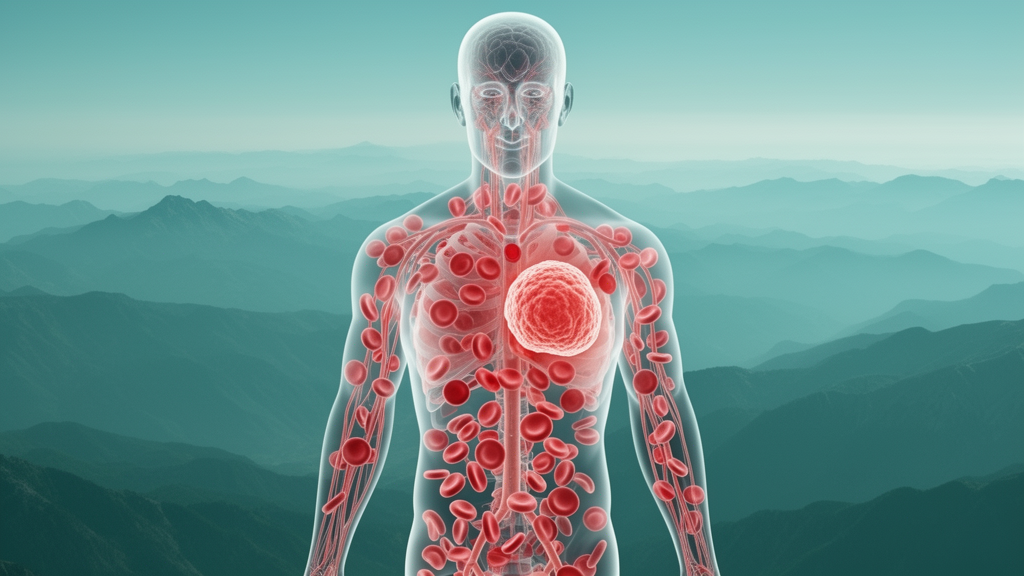
Why Altitude May Make Chemotherapy Fatigue Worse for Breast Cancer Patients

Why Altitude May Make Chemotherapy Fatigue Worse for Breast Cancer Patients

65
SHARES
587
VIEWS
Share on FacebookShare on Twitter
ADVERTISEMENT

A review reports that chemotherapy-related fatigue affects an estimated 30–60% of breast cancer patients during treatment, with some experiencing persistent fatigue that can affect quality of life and prognosis. The article focuses on breast cancer patients in high-altitude regions, where hypoxia, low atmospheric pressure and temperature changes may contribute to the burden of fatigue. The evidence available here is limited to the review’s abstract, so its full methods, search strategy and detailed findings cannot be assessed.

The review describes chemotherapy-related fatigue as a multifactorial problem involving chronic inflammation, immune dysregulation, neuroendocrine abnormalities and mitochondrial dysfunction. According to the abstract, inflammation and immune readjustment are identified as primary factors, while high-altitude hypoxia may add to these processes. These mechanisms are presented as contributing factors rather than as results from a new clinical study, and the abstract does not provide study-specific estimates of how high altitude alters fatigue risk or severity.

For nonpharmacological management, the abstract reports evidence that physical activity, cognitive behavioral therapy and mindfulness have been effective in controlling fatigue. It also states that evidence for pharmacological treatment remains inconclusive. The authors emphasize that reversible factors, including anemia and sleep disorders, should be managed. This wording reflects the review’s summary of existing management evidence and does not establish that any intervention is effective specifically for patients living at high altitude.

The review calls for further research into chemotherapy-related fatigue mechanisms in elevated areas and for customized treatments intended to improve patients’ quality of life. That proposal is not a demonstrated outcome: the available evidence describes a review rather than a trial of altitude-specific treatment. The principal limitation is that only abstract-level information was supplied, preventing verification of the included studies, their populations, outcome measures, synthesis methods and certainty of conclusions. The review was published in Supportive Care in Cancer as Volume 34, article 903, on 28 August 2026.

Subject of Research: A review of chemotherapy-related fatigue mechanisms and management in breast cancer patients living at high altitude

Article Title: Recent advances in understanding chemotherapy-induced fatigue in BC patients residing in high-altitude regions: a review

Article References: Wu, T., Li, J., Zhao, F., & Liu, Z. (2026). Recent advances in understanding chemotherapy-induced fatigue in BC patients residing in high-altitude regions: a review. Supportive Care in Cancer, 34(9), Article 903. https://doi.org/10.1007/s00520-026-11151-6

Image Credits: AI Generated

DOI: 10.1007/s00520-026-11151-6

Keywords: breast cancer, chemotherapy-related fatigue, high altitude, hypoxia, inflammation, immune dysregulation, quality of life, nonpharmacological care, supportive care, Recent, advances, understanding

Cite Scienmag News

Nathaniel Bowman. (October 21, 2026). Review outlines chemotherapy-related fatigue in breast cancer patients at high altitude. Scienmag. https://scienmag.com/review-outlines-chemotherapy-related-fatigue-in-breast-cancer-patients-at-high-altitude/


Nathaniel Bowman. "Review outlines chemotherapy-related fatigue in breast cancer patients at high altitude." Scienmag, 21 October 2026, https://scienmag.com/review-outlines-chemotherapy-related-fatigue-in-breast-cancer-patients-at-high-altitude/. Accessed 21 October 2026.

Nathaniel Bowman. "Review outlines chemotherapy-related fatigue in breast cancer patients at high altitude." Scienmag. October 21, 2026. https://scienmag.com/review-outlines-chemotherapy-related-fatigue-in-breast-cancer-patients-at-high-altitude/

Tags: advancesanemia and sleep disorders in chemotherapy-related fatiguebreast cancerchallenges of managing fatiguechemotherapy-related fatigueChemotherapy-related fatigue in breast cancer patientseffects of high altitude on cancer treatment outcomeshigh altitudehigh-altitude effects on cancer treatmenthypoxiahypoxia and fatigue in cancer patientsimmune dysregulationinflammationinflammation and immune dysregulation in cancer-related fatiguemindfulness-based interventions for cancer patientsmitochondrial dysfunction in cancer-related fatigueneuroendocrine abnormalities in chemotherapy fatiguenonpharmacological carenonpharmacological management of chemotherapy fatiguephysical activity and cognitive behavioral therapy for cancer fatigueQuality of LifeRecentsupportive careunderstanding
Share26Tweet16
Previous Post

Adversarial domain adaptation for false-positive reduction in hospital-to-robotic echocardiographic screening under limited target-domain data

Next Post

Oncologic diagnoses linked to 72-hour pediatric emergency care returns in single-center cohort

Related Posts

Study finds no excess suicide mortality among thyroid cancer survivors
Cancer

Study finds no excess suicide mortality among thyroid cancer survivors

October 21, 2026
Retrospective blood protein models predict outcomes in 38 HPV16 cancer patients
Cancer

Retrospective blood protein models predict outcomes in 38 HPV16 cancer patients

October 21, 2026
Research report: Protein acylation in cancer: from regulatory networks to precision therapeutics
Cancer

Research report: Protein acylation in cancer: from regulatory networks to precision therapeutics

October 21, 2026
Research report: Patient characteristics and the safety of stent placement for malignant vena cava syndrome in Japan: a nationwide analysis
Cancer

Research report: Patient characteristics and the safety of stent placement for malignant vena cava syndrome in Japan: a nationwide analysis

October 21, 2026
Brazilian cancer biobank targets precision prevention for diverse population
Cancer

Brazilian cancer biobank targets precision prevention for diverse population

October 21, 2026
Dana-Farber to Present Phase 3 Lung Cancer Data at ESMO
Cancer

Dana-Farber to Present Phase 3 Lung Cancer Data at ESMO

October 21, 2026
Next Post
Why Children With Cancer Are More Likely to Return to High-Priority Emergency Care Within 72 Hours

Oncologic diagnoses linked to 72-hour pediatric emergency care returns in single-center cohort

  • Mothers who receive childcare support from maternal grandparents show more optimized

    Mothers who receive childcare support from maternal grandparents show more parental warmth, finds NTU Singapore study

    27656 shares
    Share 11059 Tweet 6912
  • University of Seville Breaks 120-Year-Old Mystery, Revises a Key Einstein Concept

    1061 shares
    Share 424 Tweet 265
  • Bee body mass, pathogens and local climate influence heat tolerance

    682 shares
    Share 273 Tweet 171
  • Researchers record first-ever images and data of a shark experiencing a boat strike

    546 shares
    Share 218 Tweet 137
  • Groundbreaking Clinical Trial Reveals Lubiprostone Enhances Kidney Function

    531 shares
    Share 212 Tweet 133
Science

Embark on a thrilling journey of discovery with Scienmag.com—your ultimate source for cutting-edge breakthroughs. Immerse yourself in a world where curiosity knows no limits and tomorrow’s possibilities become today’s reality!

RECENT NEWS

  • Oncologic diagnoses linked to 72-hour pediatric emergency care returns in single-center cohort
  • Review outlines chemotherapy-related fatigue in breast cancer patients at high altitude
  • Adversarial domain adaptation for false-positive reduction in hospital-to-robotic echocardiographic screening under limited target-domain data
  • Sorbitol-nitrate pyrolysis as a method for phase composition control of bismuth oxides and composites based thereon

Categories

  • Agriculture
  • Anthropology
  • Archaeology
  • Athmospheric
  • Biology
  • Biotechnology
  • Blog
  • Bussines
  • Cancer
  • Chemistry
  • Climate
  • Earth Science
  • Editorial Policy
  • Marine
  • Mathematics
  • Medicine
  • Pediatry
  • Policy
  • Psychology & Psychiatry
  • Science Education
  • Science News
  • Social Science
  • Space
  • Technology and Engineering

Subscribe to Blog via Email

Enter your email address to subscribe to this blog and receive notifications of new posts by email.

Join 5,150 other subscribers

© 2025 Scienmag - Science Magazine

Welcome Back!

Login to your account below

Forgotten Password?

Retrieve your password

Please enter your username or email address to reset your password.

Log In
No Result
View All Result
  • HOME
  • SCIENCE NEWS
  • CONTACT US

© 2025 Scienmag - Science Magazine

Discover more from Science

Subscribe now to keep reading and get access to the full archive.

Continue reading