

Wednesday, October 21, 2026
Science
No Result
View All Result
  • Login
  • HOME
  • SCIENCE NEWS
  • CONTACT US
  • HOME
  • SCIENCE NEWS
  • CONTACT US
No Result
View All Result
Scienmag
No Result
View All Result
Home Science News Medicine

Controlled lab study improves diatom recovery in forensic testing

October 21, 2026
in Medicine
Ophelia Keating
By Ophelia Keating Scienmag Editorial Profile - Health Services Research
Reading Time: 2 mins read
0
Controlled lab study improves diatom recovery in forensic testing

Controlled lab study improves diatom recovery in forensic testing

65
SHARES
587
VIEWS
Share on FacebookShare on Twitter
ADVERTISEMENT

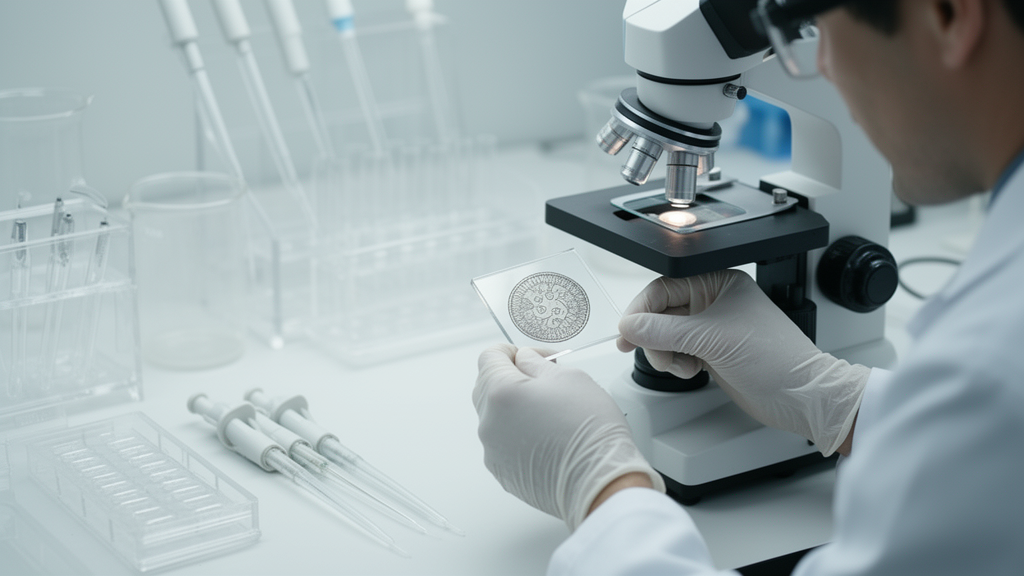
A controlled laboratory study found that a selected combination of digestion, centrifugation and washing conditions improved the recovery and preservation of diatom assemblages in materials used for forensic testing. Experiments involving pooled natural water samples and human lung tissue showed that the optimized workflow increased diatom recovery from 16.45% to 41.00% for acid digestion and from 80.87% to 84.42% for enzymatic digestion, while maintaining assemblage composition comparable to that of the reference water samples.

The research examined routine parameters that had received limited attention despite being involved in nearly all diatom-testing methods. Investigators evaluated digestion temperature and duration, centrifugation force and duration, washing frequency, and the volume of residual pellet retained after each centrifugation. Their aim was to determine how these routine variations affect the number of diatoms recovered and the integrity of the recovered assemblage, both of which matter for the standardization of forensic diatom testing used in drowning diagnosis and site inference.

The study used controlled spiking experiments and assessed procedural performance through diatom recovery rates and four assemblage-based indicators: Bray–Curtis dissimilarity, Jaccard similarity, Spearman’s rank correlation and replicate dispersion. Together, these measures evaluated how closely processed assemblages resembled reference samples and how consistently replicate results were dispersed, rather than relying only on the total number of diatoms recovered.

The best-performing combination tested consisted of heating at no more than 80 °C for no more than 60 minutes, centrifugation at 3,000 rpm, equivalent to 1,313×g, for five minutes, and one washing cycle with 500 µL retained after centrifugation. Under these conditions, acid digestion yielded a recovery rate of 41.00%, compared with 16.45% under the comparison procedure. Enzymatic digestion began at a higher recovery rate of 80.87% and increased to 84.42%. The optimized extraction workflow also maintained assemblage composition at levels comparable to the reference water samples.

These findings indicate that digestion method alone does not determine the material available for forensic analysis; details such as heating, centrifugation, washing and residual volume can also affect recovery and assemblage preservation. The authors therefore propose that routine laboratory parameters be incorporated into standardization efforts for forensic diatom testing. The results remain bounded by the study’s controlled scope, which included pooled natural water samples and human lung tissue rather than the full range of samples encountered in routine forensic investigations, and the supplied report does not establish performance across every case or sample type.

Subject of Research: Effects of routine laboratory parameters on diatom recovery and assemblage preservation in forensic testing

Article Title: Effects of routine laboratory parameter variations on diatom preservation: Implications for the standardization of forensic diatom testing

Article References: Qiu, H., Yu, L., Yin, M., Zhao, Y., Zhou, L., He, X., Huang, P., & Zhang, J. (2026). Effects of routine laboratory parameter variations on diatom preservation: Implications for the standardization of forensic diatom testing. International Journal of Legal Medicine. https://doi.org/10.1007/s00414-026-04052-0

Image Credits: AI Generated

DOI: 10.1007/s00414-026-04052-0

Keywords: forensic diatom testing, diatom recovery, acid digestion, enzymatic digestion, sample preservation, centrifugation, laboratory standardization, drowning diagnosis, assemblage composition, controlled laboratory study, Effects, routine

Cite Scienmag News

Ophelia Keating. (October 21, 2026). Controlled lab study improves diatom recovery in forensic testing. Scienmag. https://scienmag.com/controlled-lab-study-improves-diatom-recovery-in-forensic-testing/

Ophelia Keating. "Controlled lab study improves diatom recovery in forensic testing." Scienmag, 21 October 2026, https://scienmag.com/controlled-lab-study-improves-diatom-recovery-in-forensic-testing/. Accessed 21 October 2026.

Ophelia Keating. "Controlled lab study improves diatom recovery in forensic testing." Scienmag. October 21, 2026. https://scienmag.com/controlled-lab-study-improves-diatom-recovery-in-forensic-testing/


Tags: acid digestionassemblage compositioncentrifugationcontrolled laboratory studies in forensic microbiologycontrolled laboratory studydiatom recoveryDiatom recovery in forensic testingdrowning diagnosisEffectseffects of laboratory parameters on diatom identificationenhancement of diatomenzymatic digestionevaluation of diatom assemblage similarity metricsforensic diatom analysis methodsforensic diatom testingforensic drowning diagnosis techniquesimpact of digestion and centrifugation on diatom preservationimprovement of diatom recovery rates in forensic samplesinfluence of washing and centrifugation conditions on diatom integritylaboratory standardizationoptimization of diatom extraction protocolsRoutinesample preservationstandardized procedures for diatom assemblage analysis
Share26Tweet16
Previous Post

PEG and nanotubes improve lithium vanadium phosphate cathode performance

Next Post

German trial protocol tests interprofessional outpatient care for older adults

Related Posts

German trial protocol tests interprofessional outpatient care for older adults
Medicine

German trial protocol tests interprofessional outpatient care for older adults

October 21, 2026
Meta-analysis estimates 6.2% infant HIV prevalence in Ethiopia
Medicine

Meta-analysis estimates 6.2% infant HIV prevalence in Ethiopia

October 21, 2026
Stem-cell craniofacial therapy shows similar early patient-reported outcomes
Medicine

Stem-cell craniofacial therapy shows similar early patient-reported outcomes

October 21, 2026
Chimeric RNAs produce immune proteins that tune inflammation
Medicine

Chimeric RNAs produce immune proteins that tune inflammation

October 21, 2026
Research report: Work-time arrangements, career progression, and job satisfaction among physicians in Germany: a cross-sectional survey
Medicine

Research report: Work-time arrangements, career progression, and job satisfaction among physicians in Germany: a cross-sectional survey

October 21, 2026
Delphi Study Builds Nurse Employee Assistance Evaluation Framework
Medicine

Delphi Study Builds Nurse Employee Assistance Evaluation Framework

October 21, 2026
Next Post
German trial protocol tests interprofessional outpatient care for older adults

German trial protocol tests interprofessional outpatient care for older adults

  • Mothers who receive childcare support from maternal grandparents show more optimized

    Mothers who receive childcare support from maternal grandparents show more parental warmth, finds NTU Singapore study

    27656 shares
    Share 11059 Tweet 6912
  • University of Seville Breaks 120-Year-Old Mystery, Revises a Key Einstein Concept

    1061 shares
    Share 424 Tweet 265
  • Bee body mass, pathogens and local climate influence heat tolerance

    682 shares
    Share 273 Tweet 171
  • Researchers record first-ever images and data of a shark experiencing a boat strike

    546 shares
    Share 218 Tweet 137
  • Groundbreaking Clinical Trial Reveals Lubiprostone Enhances Kidney Function

    531 shares
    Share 212 Tweet 133
Science

Embark on a thrilling journey of discovery with Scienmag.com—your ultimate source for cutting-edge breakthroughs. Immerse yourself in a world where curiosity knows no limits and tomorrow’s possibilities become today’s reality!

RECENT NEWS

  • German trial protocol tests interprofessional outpatient care for older adults
  • Controlled lab study improves diatom recovery in forensic testing
  • PEG and nanotubes improve lithium vanadium phosphate cathode performance
  • Meta-analysis estimates 6.2% infant HIV prevalence in Ethiopia

Categories

  • Agriculture
  • Anthropology
  • Archaeology
  • Athmospheric
  • Biology
  • Biotechnology
  • Blog
  • Bussines
  • Cancer
  • Chemistry
  • Climate
  • Earth Science
  • Editorial Policy
  • Marine
  • Mathematics
  • Medicine
  • Pediatry
  • Policy
  • Psychology & Psychiatry
  • Science Education
  • Science News
  • Social Science
  • Space
  • Technology and Engineering

Subscribe to Blog via Email

Enter your email address to subscribe to this blog and receive notifications of new posts by email.

Join 5,150 other subscribers

© 2025 Scienmag - Science Magazine

Welcome Back!

Login to your account below

Forgotten Password?

Retrieve your password

Please enter your username or email address to reset your password.

Log In
No Result
View All Result
  • HOME
  • SCIENCE NEWS
  • CONTACT US

© 2025 Scienmag - Science Magazine

Discover more from Science

Subscribe now to keep reading and get access to the full archive.

Continue reading