


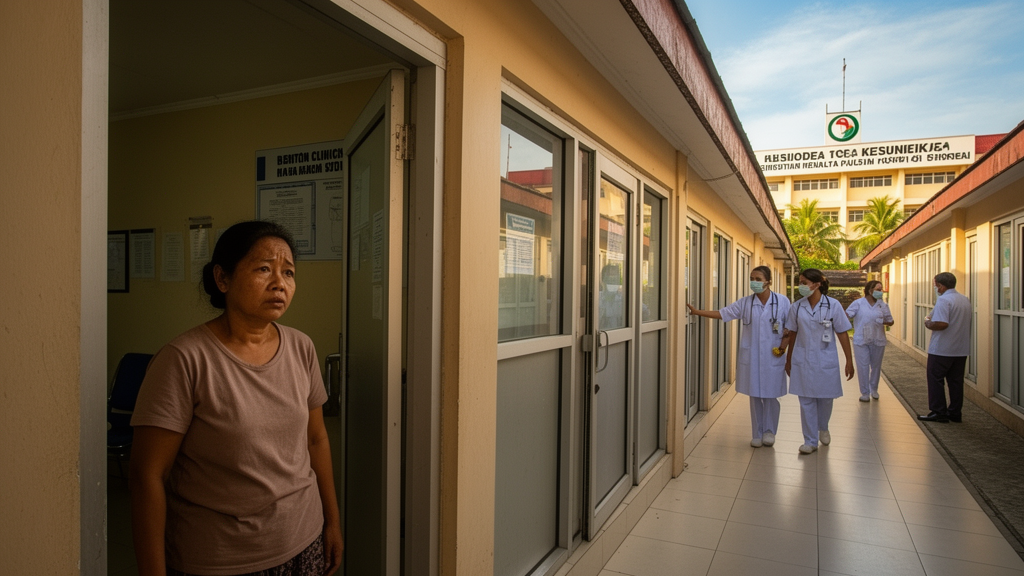
Indonesia’s tiered mental health referral system faces interconnected obstacles that can disrupt access, treatment continuity and follow-up across hospitals, according to a qualitative study involving 23 pharmacists, psychiatrists and nurses. Participants identified complex insurance and administrative requirements, intermittent shortages of psychotropic medicines, inadequate infrastructure, geographic distance, staff shortages and limited capacity for counselling and follow-up. They also described patient- and family-level barriers, including financial constraints, poor understanding of medicines and adherence, weak social support, denial of illness, stigma and difficulties sustaining long-term medication use.
The researchers conducted individual, semi-structured interviews with 23 health professionals working in psychiatric and general hospitals classified as Types A through D across multiple Indonesian provinces. The interviews were audio-recorded, transcribed verbatim and analysed using inductive thematic analysis with support from NVivo 12. Because the study was qualitative and focused on professional perspectives, its findings describe the barriers reported by participants rather than estimating their prevalence or measuring their effects on clinical outcomes.
At the healthcare-system and access level, participants said that complicated insurance and administrative procedures interfered with referral pathways. Intermittent stock-outs of psychotropic medicines and inadequate infrastructure added further strain, while distance between services could make continuity of care more difficult. These constraints did not operate independently. Complex requirements and unreliable resources increased the operational burden on health professionals, potentially leaving less time and capacity for coordinated care. The study therefore portrays weaknesses in administration, medicine supply and infrastructure as mutually reinforcing features of the referral system rather than isolated problems.
Health professionals also reported staff shortages and limited time for counselling, comprehensive assessment and follow-up. These constraints were closely connected to the wider system: administrative complexity and service gaps created additional work, while reduced opportunities for counselling and follow-up could make it harder for patients and families to maintain treatment. Medication supply problems, limited professional capacity and travel distance consequently affected different stages of care, from initial referral to continued treatment. The evidence does not show which barrier was most influential or whether particular reforms would improve outcomes, but it shows how delays and gaps at one level can amplify difficulties at another.
Participants additionally described barriers perceived at the level of patients, families and caregivers. Financial limitations and incomplete understanding of the role of medicines and the need for adherence could delay help-seeking and weaken retention in care. Denial of illness, stigma and inadequate family or social support also contributed, while some patients experienced difficulty adhering to medication over the long term. The researchers’ analysis suggests that these factors interact with the pressures facing health services: constrained counselling capacity can make it harder to address confusion, adherence concerns and family support needs, while families facing financial or social difficulties may have greater difficulty navigating a complicated referral pathway.
The study’s authors concluded that improving mental health service provision in Indonesia would require changes across several parts of the system. Their recommendations include simplifying insurance and referral procedures, strengthening the reliability of psychotropic medicine supply chains, improving service infrastructure and investing in workforce capacity. Community- and family-oriented approaches were also proposed to support treatment adherence and reduce stigma. The findings come from a relatively small qualitative sample and represent the experiences of health professionals rather than a nationwide survey of patients, families or service users. As a result, the study cannot establish the scale or direction of change in service performance. It instead provides a detailed account of how organizational, workforce and social barriers can combine to interrupt mental health care in Indonesia’s tiered referral system.
Subject of Research: Barriers to mental health service delivery in Indonesia’s tiered referral system
Article Title: Interconnected barriers to mental health service provision in Indonesia’s tiered referral system: a qualitative study
Article References: Febrianti, Y., Widayanti, A. W., Puspitasari, I., & Setiyawati, D. (2026). Interconnected barriers to mental health service provision in Indonesia’s tiered referral system: a qualitative study. BMC Health Services Research. https://doi.org/10.1186/s12913-026-15571-2
Image Credits: AI Generated
DOI: 10.1186/s12913-026-15571-2
Keywords: mental health services, Indonesia, tiered referral system, health-care access, psychotropic medicines, health workforce, treatment adherence, stigma, qualitative research, Interconnected, barriers, mental
Cite Scienmag News
Glenn Wilkins. (October 21, 2026). Interconnected barriers hinder Indonesia’s tiered mental health referrals. Scienmag. https://scienmag.com/interconnected-barriers-hinder-indonesias-tiered-mental-health-referrals/
Glenn Wilkins. "Interconnected barriers hinder Indonesia’s tiered mental health referrals." Scienmag, 21 October 2026, https://scienmag.com/interconnected-barriers-hinder-indonesias-tiered-mental-health-referrals/. Accessed 21 October 2026.
Glenn Wilkins. "Interconnected barriers hinder Indonesia’s tiered mental health referrals." Scienmag. October 21, 2026. https://scienmag.com/interconnected-barriers-hinder-indonesias-tiered-mental-health-referrals/


