

Tuesday, October 20, 2026
Science
No Result
View All Result
  • Login
  • HOME
  • SCIENCE NEWS
  • CONTACT US
  • HOME
  • SCIENCE NEWS
  • CONTACT US
No Result
View All Result
Scienmag
No Result
View All Result
Home Science News Technology and Engineering

Higher manganese content strengthens microalgae inhibition in Cu–Mn steel coatings

October 20, 2026
in Technology and Engineering
Denise Maddox
By Denise Maddox Scienmag Editorial Profile - Mechanical Engineering
Reading Time: 3 mins read
0
Higher manganese content strengthens microalgae inhibition in Cu–Mn steel coatings

Higher manganese content strengthens microalgae inhibition in Cu–Mn steel coatings

65
SHARES
587
VIEWS
Share on FacebookShare on Twitter
ADVERTISEMENT

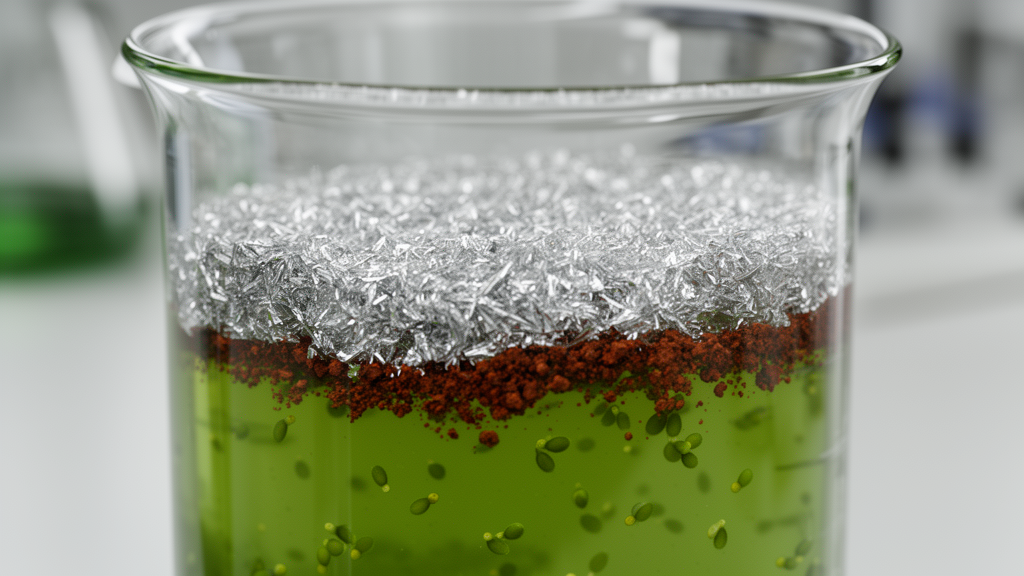
Laser-cladded copper–manganese coatings on Q235 steel maintained low microalgal coverage after 180 days in algae-containing seawater, with the coating containing 20 wt% manganese recording the lowest attachment rates: 5.81% for Chlorella and 2.52% for diatoms. The findings indicate that raising manganese content from 10 wt% to 20 wt% helped preserve the coatings’ long-term antifouling performance by promoting the release of copper ions and increasing oxidative stress in attached microalgae.

The study examined how manganese content affected the corrosion behavior of three Cu–Mn cladding layers fabricated on Q235 steel. The layers contained 10 wt%, 15 wt%, or 20 wt% Mn and were immersed for 180 days in seawater containing Chlorella or diatoms. All three compositions showed low microalgal coverage, but the 20 wt% Mn layer produced the smallest values in both test solutions. The researchers attributed the improved inhibition to the structure of the corrosion-product layer rather than to a difference in the duration of testing: increasing manganese content promoted internal-stress accumulation, which accelerated cracking and flaking of corrosion products.

This mechanism matters because copper alloys are widely used in ships and marine engineering equipment for their antifouling performance. Over long service periods, however, the corrosion-product layer can become denser while microalgae attach to the surface, progressively degrading the material’s ability to resist fouling. In the tested Cu–Mn coatings, the corrosion products instead formed a loose, heavily cracked layer that could readily flake away. As manganese content increased, that layer became more susceptible to cracking and detachment, supporting continued copper-ion release into the surrounding water.

The released copper ions were linked to elevated intracellular reactive oxygen species, or ROS, in attached microalgae. The study’s proposed mechanism is that manganese-induced changes in the corrosion layer enhance copper-ion release, increasing oxidative stress within the organisms. The authors reported that the higher ROS level was associated with extensive apoptosis and effective suppression of attachment. The results therefore connect an observable coating behavior—cracking and flaking of corrosion products—with the biological endpoint of reduced microalgal colonization, although the supplied abstract does not provide the numerical copper-release or ROS measurements needed to quantify those intermediate steps.

The experiment provides a laboratory comparison of manganese content under a defined 180-day immersion period, rather than a direct field trial of coated marine structures. Its findings nevertheless offer a technically focused route for improving durable antifouling metal surfaces: adding more manganese to the Cu–Mn cladding changed the evolving corrosion layer in a way associated with stronger inhibition of two types of microalgae. The 20 wt% Mn composition achieved the best reported outcome, with coverage remaining at only 5.81% for Chlorella and 2.52% for diatoms, but the evidence does not establish how the coatings would perform across other organisms, exposure conditions or real-world service environments.

Subject of Research: Effects of manganese content on corrosion and microalgal attachment in Cu–Mn laser-cladded Q235 steel.

Article Title: Cu–Mn laser cladding layers on Q235 steel: the influence of Mn content on corrosion behavior and long-term microalgal inhibitory performance

Article References: Li, J., Liu, Z., Liu, J., Zeng, G., Wang, X., Yang, H., Ning, H., & Li, M. (2026). Cu–Mn laser cladding layers on Q235 steel: the influence of Mn content on corrosion behavior and long-term microalgal inhibitory performance. Journal of Materials Science, 61(41), 32076-32106. https://doi.org/10.1007/s10853-026-13665-0

Image Credits: AI Generated

DOI: 10.1007/s10853-026-13665-0

Keywords: Cu–Mn coatings, laser cladding, manganese, Q235 steel, marine antifouling, corrosion products, microalgae, Chlorella, diatoms, reactive oxygen species, laser, cladding

Cite Scienmag News

Denise Maddox. (October 20, 2026). Higher manganese content strengthens microalgae inhibition in Cu–Mn steel coatings. Scienmag. https://scienmag.com/higher-manganese-content-strengthens-microalgae-inhibition-in-cu-mn-steel-coatings/


Denise Maddox. "Higher manganese content strengthens microalgae inhibition in Cu–Mn steel coatings." Scienmag, 20 October 2026, https://scienmag.com/higher-manganese-content-strengthens-microalgae-inhibition-in-cu-mn-steel-coatings/. Accessed 20 October 2026.

Denise Maddox. "Higher manganese content strengthens microalgae inhibition in Cu–Mn steel coatings." Scienmag. October 20, 2026. https://scienmag.com/higher-manganese-content-strengthens-microalgae-inhibition-in-cu-mn-steel-coatings/

Tags: Chlorellacladdingcopper ion release in marine environmentscopper-manganese alloy corrosion behaviorcorrosion productscorrosion-product layer structureCu–Mn coatingsdiatomslaserlaser cladded Cu–Mn coatingslaser claddinglong-term seawater corrosion resistancemanganesemanganese content impact on antifouling performancemarine antifoulingmarine antifouling coatingsmarine engineering anti-fouling materialsMicroalgaemicroalgae inhibition in seawatermicroalgal attachment reduction strategiesoxidation stress in marine coatingsQ235 steelreactive oxygen speciesseawater microfouling prevention
Share26Tweet16
Previous Post

CAP 2023–2027 provides freshwater restoration opportunities but falls short in implementation

Next Post

Cytogenetic study of 30 Hunan farm frogs finds 26 chromosomes and four submetacentric pairs

Related Posts

Big Brains, Small Ranges: What Makes Nigeria’s Mammals Most Likely to Vanish
Biology

Phylogenetic analysis links Nigerian mammal extinction risk to brain mass, range and generation time

October 20, 2026
Software framework targets partially fault-tolerant quantum simulation
Technology and Engineering

Software framework targets partially fault-tolerant quantum simulation

October 20, 2026
Rare Parasitoid Wasp Genus Recorded in China for the First Time
Biology

Single-specimen taxonomic study records Hemiglyptinus flavus in Hainan, China

October 20, 2026
Smart nanoplatforms aim to make sepsis therapy responsive to disease stage
Technology and Engineering

Smart nanoplatforms aim to make sepsis therapy responsive to disease stage

October 20, 2026
Mystery zoo millipede finally identified after decades on display
Biology

Morphology and DNA barcodes identify two captive-bred zoo millipedes as Spiropoeus fischeri

October 20, 2026
ANN-guided cooling cuts model-predicted EV battery thermal risk
Technology and Engineering

ANN-guided cooling cuts model-predicted EV battery thermal risk

October 20, 2026
Next Post
Spiny Frog Chromosomes Reveal Hidden Karyotype Clues Across China

Cytogenetic study of 30 Hunan farm frogs finds 26 chromosomes and four submetacentric pairs

  • Mothers who receive childcare support from maternal grandparents show more optimized

    Mothers who receive childcare support from maternal grandparents show more parental warmth, finds NTU Singapore study

    27656 shares
    Share 11059 Tweet 6912
  • University of Seville Breaks 120-Year-Old Mystery, Revises a Key Einstein Concept

    1061 shares
    Share 424 Tweet 265
  • Bee body mass, pathogens and local climate influence heat tolerance

    682 shares
    Share 273 Tweet 171
  • Researchers record first-ever images and data of a shark experiencing a boat strike

    546 shares
    Share 218 Tweet 137
  • Groundbreaking Clinical Trial Reveals Lubiprostone Enhances Kidney Function

    531 shares
    Share 212 Tweet 133
Science

Embark on a thrilling journey of discovery with Scienmag.com—your ultimate source for cutting-edge breakthroughs. Immerse yourself in a world where curiosity knows no limits and tomorrow’s possibilities become today’s reality!

RECENT NEWS

  • Morphological and mitochondrial evidence identifies new Leptobrachella frog from Guangxi
  • Phylogenetic analysis links Nigerian mammal extinction risk to brain mass, range and generation time
  • Morphological and phylogenetic study describes Elatostema weizhianum from Zhejiang, China
  • Cytogenetic study of 30 Hunan farm frogs finds 26 chromosomes and four submetacentric pairs

Categories

  • Agriculture
  • Anthropology
  • Archaeology
  • Athmospheric
  • Biology
  • Biotechnology
  • Blog
  • Bussines
  • Cancer
  • Chemistry
  • Climate
  • Earth Science
  • Editorial Policy
  • Marine
  • Mathematics
  • Medicine
  • Pediatry
  • Policy
  • Psychology & Psychiatry
  • Science Education
  • Science News
  • Social Science
  • Space
  • Technology and Engineering

Subscribe to Blog via Email

Enter your email address to subscribe to this blog and receive notifications of new posts by email.

Join 5,150 other subscribers

© 2025 Scienmag - Science Magazine

Welcome Back!

Login to your account below

Forgotten Password?

Retrieve your password

Please enter your username or email address to reset your password.

Log In
No Result
View All Result
  • HOME
  • SCIENCE NEWS
  • CONTACT US

© 2025 Scienmag - Science Magazine

Discover more from Science

Subscribe now to keep reading and get access to the full archive.

Continue reading