


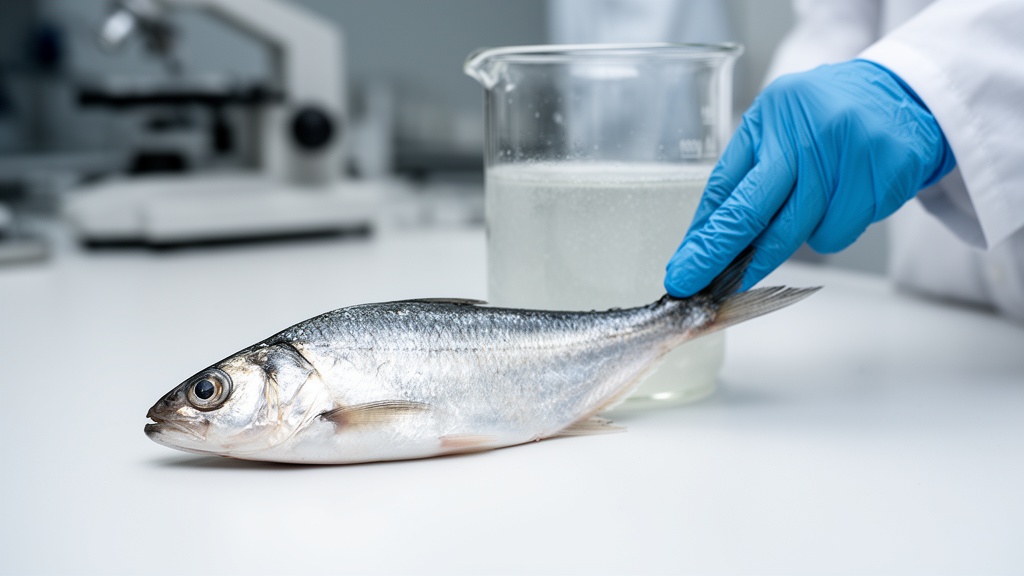
In a five-day replicated tank experiment, dead rainbow trout released significantly more total environmental DNA than live trout on two observation days, while the amount of DNA resistant to propidium monoazide treatment was higher in dead-fish treatments on three days. The researchers interpreted the PMA-resistant signal as a proxy for DNA associated with intact cells.
The animal study used live and dead rainbow trout (Oncorhynchus mykiss) as experimental subjects for eDNA production. Environmental DNA has supported biodiversity monitoring, but its use in population and landscape genetics remains underexplored because those applications require high-quality genetic information. The authors investigated whether intact fish cells in water could provide a source of DNA templates.
Total eDNA concentrations in the dead-fish treatments were 12.9 times those in the live-fish treatments on Day 2 and 7.4 times higher on Day 3. PMA-resistant eDNA was also significantly elevated in the dead-fish treatments: 29.3 times higher on Day 2, 31.3 times higher on Day 3 and 5.2 times higher on Day 5.
These measurements were made using PMA, a photoreactive intercalating dye that can enter cells with disrupted biological membranes and inhibit amplification of their DNA. The authors used the resistant signal to distinguish likely intact-cell eDNA from DNA associated with compromised cells within the total eDNA pool. Overall, the abstract reports that dead fish released greater amounts of both total and PMA-resistant eDNA than live fish. The findings are limited to the replicated tank experiment with one fish species, and the supplied abstract does not establish how broadly the pattern applies to other organisms or environments.
Subject of Research: Measurement of total and intact-cell environmental DNA released by live and dead rainbow trout in replicated tanks
Article Title: Live and dead fish shed different amounts of intact cells: Implications for advancing environmental DNA methodologies
Article References: Yamanaka, H., Hirohara, T., Hoy, M. S., Chase, D. M., Duda, J. J., & Ostberg, C. O. (2026). Live and dead fish shed different amounts of intact cells: Implications for advancing environmental DNA methodologies. Metabarcoding and Metagenomics, 10, Article e177451. https://doi.org/10.3897/mbmg.10.177451
Image Credits: AI Generated
Keywords: environmental DNA, rainbow trout, PMA treatment, intact cells, tank experiment, eDNA quantification, metabarcoding, environmental genetics, Live, dead, fish, shed
Cite Scienmag News
Juliet Wilcox. (October 20, 2026). Tank study finds dead rainbow trout release more total and PMA-resistant eDNA than live trout. Scienmag. https://scienmag.com/tank-study-finds-dead-rainbow-trout-release-more-total-and-pma-resistant-edna-than-live-trout/
Juliet Wilcox. "Tank study finds dead rainbow trout release more total and PMA-resistant eDNA than live trout." Scienmag, 20 October 2026, https://scienmag.com/tank-study-finds-dead-rainbow-trout-release-more-total-and-pma-resistant-edna-than-live-trout/. Accessed 20 October 2026.
Juliet Wilcox. "Tank study finds dead rainbow trout release more total and PMA-resistant eDNA than live trout." Scienmag. October 20, 2026. https://scienmag.com/tank-study-finds-dead-rainbow-trout-release-more-total-and-pma-resistant-edna-than-live-trout/


