


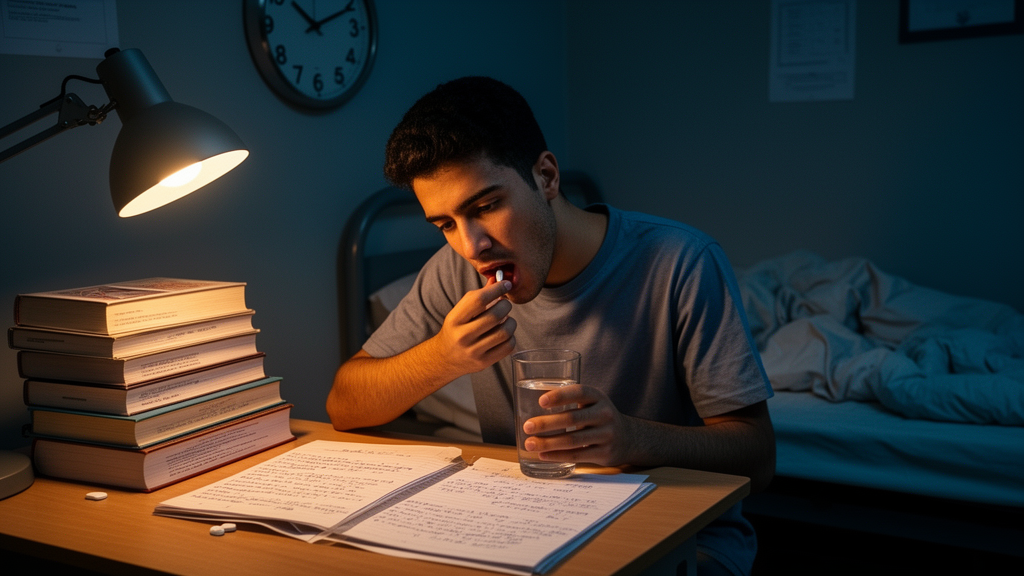
A cross-sectional online survey of 647 medical university students across Syria found that 13.6% reported using exogenous melatonin, according to the study abstract. Use was concentrated around examination periods: 81.8% of users agreed or strongly agreed that they took melatonin during examinations, while 45.4% agreed or strongly agreed that they used it outside examination periods. Among users, insomnia was the primary stated reason for use, cited by 71.6%, followed by improving sleep quality at 21.6%.
The survey was completed during the 2025–2026 academic year using an Arabic, self-administered questionnaire. It collected information about students’ sociodemographic characteristics, lifestyle behaviors, melatonin-use patterns, perceived effectiveness and safety, and adverse effects. Investigators used descriptive statistics and chi-square tests, analyzed with SPSS version 27.0, to examine the prevalence and patterns of use and factors associated with melatonin consumption. The research was observational and cross-sectional rather than an intervention designed to test sleep or clinical outcomes.
Most users perceived melatonin favorably. A total of 87.5% reported improved sleep quality, and 73.9% considered melatonin safe. Nearly 40% of users, however, reported at least one adverse effect. Among users who reported adverse effects, headache was most frequently cited, at 60%, followed by dreams or nightmares at 40%, mood changes at 31.4%, and dizziness at 25.7%. The study abstract states that most reported adverse effects were mild to moderate. These figures represent students’ reported experiences and perceptions; they do not establish melatonin’s clinical effectiveness or safety beyond this surveyed population.
Two factors were significantly associated with melatonin use in the chi-square analyses. Working outside the university was associated with use at χ² = 8.607 and p = 0.003, while frequent electronic-device use before sleep was associated with use at χ² = 17.734 and p < 0.001. The analysis does not show that either factor caused melatonin use. The authors concluded that use was commonly reported in connection with examination-related insomnia and academic stress, while also noting that a considerable share of users experienced adverse effects. Because the available report is an abstract, the full survey instruments, sampling details, and additional analyses cannot be assessed here. The online, self-reported, cross-sectional design also limits conclusions about causality, clinical outcomes, and generalization beyond the participating Syrian medical students.
Subject of Research: Prevalence, use patterns, perceived safety, and self-reported adverse effects of exogenous melatonin among Syrian medical university students
Article Title: Exogenous melatonin use, perceived safety, and adverse effects among medical university students in Syria: a cross-sectional study
Article References: Jarrouge, G., Darwich, K., Gergi, M., Hanna, S. F., Salaheddin, A., Haidar, S., Al Wannous, K., & Affan, R. (2026). Exogenous melatonin use, perceived safety, and adverse effects among medical university students in Syria: a cross-sectional study. BMC Medical Education. https://doi.org/10.1186/s12909-026-10482-6
Image Credits: AI Generated
DOI: 10.1186/s12909-026-10482-6
Keywords: melatonin, medical students, Syria, cross-sectional survey, sleep disturbance, examination stress, self-medication, adverse effects, sleep quality, student health, Exogenous, perceived
Cite Scienmag News
Courtney Benton. (October 20, 2026). Melatonin use reported by 13.6% of Syrian medical students in cross-sectional survey. Scienmag. https://scienmag.com/melatonin-use-reported-by-13-6-of-syrian-medical-students-in-cross-sectional-survey/
Courtney Benton. "Melatonin use reported by 13.6% of Syrian medical students in cross-sectional survey." Scienmag, 20 October 2026, https://scienmag.com/melatonin-use-reported-by-13-6-of-syrian-medical-students-in-cross-sectional-survey/. Accessed 20 October 2026.
Courtney Benton. "Melatonin use reported by 13.6% of Syrian medical students in cross-sectional survey." Scienmag. October 20, 2026. https://scienmag.com/melatonin-use-reported-by-13-6-of-syrian-medical-students-in-cross-sectional-survey/


