

Tuesday, October 20, 2026
Science
No Result
View All Result
  • Login
  • HOME
  • SCIENCE NEWS
  • CONTACT US
  • HOME
  • SCIENCE NEWS
  • CONTACT US
No Result
View All Result
Scienmag
No Result
View All Result
Home Science News Medicine

Secondary analysis finds no clear correlation between indoor pollutants and blood pressure in 4,854 Japanese toddlers

October 20, 2026
in Medicine
Russell Cooper
By Russell Cooper Scienmag Editorial Profile - Environmental Pollution
Reading Time: 2 mins read
0
Household Air Pollution Shows Little Link to Toddler Blood Pressure in Landmark Japanese Study

Household Air Pollution Shows Little Link to Toddler Blood Pressure in Landmark Japanese Study

65
SHARES
587
VIEWS
Share on FacebookShare on Twitter
ADVERTISEMENT

A secondary analysis of 4,854 children in the Japan Environment and Children’s Study found no clear correlations between measured indoor particulate matter, volatile organic compounds and blood pressure at the paired ages examined. According to the abstract, the absolute values of all correlation coefficients were below 0.2. Multiple regression analyses nevertheless identified associations involving specific pollutants, but the authors reported that all such effect sizes were small.

The researchers analyzed data from the Japanese national birth cohort. Indoor concentrations of particulate matter and volatile organic compounds were measured when participants were 1.5 and three years old, while blood pressure was assessed at ages two and four. The analysis used scatter plots to inspect possible relationships and calculated correlation coefficients. Exposure at 1.5 years was compared with blood pressure at age two, and exposure at three years was compared with blood pressure at age four.

The abstract states that m,p-xylene measured at 1.5 years was associated with higher blood pressure at age two. It also reports lower blood pressure in association with PM2.5, p-dichlorobenzene and toluene, without assigning all three pollutants to a specific age-two or age-four outcome in the supplied summary. Benzene measured at age three was associated with lower blood pressure at age four. These regression findings were characterized as small associations and were not presented as evidence that the pollutants caused changes in blood pressure.

Based on the reported results, the authors concluded that exposure to particulate matter and volatile organic compounds at levels sufficient to affect blood pressure in early childhood is unlikely to occur during normal household life. They also cautioned that this conclusion does not eliminate the long-term risks of hypertension or the potential for other diseases. The available report is limited to the study’s abstract and describes an early-access BMC Pediatrics article published on 10 September 2026 that was subject to further edits. Details of measurement procedures, statistical models, participant selection, missing data and the study’s fuller limitations therefore cannot be assessed from the supplied text.

Subject of Research: Associations between indoor air pollutants and blood pressure in toddlers in the Japan Environment and Children’s Study

Article Title: Indoor air pollutants and blood pressure in toddlers: data from the Japan environment and children’s study

Article References: Kanamori, K., Suzuki, T., Ota, C., The Japan Environment, Children’s Study Group, Kamijima, M., Yamazaki, S., Fukami, M., Kishi, R., Koichi, K., Mori, C., Ito, S., Shinohara, R., Inadera, H., Nakayama, T., Kawasaki, R., Takeshima, Y., Kageyama, S., Suganuma, N., Ohga, S., & Katoh, T. (2026). Indoor air pollutants and blood pressure in toddlers: data from the Japan environment and children’s study. BMC Pediatrics. https://doi.org/10.1186/s12887-026-07676-8

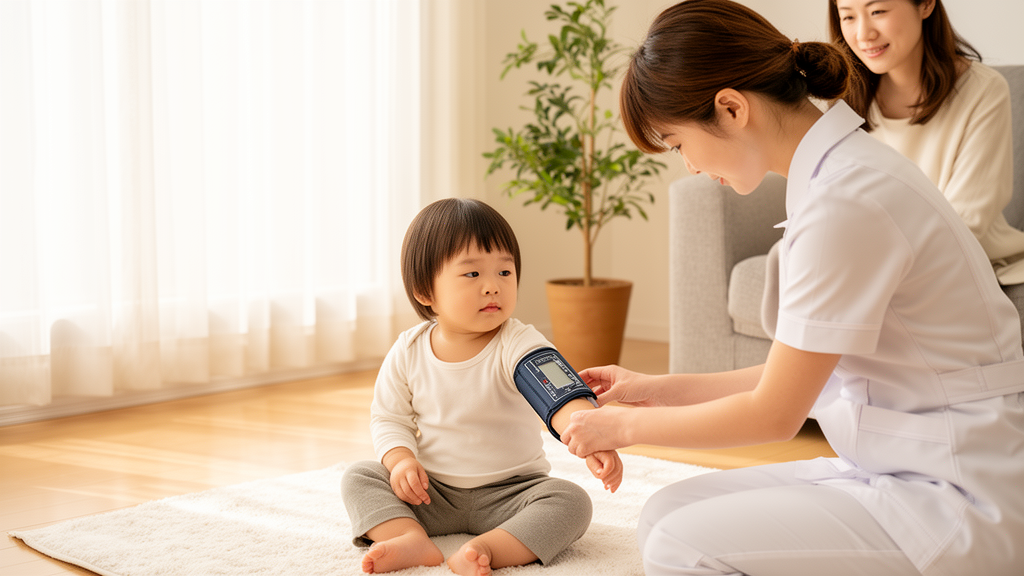
Image Credits: AI Generated

DOI: 10.1186/s12887-026-07676-8

Keywords: indoor air pollution, toddler blood pressure, Japan birth cohort, particulate matter, volatile organic compounds, PM2.5, m,p-xylene, benzene, hypertension risk, JECS, Indoor, pollutants

Cite Scienmag News

Russell Cooper. (October 20, 2026). Secondary analysis finds no clear correlation between indoor pollutants and blood pressure in 4,854 Japanese toddlers. Scienmag. https://scienmag.com/secondary-analysis-finds-no-clear-correlation-between-indoor-pollutants-and-blood-pressure-in-4854-japanese-toddlers/


Russell Cooper. "Secondary analysis finds no clear correlation between indoor pollutants and blood pressure in 4,854 Japanese toddlers." Scienmag, 20 October 2026, https://scienmag.com/secondary-analysis-finds-no-clear-correlation-between-indoor-pollutants-and-blood-pressure-in-4854-japanese-toddlers/. Accessed 20 October 2026.

Russell Cooper. "Secondary analysis finds no clear correlation between indoor pollutants and blood pressure in 4,854 Japanese toddlers." Scienmag. October 20, 2026. https://scienmag.com/secondary-analysis-finds-no-clear-correlation-between-indoor-pollutants-and-blood-pressure-in-4854-japanese-toddlers/

Tags: benzenechildren’s blood pressureearly childhood exposureenvironmental risk factors for childrenhealth outcomes in toddlershypertension riskindoorindoor air pollutionindoor pollution and cardiovascular riskJapan birth cohortJapanese children cohortJECSm,p-xyleneparticulate matterparticulate matter health effectspediatric environmental healthPM2.5pollutant exposure assessmentpollutantssecondary data analysistoddler blood pressurevolatile organic compoundsvolatile organic compounds impact
Share26Tweet16
Previous Post

Mexican cross-sectional study links greater delivery of recommended care with higher perceived quality among adults with uncontrolled hypertension

Next Post

Parents’ gatekeeper role in screen time control: a phenomenological study of parents’ lives

Related Posts

Uncontrolled Hypertension in Mexico: Patients Receive Only a Fraction of Recommended Care
Medicine

Mexican cross-sectional study links greater delivery of recommended care with higher perceived quality among adults with uncontrolled hypertension

October 20, 2026
Hidden Symptom Patterns Predict Whether Older Tuberculosis Patients Stay on Their Medication
Medicine

Multicenter observational cohort links symptom subtypes with medication adherence in older pulmonary tuberculosis patients

October 20, 2026
Zinc-Boosted Wheat Holds Promise but Awareness Gaps Stall Its Reach in Pakistan
Medicine

Cross-sectional Sindh survey finds low awareness and limited use of fortified and biofortified wheat flour

October 20, 2026
When Teenagers Suddenly Stop Hearing: Stress-Driven Hearing Loss Masquerades as Deafness
Medicine

Functional hearing loss in 21 adolescents: case series reports inconsistent hearing tests and favorable recovery

October 20, 2026
The Cacophony Problem: ICU Nurses Are Drowning in Alarms They Cannot Trust
Medicine

Alarm fatigue severity and associated factors among intensive care unit nurses: a systematic review and meta-analysis

October 20, 2026
When Care Waits, Patients Improvise: How Saudis Manage Chronic Pain Alone — and What They Want From Virtual Physiotherapy
Medicine

Research report: Patients’ experiences of musculoskeletal pain self-management and perspectives on virtual physiotherapy in Saudi Arabia: a reflexive thematic analysis

October 20, 2026
Next Post
Modern-Day Gatekeepers: How Parents Wage the Daily Battle Over Children’s Screen Time

Parents’ gatekeeper role in screen time control: a phenomenological study of parents’ lives

  • Mothers who receive childcare support from maternal grandparents show more optimized

    Mothers who receive childcare support from maternal grandparents show more parental warmth, finds NTU Singapore study

    27656 shares
    Share 11059 Tweet 6912
  • University of Seville Breaks 120-Year-Old Mystery, Revises a Key Einstein Concept

    1061 shares
    Share 424 Tweet 265
  • Bee body mass, pathogens and local climate influence heat tolerance

    682 shares
    Share 273 Tweet 171
  • Researchers record first-ever images and data of a shark experiencing a boat strike

    546 shares
    Share 218 Tweet 137
  • Groundbreaking Clinical Trial Reveals Lubiprostone Enhances Kidney Function

    531 shares
    Share 212 Tweet 133
Science

Embark on a thrilling journey of discovery with Scienmag.com—your ultimate source for cutting-edge breakthroughs. Immerse yourself in a world where curiosity knows no limits and tomorrow’s possibilities become today’s reality!

RECENT NEWS

  • Parents’ gatekeeper role in screen time control: a phenomenological study of parents’ lives
  • Secondary analysis finds no clear correlation between indoor pollutants and blood pressure in 4,854 Japanese toddlers
  • Mexican cross-sectional study links greater delivery of recommended care with higher perceived quality among adults with uncontrolled hypertension
  • Multicenter observational cohort links symptom subtypes with medication adherence in older pulmonary tuberculosis patients

Categories

  • Agriculture
  • Anthropology
  • Archaeology
  • Athmospheric
  • Biology
  • Biotechnology
  • Blog
  • Bussines
  • Cancer
  • Chemistry
  • Climate
  • Earth Science
  • Editorial Policy
  • Marine
  • Mathematics
  • Medicine
  • Pediatry
  • Policy
  • Psychology & Psychiatry
  • Science Education
  • Science News
  • Social Science
  • Space
  • Technology and Engineering

Subscribe to Blog via Email

Enter your email address to subscribe to this blog and receive notifications of new posts by email.

Join 5,150 other subscribers

© 2025 Scienmag - Science Magazine

Welcome Back!

Login to your account below

Forgotten Password?

Retrieve your password

Please enter your username or email address to reset your password.

Log In
No Result
View All Result
  • HOME
  • SCIENCE NEWS
  • CONTACT US

© 2025 Scienmag - Science Magazine

Discover more from Science

Subscribe now to keep reading and get access to the full archive.

Continue reading