


A study of 21 tea plant accessions identified 242 CsOSCA genes, which were assigned to four orthogroups and showed a stable core of seven genes per accession alongside a variable accessory set. The researchers reported that this genomic variation was associated with varietal divergence, while purifying selection predominated across the gene family.
The study’s evolutionary analyses identified a small number of positive-selection sites in CsOSCA1 and weak codon usage bias. The authors also observed differing selection strategies among orthogroups. These findings characterize the composition and evolutionary patterns of the OSCA gene family in the sampled tea accessions; they do not establish whether the same patterns occur across the full range of cultivated tea.
Expression analysis found that CsOSCA1.1 was preferentially expressed in roots and increased in expression under polyethylene glycol stress. A proximal W-box fragment was reported to mediate this stress response, providing a candidate regulatory element associated with the observed expression change.
In a plant functional experiment, the researchers overexpressed tea CsOSCA1.1 in Arabidopsis. Plants carrying the construct showed enhanced tolerance to polyethylene glycol and sodium chloride compared with the experimental comparison, together with increased antioxidant enzyme activities and improved membrane integrity. These results support a role for CsOSCA1.1 in osmotic and salt-stress responses under the tested conditions, but the experiment did not demonstrate improved stress tolerance in tea crops themselves.
The available evidence is an abstract and an early-access version of a peer-reviewed BMC Plant Biology article that the publisher states remains subject to further edits. The reported conclusions are therefore bounded to the sampled tea accessions, the expression assays, and the Arabidopsis overexpression experiment described in the abstract.
Subject of Research: Genome-wide characterization and functional testing of the tea OSCA gene family
Article Title: Genome‑wide identification, evolutionary dynamics, and functional characterization of the CsOSCA gene family in tea plants
Article References: Wang, L., Liu, D., Sun, M., Jiao, X., Ruan, X., Wu, Q., & Wang, W. (2026). Genome‑wide identification, evolutionary dynamics, and functional characterization of the CsOSCA gene family in tea plants. BMC Plant Biology. https://doi.org/10.1186/s12870-026-09962-0
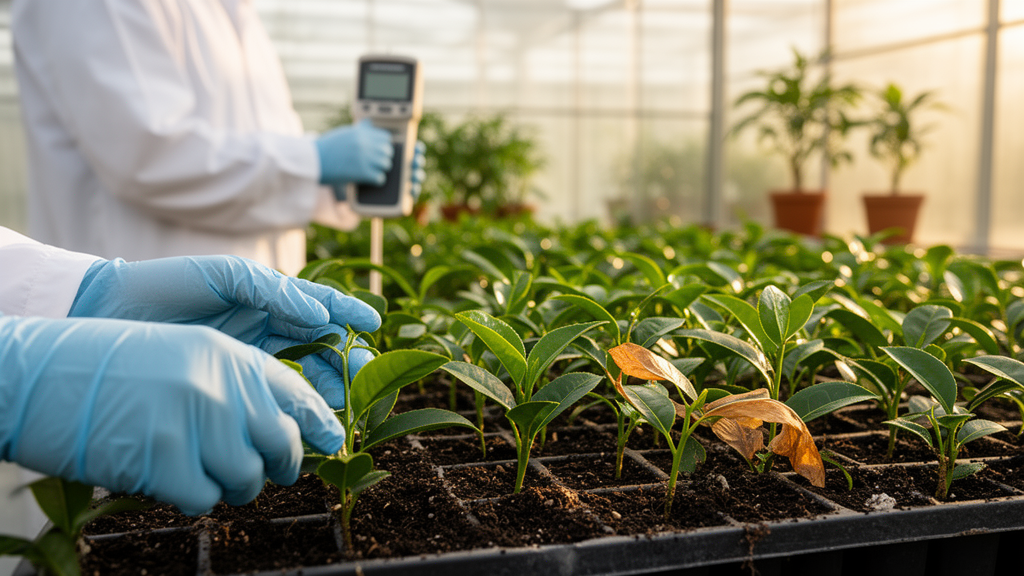
Image Credits: AI Generated
DOI: 10.1186/s12870-026-09962-0
Keywords: tea plant, CsOSCA1.1, OSCA gene family, osmotic stress, salt stress, gene family evolution, purifying selection, pangenome, gene expression, Arabidopsis, Genome, wide
Cite Scienmag News
Juliet Wilcox. (October 20, 2026). Tea OSCA gene family survey links CsOSCA1.1 to osmotic stress responses in Arabidopsis. Scienmag. https://scienmag.com/tea-osca-gene-family-survey-links-csosca1-1-to-osmotic-stress-responses-in-arabidopsis/
Juliet Wilcox. "Tea OSCA gene family survey links CsOSCA1.1 to osmotic stress responses in Arabidopsis." Scienmag, 20 October 2026, https://scienmag.com/tea-osca-gene-family-survey-links-csosca1-1-to-osmotic-stress-responses-in-arabidopsis/. Accessed 20 October 2026.
Juliet Wilcox. "Tea OSCA gene family survey links CsOSCA1.1 to osmotic stress responses in Arabidopsis." Scienmag. October 20, 2026. https://scienmag.com/tea-osca-gene-family-survey-links-csosca1-1-to-osmotic-stress-responses-in-arabidopsis/


