


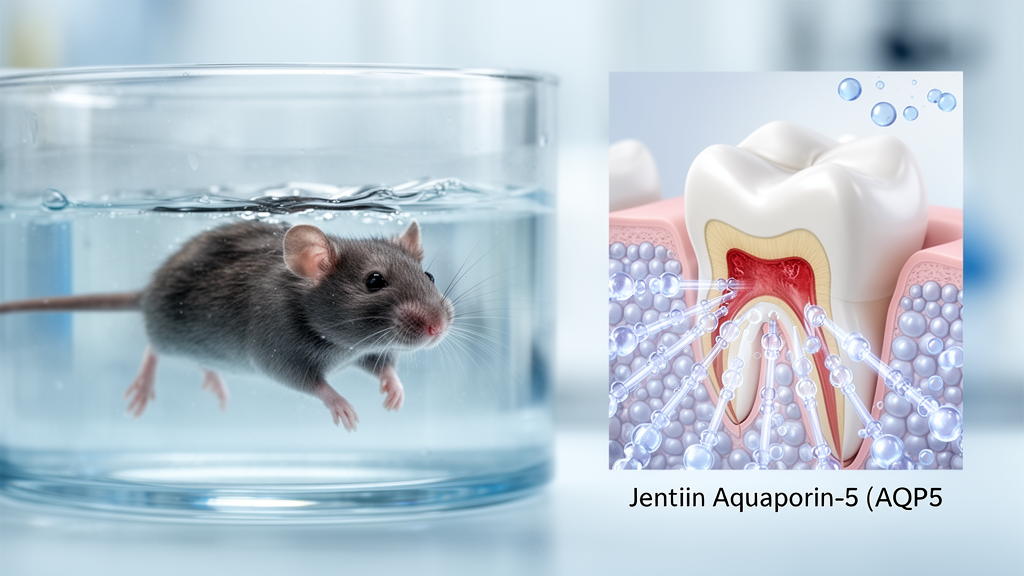
Dental tissue expression of the water-channel protein aquaporin-5, or AQP5, differed significantly between rats killed by drowning and controls exposed to freshwater, according to a prospective experimental study of 38 adult Wistar rats. The finding points to AQP5 as a potential supplementary forensic marker for drowning, particularly when decomposition has left investigators with skeletal remains. The researchers also tested cytochrome c, an apoptosis-related protein, but found no significant difference between drowning and control groups in any of the three tissues examined.
Drowning remains difficult to establish during forensic examinations, especially in advanced decomposition cases in which only skeletal material remains. Conventional approaches such as diatom analysis and macroscopic autopsy findings can lack sufficient specificity or reliability, while molecular markers investigated to date have not yet achieved the accuracy needed for routine forensic use. The new study therefore examined a dual-biomarker strategy in which AQP5 and cytochrome c concentrations were measured in lung, femoral bone and dental tissues from animals that died in two freshwater environments, Boračko and Jablaničko lakes.
After the animals were assigned to experimental drowning or non-drowning control groups, researchers collected postmortem samples of lung, femur and teeth. AQP5 and cytochrome c concentrations were quantified with commercially available enzyme-linked immunosorbent assay kits. The statistical analysis included a Shapiro–Wilk test and the Mann–Whitney U test, with statistical significance defined as p < 0.05. This design allowed the investigators to ask whether the two proteins were distributed differently in drowning cases than in controls and whether the pattern varied between tissues or freshwater locations.
AQP5 expression in dental tissue was the only result to show a statistically significant association with drowning status. Differences were detected in both freshwater environments, with p-values of 0.0184 and 0.0235. By contrast, AQP5 concentrations did not differ significantly between the groups in lung or bone tissue. Cytochrome c, abbreviated CYCS in the study, produced no significant group differences in lung, bone or dental tissue. Thus, the data do not support cytochrome c as a discriminator of drowning in this rat model, even when it is combined with AQP5 in the proposed biomarker approach.
The mechanism behind the dental signal was not established in the available report, and the study should not be interpreted as a diagnostic test for human deaths. Its subjects were laboratory rats rather than people, and exposure to freshwater in a control group is not equivalent to the complex circumstances surrounding a human drowning incident. The relatively small experimental cohort also limits the strength and generalizability of the result. AQP5 concentrations may reflect responses associated with aquatic exposure that the study design could not fully separate from the lethal drowning process itself.
Nevertheless, the findings identify teeth as a potentially useful sampling site in a forensic problem where usable lung and other soft-tissue evidence may be unavailable. If the association is confirmed in larger experimental cohorts and in human tissues, measuring AQP5 in dental material could potentially supplement established forensic methods rather than replace them. Until that validation occurs, the evidence supports describing dental AQP5 as a promising candidate marker, not a validated standalone biomarker. The negative cytochrome c results also show the value of testing proposed forensic markers across multiple tissues: one protein in the panel may carry a detectable signal even when another does not.
Subject of Research: Experimental assessment of aquaporin-5 and cytochrome c as forensic biomarkers of drowning in rats.
Article Title: Tissue expression of aquaporin-5 and cytochrome c as potential forensic biomarkers of drowning: Evidence from an experimental rat model
Article References: Dervišević, E., Osmanović, H., Katica, M., Bešić, A., Čelebičić, M., Goletić, T., Terzić, I., Šabić, E., Selmanagić, A., Spahović, H., Dervišević, M., Montanari, E., & Montana, A. (2026). Tissue expression of aquaporin-5 and cytochrome c as potential forensic biomarkers of drowning: Evidence from an experimental rat model. The Science of Nature, 113(6), Article 136. https://doi.org/10.1007/s00114-026-02187-z
Image Credits: AI Generated
DOI: 10.1007/s00114-026-02187-z
Keywords: drowning diagnosis, forensic pathology, aquaporin-5, cytochrome c, dental tissue, rat model, biomarkers, decomposition, freshwater exposure, Tissue, expression, cytochrome
Cite Scienmag News
Drew Townsend. (October 20, 2026). Aquaporin-5 in teeth shows promise as a drowning biomarker in rats. Scienmag. https://scienmag.com/aquaporin-5-in-teeth-shows-promise-as-a-drowning-biomarker-in-rats/
Drew Townsend. "Aquaporin-5 in teeth shows promise as a drowning biomarker in rats." Scienmag, 20 October 2026, https://scienmag.com/aquaporin-5-in-teeth-shows-promise-as-a-drowning-biomarker-in-rats/. Accessed 20 October 2026.
Drew Townsend. "Aquaporin-5 in teeth shows promise as a drowning biomarker in rats." Scienmag. October 20, 2026. https://scienmag.com/aquaporin-5-in-teeth-shows-promise-as-a-drowning-biomarker-in-rats/


