

Tuesday, October 20, 2026
Science
No Result
View All Result
  • Login
  • HOME
  • SCIENCE NEWS
  • CONTACT US
  • HOME
  • SCIENCE NEWS
  • CONTACT US
No Result
View All Result
Scienmag
No Result
View All Result
Home Science News Agriculture

Soybean seed pigmentation is associated with oil and lipid differences

October 20, 2026
in Agriculture
Alan Morgan
By Alan Morgan Scienmag Editorial Profile - Precision Agriculture
Reading Time: 2 mins read
0
Soybean seed pigmentation is associated with oil and lipid differences

Soybean seed pigmentation is associated with oil and lipid differences

65
SHARES
587
VIEWS
Share on FacebookShare on Twitter
ADVERTISEMENT

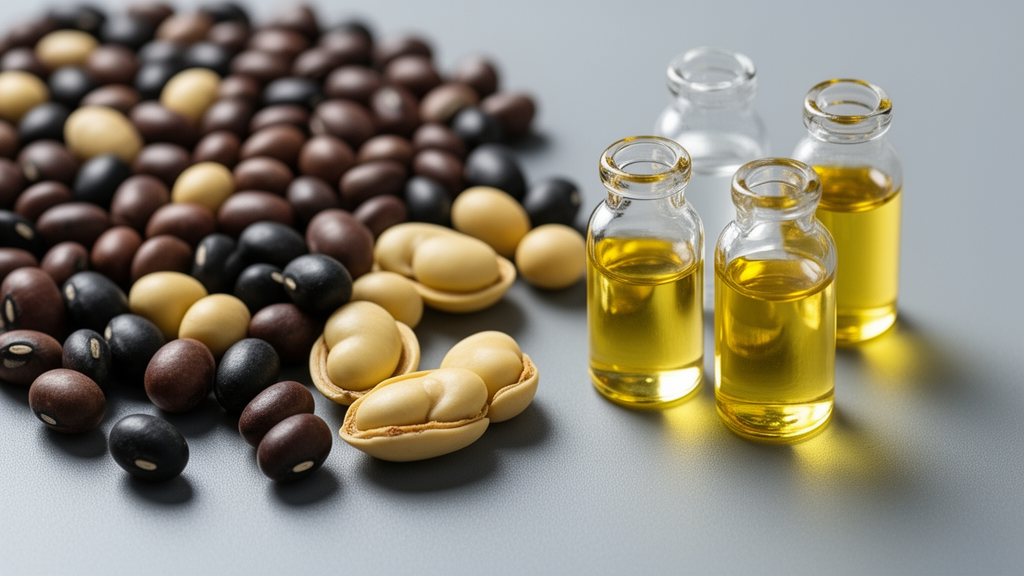
Soybean accessions with increasingly dark seed coats had lower oil content and distinct lipid profiles in a study that combined broad screening with quantitative lipidomics. Among 169 yellow, green, brown and black accessions, yellow seeds had the highest oil content and black seeds the lowest, revealing a negative association between seed coat pigmentation and oil content. The researchers also identified 38 differentially accumulated lipids between common yellow and black soybeans, with these compounds significantly enriched in the sphingolipid metabolism pathway.

The research, published in npj Science of Food, used Soxhlet extraction to measure oil in all 169 soybean accessions. The researchers then selected two representative accessions from each of the four seed color groups for metabolomic analysis and detailed quantitative lipidomic profiling. This design separated the large-scale assessment of oil content from the more intensive molecular comparison, which involved eight accessions. The broader screening established the overall association with pigmentation, while the selected accessions were used to characterize differences in metabolic pathways and individual lipid species.

Quantitative profiling identified 650 lipid species in the eight accessions, divided among five major lipid classes and 26 subclasses. HPLC quantification showed that total lipid content decreased progressively as seed coat pigmentation increased. The differences were mainly associated with changes in triglycerides, phosphatidylethanolamines, phosphatidylcholines and phosphatidylinositols. In the broader metabolomic analysis, lipid subclasses were consistently represented among significantly altered pathways across the four color groups. These measurements show that the observed differences in oil content were accompanied by shifts in the classes and subclasses of lipids present in the seeds.

The comparison between common yellow and black soybeans produced the most specific set of differential findings: 38 lipids accumulated differently between the two groups, and pathway analysis indicated significant enrichment in sphingolipid metabolism. The study therefore links visible variation in seed coat color with both total oil content and lipid composition. Its scope should be considered carefully, however. Oil content was measured across 169 accessions, but metabolomic and quantitative lipidomic analyses were confined to two representatives from each color group. The reported results are associations among seed color groups and lipid profiles; they do not establish that pigmentation causes the differences or directly demonstrate effects on human dietary outcomes.

Subject of Research: Association of soybean seed coat pigmentation with oil content and lipidomic profiles

Article Title: Quantitative lipidomics reveals differences in oil metabolism and nutritional profiles of soybeans with various seed coat colors

Article References: Zhao, Y., Zhao, S., Li, J., Tang, F., He, L., Li, X., Su, Y., Xu, H., Du, N., Chi, H., Cheng, B., Zhang, Z., Xu, M., Tang, X., Xiao, H., Yang, W., & Liu, W. (2026). Quantitative lipidomics reveals differences in oil metabolism and nutritional profiles of soybeans with various seed coat colors. npj Science of Food. https://doi.org/10.1038/s41538-026-01195-7

Image Credits: AI Generated

DOI: 10.1038/s41538-026-01195-7

Keywords: soybean, seed coat color, oil content, quantitative lipidomics, sphingolipid metabolism, triglycerides, phosphatidylcholines, metabolomics, food chemistry, crop diversity, Quantitative, lipidomics

Cite Scienmag News

Alan Morgan. (October 20, 2026). Soybean seed pigmentation is associated with oil and lipid differences. Scienmag. https://scienmag.com/soybean-seed-pigmentation-is-associated-with-oil-and-lipid-differences/

Alan Morgan. "Soybean seed pigmentation is associated with oil and lipid differences." Scienmag, 20 October 2026, https://scienmag.com/soybean-seed-pigmentation-is-associated-with-oil-and-lipid-differences/. Accessed 20 October 2026.

Alan Morgan. "Soybean seed pigmentation is associated with oil and lipid differences." Scienmag. October 20, 2026. https://scienmag.com/soybean-seed-pigmentation-is-associated-with-oil-and-lipid-differences/


Tags: broad screening and molecular analysis of soybean seedscrop diversityfood chemistryimpact of seed coat pigmentation on soybean lipid compositioninfluence of seed coat pigmentationlipid profile differences in yellow and black soybeanslipid species diversity in soybean seedslipidomicslipidomics analysis of soybean seedsMetabolomicsoil contentoil content variation among soybean seed colorsphosphatidylcholinesQuantitativequantitative lipid profiling in soybean accessionsquantitative lipidomicsrelationship between seed coat pigmentation and oil contentseed coat colorseed pigmentation and oil content in soybeanssoybeansoybean seed coat color and lipid compositionsphingolipid metabolismsphingolipid metabolism in soybeanstriglycerides
Share26Tweet16
Previous Post

Midwest soil carbon monitoring requires deeper sampling, study finds

Next Post

Extra Trees leads 13-model cyberbullying benchmark on English tweets

Related Posts

Postbiotics Gain Ground as Functional Foods, but Human Evidence Varies
Agriculture

Postbiotics Gain Ground as Functional Foods, but Human Evidence Varies

October 20, 2026
Research report: Spatiotemporal optimization of micro spray mist: effects on growth physiology in apple trees and comprehensive evaluation
Agriculture

Research report: Spatiotemporal optimization of micro spray mist: effects on growth physiology in apple trees and comprehensive evaluation

October 20, 2026
Cyanidin glycosides protect zebrafish brains in Alzheimer’s-like model
Agriculture

Cyanidin glycosides protect zebrafish brains in Alzheimer’s-like model

October 20, 2026
Bayesian workflow analyzes censored soybean R6 timing across CO₂, light and photoperiod treatments
Agriculture

Bayesian workflow analyzes censored soybean R6 timing across CO₂, light and photoperiod treatments

October 20, 2026
Resveratrol pretreatment accompanies fewer DBDPE-associated changes in female mice
Agriculture

Resveratrol pretreatment accompanies fewer DBDPE-associated changes in female mice

October 20, 2026
Comparative chloroplast genomics reveals codon usage and phylogeny in 16 Amorphophallus species
Agriculture

Comparative chloroplast genomics reveals codon usage and phylogeny in 16 Amorphophallus species

October 20, 2026
Next Post
Extra Trees leads 13-model cyberbullying benchmark on English tweets

Extra Trees leads 13-model cyberbullying benchmark on English tweets

  • Mothers who receive childcare support from maternal grandparents show more optimized

    Mothers who receive childcare support from maternal grandparents show more parental warmth, finds NTU Singapore study

    27656 shares
    Share 11059 Tweet 6912
  • University of Seville Breaks 120-Year-Old Mystery, Revises a Key Einstein Concept

    1061 shares
    Share 424 Tweet 265
  • Bee body mass, pathogens and local climate influence heat tolerance

    682 shares
    Share 273 Tweet 171
  • Researchers record first-ever images and data of a shark experiencing a boat strike

    546 shares
    Share 218 Tweet 137
  • Groundbreaking Clinical Trial Reveals Lubiprostone Enhances Kidney Function

    531 shares
    Share 212 Tweet 133
Science

Embark on a thrilling journey of discovery with Scienmag.com—your ultimate source for cutting-edge breakthroughs. Immerse yourself in a world where curiosity knows no limits and tomorrow’s possibilities become today’s reality!

RECENT NEWS

  • Lab study links neurokinin receptor blockers to reduced breast cancer cell viability
  • Coping strategies and mental wellbeing among TVET students: the moderating role of self-efficacy
  • Extra Trees leads 13-model cyberbullying benchmark on English tweets
  • Soybean seed pigmentation is associated with oil and lipid differences

Categories

  • Agriculture
  • Anthropology
  • Archaeology
  • Athmospheric
  • Biology
  • Biotechnology
  • Blog
  • Bussines
  • Cancer
  • Chemistry
  • Climate
  • Earth Science
  • Editorial Policy
  • Marine
  • Mathematics
  • Medicine
  • Pediatry
  • Policy
  • Psychology & Psychiatry
  • Science Education
  • Science News
  • Social Science
  • Space
  • Technology and Engineering

Subscribe to Blog via Email

Enter your email address to subscribe to this blog and receive notifications of new posts by email.

Join 5,150 other subscribers

© 2025 Scienmag - Science Magazine

Welcome Back!

Login to your account below

Forgotten Password?

Retrieve your password

Please enter your username or email address to reset your password.

Log In
No Result
View All Result
  • HOME
  • SCIENCE NEWS
  • CONTACT US

© 2025 Scienmag - Science Magazine

Discover more from Science

Subscribe now to keep reading and get access to the full archive.

Continue reading