

Tuesday, October 20, 2026
Science
No Result
View All Result
  • Login
  • HOME
  • SCIENCE NEWS
  • CONTACT US
  • HOME
  • SCIENCE NEWS
  • CONTACT US
No Result
View All Result
Scienmag
No Result
View All Result
Home Science News Medicine

Mechanistic Role of Layer 5-to-2/3 Recurrent Feedback in TMS-Evoked Motor Potentials

October 20, 2026
in Medicine
Ophelia Keating
By Ophelia Keating Scienmag Editorial Profile - Health Services Research
Reading Time: 2 mins read
0
Mechanistic Role of Layer 5-to-2/3 Recurrent Feedback in TMS-Evoked Motor Potentials

Mechanistic Role of Layer 5-to-2/3 Recurrent Feedback in TMS-Evoked Motor Potentials

65
SHARES
587
VIEWS
Share on FacebookShare on Twitter
ADVERTISEMENT

A personalized neural field theory model indicates that recurrent feedback from layer 5 to layers 2/3 of the motor cortex is a major regulator of the motor potentials evoked by transcranial magnetic stimulation. The study found that the model’s recurrent weighted inhibitory gain was especially important for reproducing short-interval intracortical inhibition and individual responses to theta-burst stimulation. This was a computational modeling study based on experimental input–output curves, not a clinical trial of treatment efficacy.

The researchers extended an established feedforward motor-cortex model by adding recurrent connections between the specified cortical layers. Synaptic coupling coefficients were derived through a bottom-up approach using microanatomical data and then calibrated against experimental input–output curves with particle swarm optimization. To personalize the model, they optimized three recurrent weighted gains: W_ev, W_iv and W_vv. The model was then used to simulate single-pulse input–output curves, paired-pulse protocols known as short-interval intracortical inhibition, intracortical facilitation and long-interval intracortical inhibition, as well as responses to intermittent and continuous theta-burst stimulation.

One central result was a sigmoidal, nonlinear relationship between TMS intensity and neuronal input. This differed from the linear relationship assumed in previous feedforward models. Recurrent weighted inhibitory gain, W_iv, was critical for generating realistic short-interval intracortical inhibition and was the dominant parameter used to personalize the model. With that parameter, the simulations successfully fit 13 of 18 individual intermittent theta-burst stimulation response profiles and 15 of 18 individual continuous theta-burst stimulation profiles.

The model also connected distinct paired-pulse responses to protocol-specific settings of the same recurrent microcircuit. Short-interval intracortical inhibition and facilitation emerged through different tuning of recurrent activity, while long-interval intracortical inhibition required greater suppression of recurrent excitation. The latter model result was consistent with GABAB mediation. The authors therefore present recurrent inhibitory feedback as a mechanism that helps organize TMS dynamics and may help account for differences among individuals in their responses to stimulation.

Generalization was assessed using an independent continuous theta-burst stimulation dataset that had not been used for the initial calibration. The personalized model produced robust fits on that dataset, supporting its ability to reproduce responses beyond the measurements used to tune it. The authors describe the framework as a mechanistically interpretable approach for linking clinical TMS metrics to specific motor-cortex circuits, with potential value for personalized neuromodulation. However, the reported evidence concerns model construction, calibration and computational validation; it does not demonstrate that the model improves patient outcomes or that its parameters can yet be used to select effective stimulation protocols.

Subject of Research: Personalized neural field modeling of recurrent motor-cortex feedback in TMS-evoked motor potentials

Article Title: Mechanistic Role of Layer 5-to-2/3 Recurrent Feedback in TMS-Evoked Motor Potentials

Article References: Mahmouie, S., Saviz, M., Baghdadi, G., & Towhidkhah, F. (2026). Mechanistic Role of Layer 5-to-2/3 Recurrent Feedback in TMS-Evoked Motor Potentials. Neuroinformatics, 24(4), Article 68. https://doi.org/10.1007/s12021-026-09818-w

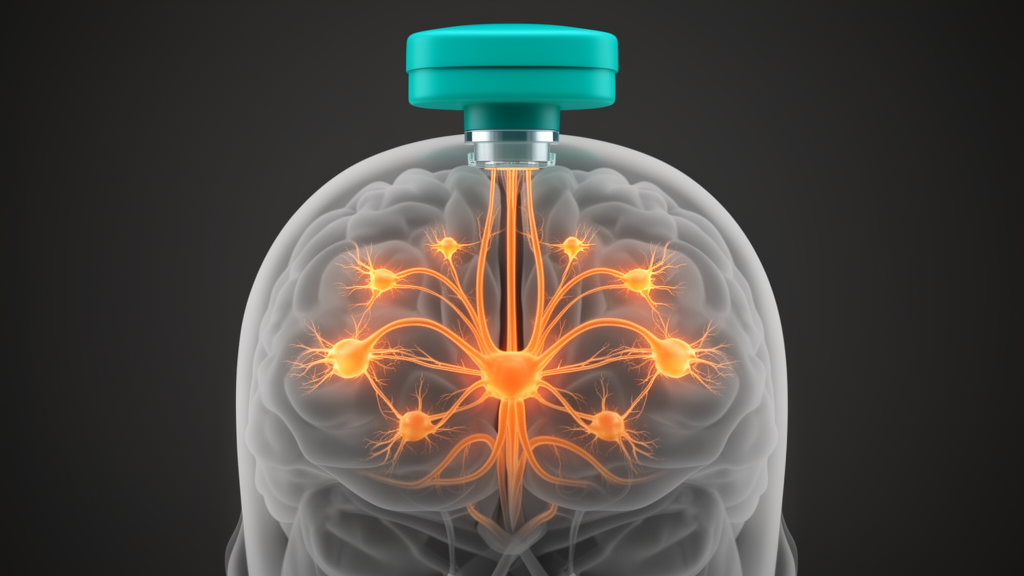
Image Credits: AI Generated

DOI: 10.1007/s12021-026-09818-w

Keywords: transcranial magnetic stimulation, motor cortex, neural field theory, recurrent feedback, cortical inhibition, theta-burst stimulation, paired-pulse protocols, inter-individual variability, neuromodulation, Mechanistic, Role, Layer

Cite Scienmag News

Ophelia Keating. (October 20, 2026). Mechanistic Role of Layer 5-to-2/3 Recurrent Feedback in TMS-Evoked Motor Potentials. Scienmag. https://scienmag.com/mechanistic-role-of-layer-5-to-2-3-recurrent-feedback-in-tms-evoked-motor-potentials/


Ophelia Keating. "Mechanistic Role of Layer 5-to-2/3 Recurrent Feedback in TMS-Evoked Motor Potentials." Scienmag, 20 October 2026, https://scienmag.com/mechanistic-role-of-layer-5-to-2-3-recurrent-feedback-in-tms-evoked-motor-potentials/. Accessed 20 October 2026.

Ophelia Keating. "Mechanistic Role of Layer 5-to-2/3 Recurrent Feedback in TMS-Evoked Motor Potentials." Scienmag. October 20, 2026. https://scienmag.com/mechanistic-role-of-layer-5-to-2-3-recurrent-feedback-in-tms-evoked-motor-potentials/

Tags: computational modeling of transcranial magnetic stimulationcortical inhibitioninter-individual variabilitylayerLayer 5 to layer 2/3 recurrent feedback in motor cortexmechanisms of short-mechanisticmicroanatomical data-driven synaptic coupling in TMS responseMotor Cortexneural field theoryneural field theory models of cortical circuitsneuromodulationnonlinear sigmoid relationship between TMS intensity and neuronal inputoptimization of cortical layer interactions using particle swarm algorithmpaired-pulse protocolspersonalized neural models for motor evoked potentialsrecurrent feedbackrolerole of recurrent inhibitory gain in intracortical inhibitionsimulation of paired-pulse TMS protocolstheta burst stimulationtranscranial magnetic stimulation
Share26Tweet16
Previous Post

Research report: Case Report: Twelve-year longitudinal CMR follow-up in Becker muscular dystrophy–associated cardiomyopathy

Next Post

Model reveals dual-mode vibrations in pipes under internal and external flows

Related Posts

Research report: Case Report: Twelve-year longitudinal CMR follow-up in Becker muscular dystrophy–associated cardiomyopathy
Medicine

Research report: Case Report: Twelve-year longitudinal CMR follow-up in Becker muscular dystrophy–associated cardiomyopathy

October 20, 2026
Weil’s Syndrome Mimicked Acute Cholangitis in a Farmer With Leptospirosis
Medicine

Weil’s Syndrome Mimicked Acute Cholangitis in a Farmer With Leptospirosis

October 20, 2026
Single-center nomogram estimates VTE risk in acute herpetic neuralgia
Medicine

Single-center nomogram estimates VTE risk in acute herpetic neuralgia

October 20, 2026
Moderate pediatric burns link reduced HLA-DR with stronger TNF response
Medicine

Moderate pediatric burns link reduced HLA-DR with stronger TNF response

October 20, 2026
Finerenone Safety Signals Identified in US and Japanese Reports
Medicine

Finerenone Safety Signals Identified in US and Japanese Reports

October 20, 2026
Organisational support linked to training willingness in Chinese hospital nurses
Medicine

Organisational support linked to training willingness in Chinese hospital nurses

October 20, 2026
Next Post
Model reveals dual-mode vibrations in pipes under internal and external flows

Model reveals dual-mode vibrations in pipes under internal and external flows

  • Mothers who receive childcare support from maternal grandparents show more optimized

    Mothers who receive childcare support from maternal grandparents show more parental warmth, finds NTU Singapore study

    27656 shares
    Share 11059 Tweet 6912
  • University of Seville Breaks 120-Year-Old Mystery, Revises a Key Einstein Concept

    1061 shares
    Share 424 Tweet 265
  • Bee body mass, pathogens and local climate influence heat tolerance

    682 shares
    Share 273 Tweet 171
  • Researchers record first-ever images and data of a shark experiencing a boat strike

    546 shares
    Share 218 Tweet 137
  • Groundbreaking Clinical Trial Reveals Lubiprostone Enhances Kidney Function

    531 shares
    Share 212 Tweet 133
Science

Embark on a thrilling journey of discovery with Scienmag.com—your ultimate source for cutting-edge breakthroughs. Immerse yourself in a world where curiosity knows no limits and tomorrow’s possibilities become today’s reality!

RECENT NEWS

  • Qayapu persists in urban Ayacucho as a culturally adapted healing ritual
  • Physics-informed deep learning forecasts marine oil spill growth and spread
  • Integrated cost–risk optimization of sustainable reverse supply chain networks for medical waste using artificial intelligence with energy consumption and uncertainty considerations
  • Model reveals dual-mode vibrations in pipes under internal and external flows

Categories

  • Agriculture
  • Anthropology
  • Archaeology
  • Athmospheric
  • Biology
  • Biotechnology
  • Blog
  • Bussines
  • Cancer
  • Chemistry
  • Climate
  • Earth Science
  • Editorial Policy
  • Marine
  • Mathematics
  • Medicine
  • Pediatry
  • Policy
  • Psychology & Psychiatry
  • Science Education
  • Science News
  • Social Science
  • Space
  • Technology and Engineering

Subscribe to Blog via Email

Enter your email address to subscribe to this blog and receive notifications of new posts by email.

Join 5,149 other subscribers

© 2025 Scienmag - Science Magazine

Welcome Back!

Login to your account below

Forgotten Password?

Retrieve your password

Please enter your username or email address to reset your password.

Log In
No Result
View All Result
  • HOME
  • SCIENCE NEWS
  • CONTACT US

© 2025 Scienmag - Science Magazine

Discover more from Science

Subscribe now to keep reading and get access to the full archive.

Continue reading