

Monday, October 19, 2026
Science
No Result
View All Result
  • Login
  • HOME
  • SCIENCE NEWS
  • CONTACT US
  • HOME
  • SCIENCE NEWS
  • CONTACT US
No Result
View All Result
Scienmag
No Result
View All Result
Home Science News

Research report: Vegetation classification of Stipa steppes in China, with reference to the International Vegetation Classification

October 19, 2026
in Science News
Gavin Prescott
By Gavin Prescott Scienmag Editorial Profile - Ecology and Ecosystem Dynamics
Reading Time: 2 mins read
0
Research report: Vegetation classification of Stipa steppes in China, with reference to the International Vegetation Classification

Research report: Vegetation classification of Stipa steppes in China, with reference to the International Vegetation Classification

65
SHARES
587
VIEWS
Share on FacebookShare on Twitter
ADVERTISEMENT

A plot-based analysis classified China’s Stipa steppes into five biogeographic groups, 26 alliances, 91 associations and 12 communities, establishing what the researchers describe as the first systematic and comprehensive classification of these grasslands based on plot data. The study used 1,337 plots and designed the classification to be compatible with the International Vegetation Classification. It also verified the Stipa-dominated alliances represented in the current vegetation classification system of China, while finding that the four vegetation subformations of Tussock Steppe were not completely supported.

The study area covered Stipa steppes in the Songnen Plain, Inner Mongolian Plateau, Loess Plateau, Tibetan Plateau and northwest mountain areas of China. Because the vegetation classification system of China, or China-VCS, had not been completed, the researchers used the available plot data to classify Stipa steppes at several levels. Their framework combines broad biogeographic groups with alliances, associations and smaller communities, using dominant and diagnostic species to distinguish the units and maintain consistency with the International Vegetation Classification.

To develop the classification, the researchers partitioned the 1,337 plots into clusters through hierarchical clustering. They then used supervised noise clustering to improve the classifications at the group, alliance and association levels. Non-metric multidimensional scaling ordination was applied to visualize the homogeneity of plots within each cluster.

Site and climatic vectors were overlaid on the ordination, allowing the vegetation groupings to be examined in relation to geographic patterns and climate variables. Indicator Species Analysis was used to identify diagnostic species for each cluster. The reported climatic variables were annual mean temperature, annual precipitation, mean temperature of the coldest quarter, mean temperature of the warmest quarter, precipitation of the driest quarter, precipitation of the wettest quarter, temperature seasonality and precipitation seasonality.

Together with dominant species, the diagnostic species supplied the botanical basis for defining the biogeographic groups, alliances and associations in the resulting classification. The findings provide the strongest support for the alliances already recognized in China-VCS, but the incomplete support for the four Tussock Steppe subformations shows that the analysis did not simply reproduce the existing framework. The study is a national classification based on 1,337 plots across five broad study regions; it is not a local vegetation survey or an assessment of change through time.

Its conclusions concern how the sampled Stipa steppe vegetation can be divided into hierarchical units, with compatibility to the International Vegetation Classification built into the classification criteria.

Subject of Research: Plot-based hierarchical classification of Stipa steppe vegetation across China

Article Title: Vegetation classification of Stipa steppes in China, with reference to the International Vegetation Classification

Article References: Liu, C., Qiao, X., Guo, K., Zhao, L., & Pan, Q. (2022). Vegetation classification of Stipa steppes in China, with reference to the International Vegetation Classification. Vegetation Classification and Survey, 3, 121-144. https://doi.org/10.3897/vcs.72875

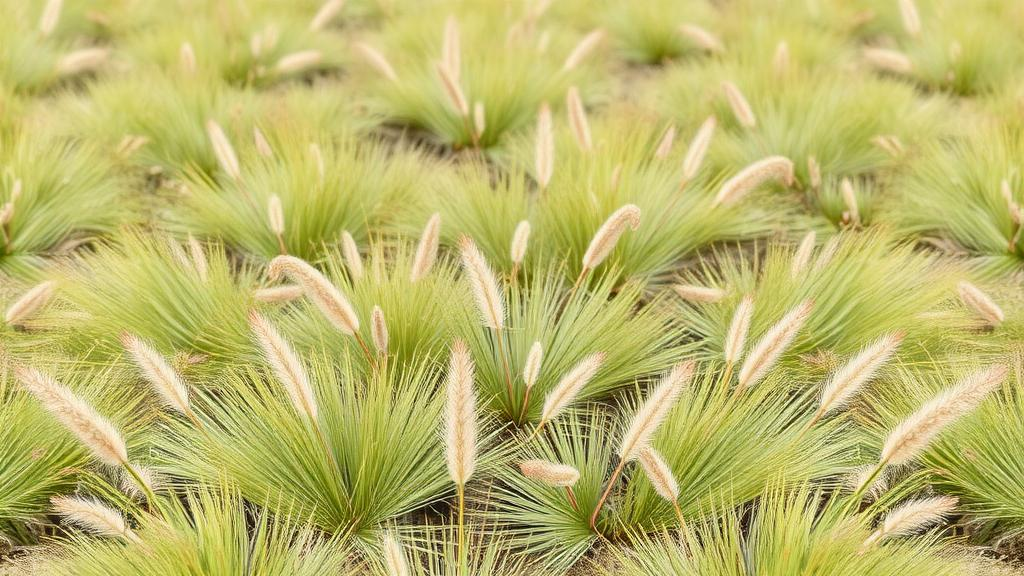
Image Credits: AI Generated

DOI: 10.3897/vcs.72875

Keywords: Stipa steppes, China, vegetation classification, vegetation plots, International Vegetation Classification, biogeographic groups, plant communities, climate gradients, Vegetation, classification, Stipa, steppes

Cite Scienmag News

Gavin Prescott. (October 19, 2026). Research report: Vegetation classification of Stipa steppes in China, with reference to the International Vegetation Classification. Scienmag. https://scienmag.com/research-report-vegetation-classification-of-stipa-steppes-in-china-with-reference-to-the-international-vegetation-classification/


Gavin Prescott. "Research report: Vegetation classification of Stipa steppes in China, with reference to the International Vegetation Classification." Scienmag, 19 October 2026, https://scienmag.com/research-report-vegetation-classification-of-stipa-steppes-in-china-with-reference-to-the-international-vegetation-classification/. Accessed 19 October 2026.

Gavin Prescott. "Research report: Vegetation classification of Stipa steppes in China, with reference to the International Vegetation Classification." Scienmag. October 19, 2026. https://scienmag.com/research-report-vegetation-classification-of-stipa-steppes-in-china-with-reference-to-the-international-vegetation-classification/

Tags: biogeographic grouping of Chinese steppesbiogeographic groupsChinaChina grassland biogeographyclassificationclimate gradientscomprehensive Chinese grassland systemgrassland alliance and association identificationhierarchical clustering in ecologyInternational Vegetation ClassificationInternational Vegetation Classification integrationnon-metric multidimensional scaling in ecologyplant communitiesplot-based vegetation analysissteppesStipaStipa steppe vegetation classificationStipa steppesTussock Steppe subformation evaluationvegetationvegetation classificationvegetation classification verificationvegetation community structure in Chinavegetation plots
Share26Tweet16
Previous Post

New Nepal groundhopper genus and species honor satirist Bhairav Aryal

Next Post

Otakar Kudrna’s Career in European Butterfly Taxonomy and Conservation

Related Posts

Otakar Kudrna’s Career in European Butterfly Taxonomy and Conservation
Science News

Otakar Kudrna’s Career in European Butterfly Taxonomy and Conservation

October 19, 2026
New Nepal groundhopper genus and species honor satirist Bhairav Aryal
Science News

New Nepal groundhopper genus and species honor satirist Bhairav Aryal

October 19, 2026
Three Plants Classified Critically Endangered in Global or Regional Red Lists
Biology

Three Plants Classified Critically Endangered in Global or Regional Red Lists

October 19, 2026
FELL Peptide Edits Reveal Unpredictable Anti-Inflammatory Activity
Medicine

FELL Peptide Edits Reveal Unpredictable Anti-Inflammatory Activity

October 19, 2026
Citizen survey maps exotic bolete’s expansion across Poland
Biology

Citizen survey maps exotic bolete’s expansion across Poland

October 19, 2026
Alpine Newts Recorded Feeding on Rodent Carcass
Biology

Alpine Newts Recorded Feeding on Rodent Carcass

October 19, 2026
Next Post
Otakar Kudrna’s Career in European Butterfly Taxonomy and Conservation

Otakar Kudrna’s Career in European Butterfly Taxonomy and Conservation

  • Mothers who receive childcare support from maternal grandparents show more optimized

    Mothers who receive childcare support from maternal grandparents show more parental warmth, finds NTU Singapore study

    27656 shares
    Share 11059 Tweet 6912
  • University of Seville Breaks 120-Year-Old Mystery, Revises a Key Einstein Concept

    1061 shares
    Share 424 Tweet 265
  • Bee body mass, pathogens and local climate influence heat tolerance

    682 shares
    Share 273 Tweet 171
  • Researchers record first-ever images and data of a shark experiencing a boat strike

    546 shares
    Share 218 Tweet 137
  • Groundbreaking Clinical Trial Reveals Lubiprostone Enhances Kidney Function

    531 shares
    Share 212 Tweet 133
Science

Embark on a thrilling journey of discovery with Scienmag.com—your ultimate source for cutting-edge breakthroughs. Immerse yourself in a world where curiosity knows no limits and tomorrow’s possibilities become today’s reality!

RECENT NEWS

  • Otakar Kudrna’s Career in European Butterfly Taxonomy and Conservation
  • Research report: Vegetation classification of Stipa steppes in China, with reference to the International Vegetation Classification
  • New Nepal groundhopper genus and species honor satirist Bhairav Aryal
  • Three Plants Classified Critically Endangered in Global or Regional Red Lists

Categories

  • Agriculture
  • Anthropology
  • Archaeology
  • Athmospheric
  • Biology
  • Biotechnology
  • Blog
  • Bussines
  • Cancer
  • Chemistry
  • Climate
  • Earth Science
  • Editorial Policy
  • Marine
  • Mathematics
  • Medicine
  • Pediatry
  • Policy
  • Psychology & Psychiatry
  • Science Education
  • Science News
  • Social Science
  • Space
  • Technology and Engineering

Subscribe to Blog via Email

Enter your email address to subscribe to this blog and receive notifications of new posts by email.

Join 5,149 other subscribers

© 2025 Scienmag - Science Magazine

Welcome Back!

Login to your account below

Forgotten Password?

Retrieve your password

Please enter your username or email address to reset your password.

Log In
No Result
View All Result
  • HOME
  • SCIENCE NEWS
  • CONTACT US

© 2025 Scienmag - Science Magazine

Discover more from Science

Subscribe now to keep reading and get access to the full archive.

Continue reading