


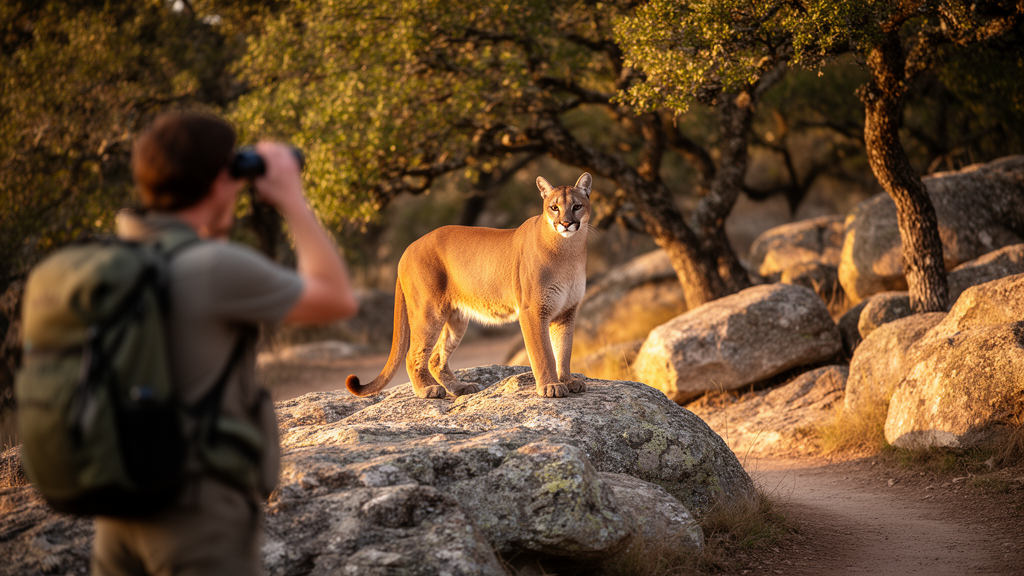
A sweeping survey of Texas residents has revealed a striking gap between what people believe about mountain lions and the legal reality governing the species in the state. The study, which synthesised responses from 740 Texans, found that most residents correctly perceive mountain lions as rare in Texas, yet a majority wrongly believe the animals are protected by law. In fact, mountain lions in Texas remain classified as non-game animals, meaning they can be killed in any quantity, by any method and at any time of year, with no requirement to report the mortality to state wildlife authorities. The findings arrive at a pivotal moment, as the Texas Parks and Wildlife Department (TPWD) has been directed to develop the state’s first mountain lion management plan through a stakeholder working group, and the survey data offer a detailed portrait of public sentiment that decision-makers can no longer ignore.
The research context is unusual. In June 2022, a coalition of Texas residents, scientists, advocates and other private citizens submitted a Petition for Rulemaking to TPWD and the Texas Wildlife Commission requesting six specific policy changes. These included a state-wide study of mountain lion abundance, mandatory reporting of any mountain lion killed, a requirement that trappers check their devices at least every 36 hours, a limit on take in south Texas, a prohibition on killing mountain lions that have been restrained during hunts and the formation of a stakeholder advisory group to draft a management plan. In August 2022, the agency denied the petition but presented the Commission with a full status report on the species. The Commission then mandated that TPWD fulfil the sixth request, convening a stakeholder working group that has since been tasked with drafting the state’s first management plan for the species.
Against this backdrop, researchers analysed a subset of survey data originally collected between November 2021 and January 2022 through an online panel administered by Qualtrics, with the instrument and procedure approved by the Texas A&M University Institutional Review Board. The survey sought to fill quotas balancing urban and rural respondents, though rural participants proved harder to recruit, and the final sample under-represented Hispanic residents relative to the 2020 Census. The researchers weighted the data to correct for these imbalances, reducing the analytical sample to 702 people. Respondents were asked about their knowledge of mountain lion status, their general attitudes toward the species, their views on management tools such as trapping and hunting, and their trust in the state wildlife agency.
The knowledge results were sobering. Thirty-two percent of respondents correctly identified mountain lions as rare but not endangered, the most common correct answer, while 28 percent believed the species is endangered and 21 percent admitted they did not know. More troubling was the response to a question about legal status: 45 percent of respondents believed mountain lions are a protected species that cannot be legally hunted or trapped, which is false in Texas. Hunters were more likely than non-hunters to correctly identify the species as non-game with unmanaged harvest, while non-hunters more often held the mistaken belief that the animals are protected. Livestock owners were more likely than others to misreport mountain lions as common or even extinct, views inconsistent with current scientific understanding of the species’ status in the state.
Perhaps the most surprising finding concerns who supports mountain lions. Contrary to the prevailing assumption that hunters and livestock producers view large carnivores unfavourably, the survey found that hunters and livestock owners expressed more positive attitudes toward mountain lions and their management than did non-hunters and people without livestock. Hunters scored 0.98 on a scale of general attitude toward the species, compared with 0.31 for non-hunters, and livestock owners scored 0.93 versus 0.31 for those without livestock. Hunters and livestock producers also reported higher trust in TPWD than their counterparts. This pattern aligns with earlier research suggesting that people with greater knowledge of pumas express less fear and greater tolerance, and it challenges the frequent narrative that the traditional constituents of state wildlife agencies are inherently hostile to carnivore conservation.
Equally notable was what the researchers did not find. Despite decades of literature describing a divide between rural residents who live alongside large carnivores and urban residents who do not, the survey detected no significant differences in attitudes between rural and urban respondents, nor between Hispanic and non-Hispanic participants. This absence of a rural-urban split carries far-reaching implications, since rural communities are often assumed to bear the costs of carnivore presence and therefore to oppose their conservation. The results suggest instead that there may be common ground upon which to build shared, adaptive conservation strategies for large carnivores, and that policymakers should be cautious about presuming entrenched opposition from any particular constituency.
On specific policy questions, the public’s preferences were unambiguous. Sixty-four percent of respondents favoured daily trap checks for mountain lions, far stricter than the 36-hour standard currently applied to fur-bearer trapping in Texas; only one percent said there should be no trap-check requirement. Seventy-four percent supported mandatory reporting of any mountain lion killed or euthanised in the state, with support evenly split between hunters and non-hunters, though hunters were more likely to actively oppose the measure. Respondents also endorsed, by a margin of four to one among those with strong opinions, a compensation programme for livestock producers who lose animals to mountain lion predation. These positions correspond directly to the first three requests of the 2022 petition, suggesting substantial public backing for the reforms now under consideration.
Attitudes toward lethal management tools were more ambivalent. Respondents were essentially neutral on trapping as a management method, with strong opposition nearly matching strong support. Views on hunting as a management tool leaned slightly negative overall, driven by non-hunters, while hunters and livestock producers expressed mild support. The researchers noted that the broad framing of the trapping question may have allowed respondents to consider a range of activities, from controlling invasive species to recreational fur trapping, which could explain why the anticipated anti-trapping majority did not materialise. The slight negativity toward hunting was unexpected given that hunters were over-represented in the sample compared with the general Texas population.
Trust in the state wildlife agency emerged as a central theme. Texans expressed modest but positive trust in TPWD’s management of mountain lions, with particularly high consensus that the agency draws upon sound science in its decisions. However, respondents were more neutral and less consensual when asked whether the agency is open and honest in its management of the species. The authors connect these findings to a broader body of research showing that trust in wildlife management institutions is a key predictor of tolerance for large carnivores, citing case studies of wolves in Italy and black bears in Colorado where distrust of authorities correlated with retaliatory killing or increased conflict reports.
The study’s authors conclude that the data give TPWD, the Texas Wildlife Commission and the stakeholder working group a strong empirical basis for crafting a defensible and adaptive management plan. They also emphasise the need for the agency to prioritise public outreach and education aimed at a more diverse constituency, both to correct widespread misconceptions about the species’ legal status and to prevent public disengagement from natural resource governance. The researchers caution that attitudes do not always translate directly into behaviour, and they acknowledge limitations including under-representation of rural and Hispanic residents, the online delivery format and the use of split survey components. Still, the central message is clear: the people of Texas, including the hunters and ranchers traditionally seen as sceptical of carnivore protection, appear ready to support meaningful reforms for a species that has long managed itself in the shadows of state law.
Subject of Research: Public knowledge and attitudes toward mountain lion management and conservation policy in Texas
Article Title: Mountain lions ( Puma concolor ) and their current management: Texas residents’ knowledge and attitudes
Article References: Ohrens, O., Ghasemi, B., Gulas-Wroblewski, B. E., & Elbroch, L. M. (2025). Mountain lions (Puma concolor) and their current management: Texas residents’ knowledge and attitudes. Nature Conservation, 60, 1-19. https://doi.org/10.3897/natureconservation.60.140566
Image Credits: AI Generated
DOI: 10.3897/natureconservation.60.140566
Keywords: mountain lions, Texas, wildlife management, human dimensions, carnivore conservation, public attitudes survey, TPWD, trapping regulations, harvest reporting, stakeholder working group, wildlife policy, rural-urban attitudes
Cite Scienmag News
Margaret Porter. (October 19, 2026). Texans Back Stronger Protections for Mountain Lions, Survey Reveals. Scienmag. https://scienmag.com/texans-back-stronger-protections-for-mountain-lions-survey-reveals/
Margaret Porter. "Texans Back Stronger Protections for Mountain Lions, Survey Reveals." Scienmag, 19 October 2026, https://scienmag.com/texans-back-stronger-protections-for-mountain-lions-survey-reveals/. Accessed 19 October 2026.
Margaret Porter. "Texans Back Stronger Protections for Mountain Lions, Survey Reveals." Scienmag. October 19, 2026. https://scienmag.com/texans-back-stronger-protections-for-mountain-lions-survey-reveals/


