


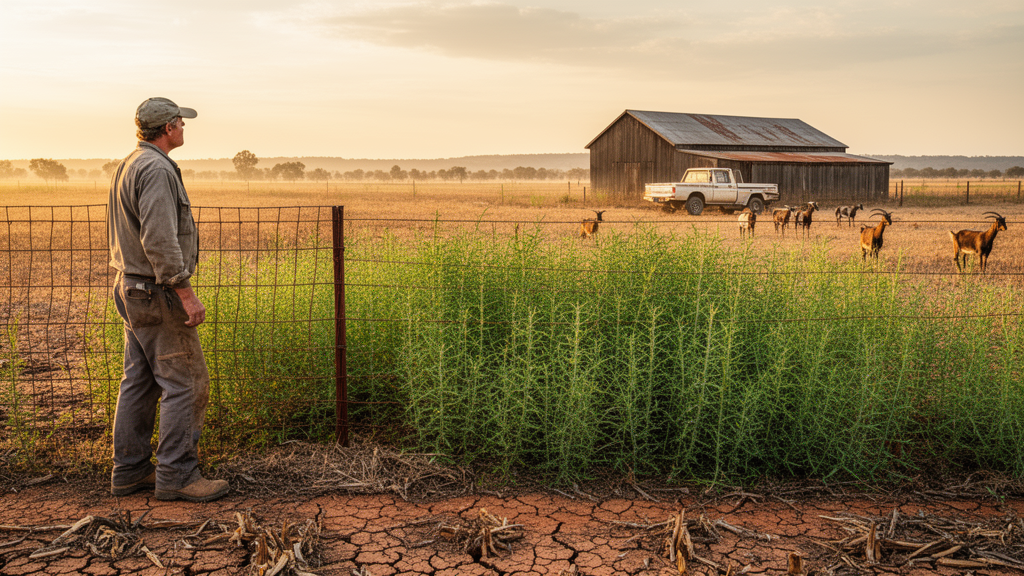
Invasive species are quietly draining billions of dollars from New South Wales every year, and according to a new review published in the journal NeoBiota, the true bill is almost certainly far higher than the numbers suggest. The study, conducted as part of a broader invasive species management review led by the NSW Natural Resources Commission, set out to tally every reported monetary cost of established non-native plants and animals in Australia’s most populous state. What it found is a cumulative total of AU$30.761 billion in reported costs between 1970 and 2022, expressed in 2023 dollar values, with annual losses running on the scale of billions of dollars and rising steeply decade after decade.
The research team took an unusual methodological route: a rapid review, sometimes called an expedited systematic review. Rather than starting from scratch, they combined the InvaCost database, a global living review of invasive species cost estimates, with an independent literature search modelled on InvaCost’s own systematic methods. InvaCost version 4.1 contained 2,597 cost estimates specific to Australia at the time of the study, but the researchers suspected that a state-level assessment would need finer, more recent data. Their targeted searches of Web of Science and Scopus, conducted in January 2024, plus grey literature and recent agricultural cost surveys, uncovered records the global database had not yet captured. In total, 217 references met the review criteria, and after screening out public expenditure, potential or avoided costs, duplicates, and low-reliability estimates, the final analytical dataset contained 374 individual cost estimates from 50 records.
One of the study’s central technical challenges was spatial. Most cost estimates in the literature are reported at national or regional scales, not for individual states. To address this, the team partitioned 90 national or regional estimates down to NSW using the Biosecurity Commons platform, a cloud-based decision-support tool. They overlaid species distribution layers built from Atlas of Living Australia occurrence records with Australian Land Use and Management Classification layers at one-square-kilometre resolution, calculating the proportion of each species’ range and impacted industry that fell within NSW borders. This spatial partitioning accounted for roughly half of the final total cost estimate, a key reason the study’s figure is nearly four times higher, in equivalent currency, than the NSW estimate in a previous Australia-wide review by Bradshaw and colleagues.
The temporal picture is stark. Average annual reported costs climbed from AU$25.51 million per year in the 1970s to AU$299.21 million in the 1980s, AU$456.22 million in the 1990s, and AU$661.22 million in the 2000s, before surging past AU$3 billion in multiple years of the 2010s and peaking at AU$3.822 billion in 2019. The apparent dip in the early 2020s, with 2022 costs reported at just AU$0.424 billion, is almost certainly an artefact of reporting lag rather than genuine relief: the dataset contains 255 distinct cost estimates from the 2010s but only 25 from the 2020s, reflecting the slow pace of academic publication and technical report release.
Using robust regression models designed to tolerate high variability and outliers, the researchers modelled the trend in annual costs from 1970 to 2022. A robust linear model projects costs of AU$2.076 billion for 2023, while a more conservative quadratic model yields AU$1.101 billion, both with extremely wide prediction intervals. The authors are emphatic that these figures should not be treated as forecasts, since the models lack the underlying covariates, such as climate, land use change, and management effort, that actually drive invasion costs. The models capture the general upward trajectory without overfitting to a tight pattern, and the researchers deliberately chose the simplest appropriate approach given the incompleteness of the data.
By taxonomy, the burden is overwhelmingly botanical. Terrestrial plants account for 82.9 percent of cumulative reported costs, with terrestrial vertebrates a distant second at roughly one-fifth of that share. The costliest plants are serrated tussock at AU$322 million, blackberry at AU$305 million, ryegrass at AU$153 million, fleabane at AU$130 million, and barnyard grass at AU$119 million. Among vertebrates, feral cats dominate at a staggering AU$2.291 billion, followed by European rabbits, wild dogs, feral pigs, and red foxes, each in the AU$390 to 443 million range. Invertebrate costs are led by oat aphids, blue oat mites, and lucerne fleas, while common carp, at AU$30 million, is the only aquatic species with species-specific estimates in the entire dataset.
The sectoral breakdown is even more lopsided. Industry and agricultural losses, dominated by production losses and pest control costs across pastoral, cropping, and forestry operations, make up 92.2 percent of all reported costs. Health, public, and social welfare costs account for 7.4 percent, almost entirely attributable to terrestrial vertebrates, including medical costs and damage to community assets. Everything else, including environmental costs and private research expenditure, falls below one percent. Environmental damage in particular is nearly invisible in the ledger: only about 0.2 percent of reported costs in this review relate to the environment sector, compared with roughly 4.1 percent in the earlier national review, a gap partly explained by this study’s exclusion of public expenditure on environmental management programmes.
This near-total absence of environmental and ecosystem service costs is the study’s most consequential finding. Non-market valuation methods such as contingent valuation, choice modelling, and benefit transfer are well developed and increasingly applied in biosecurity contexts, yet they remain rare in invasive species cost accounting. The authors point to work by Stoeckl and colleagues showing that ecosystem regulating services, including erosion control, flood control, carbon sequestration, and gene pool protection, capture around 44 percent of the benefits generated by Australia’s biosecurity system, far outweighing the roughly 25 percent contributed by agriculture, forestry, aquaculture, and fishing combined. When policymakers see cost estimates that omit these values, resources may be misallocated toward the most visible market losses rather than the greatest total damages.
The review also delivers a candid assessment of InvaCost itself, both praising its value and documenting its limitations. The independent searches found only a subset of the data already in the database, confirming that InvaCost captures substantial material, particularly grey literature comprising nearly half of its relevant records, that traditional systematic searches would miss. Yet the team also encountered apparent data duplication, difficulty tracing entries to original sources, and unextracted estimates hiding within already-cited references. Around 22 percent of the records used in the analysis came from outside the database, and these additional sources contributed a large share of the total reported costs, meaning the estimate would have been considerably lower without them.
Ultimately, the study offers a reproducible roadmap for other states, provinces, and subnational jurisdictions: filter InvaCost to the region of interest, partition broader estimates using spatial tools, supplement with independent searches and local expert engagement, and feed results back through the invacost R package. The authors stress that every figure they report is an underestimate, since costs are only counted in years where someone happened to publish a number, a bias they illustrate with feral pigs, whose costs appear in just 21 of the roughly five decades over which their impacts were ongoing. As globalisation continues to erode the geographic barriers that once kept Australia relatively pest-free, the message for biosecurity policymakers is unambiguous: the economic damage of invasive species is mounting, it is concentrated in agriculture but extends far beyond what markets can see, and the tools to measure it properly now exist and are waiting to be used.
Subject of Research: Economic costs of invasive species in New South Wales, Australia, assessed through a rapid review combining the InvaCost database with independent literature searches
Article Title: An invasive species cost review for New South Wales, Australia, highlights key drivers and limitations of economic cost estimates
Article References: Moran, N. P., Wang, L.-Y., Hanea, A. M., & Kompas, T. (2025). An invasive species cost review for New South Wales, Australia, highlights key drivers and limitations of economic cost estimates. NeoBiota, 104, 319-337. https://doi.org/10.3897/neobiota.104.157434
Image Credits: AI Generated
DOI: 10.3897/neobiota.104.157434
Keywords: invasive species, InvaCost, New South Wales, biosecurity, economic costs, agriculture, ecosystem services, non-market valuation, feral cats, weeds, rapid review, Australia
Cite Scienmag News
Patricia Pace. (October 19, 2026). Invasive Species Have Cost New South Wales Billions, and the Bill Keeps Climbing. Scienmag. https://scienmag.com/invasive-species-have-cost-new-south-wales-billions-and-the-bill-keeps-climbing/
Patricia Pace. "Invasive Species Have Cost New South Wales Billions, and the Bill Keeps Climbing." Scienmag, 19 October 2026, https://scienmag.com/invasive-species-have-cost-new-south-wales-billions-and-the-bill-keeps-climbing/. Accessed 19 October 2026.
Patricia Pace. "Invasive Species Have Cost New South Wales Billions, and the Bill Keeps Climbing." Scienmag. October 19, 2026. https://scienmag.com/invasive-species-have-cost-new-south-wales-billions-and-the-bill-keeps-climbing/


