


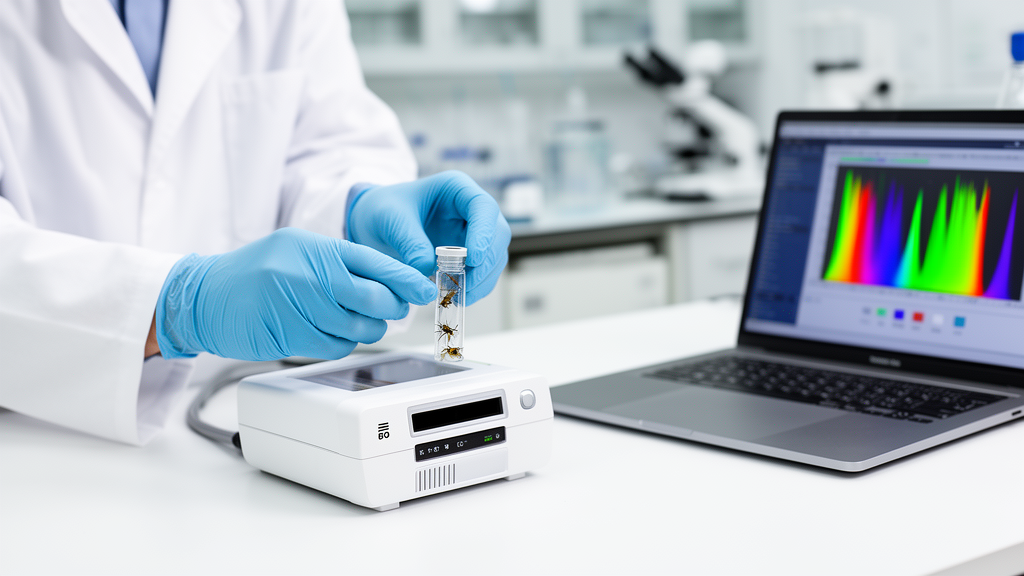
A quiet revolution is underway in the way countries detect invasive species, and it has been hiding in plain sight inside one of biology’s largest public databases. In a study published in the journal NeoBiota, researchers present a simple, generalisable workflow designed to close a gap that has cost biosecurity agencies dearly: the lag between the moment a molecular analysis first reveals an alien species in a country and the moment anyone actually acts on that information. The paper’s central warning is illustrated by one of South Africa’s most damaging pest outbreaks, a story in which DNA evidence of an invading beetle sat unnoticed in a database for five years while the insect spread unchecked.
The cautionary tale concerns the polyphagous shot hole borer, an ambrosia beetle that farms a fungal symbiont inside the wood of its host trees. Together, the beetle and fungus cause dieback and mortality across a remarkably wide range of woody plants, from native species to commercially valuable crops. Retrospective analysis showed the beetle had been sampled in South Africa as early as 2012, when it was collected during a DNA barcoding project. Yet the first detection that triggered a response came only in 2017, from a field survey at the KwaZulu-Natal Botanical Gardens. By 2021 the beetle was known to occupy eight of South Africa’s nine provinces, attacking native, ornamental and economically important trees alike. Whether action in 2012 would have contained it is unknowable, but five years of silence between molecular detection and response is exactly the kind of failure the new workflow is built to prevent.
DNA barcoding, the technique underlying the approach, involves sequencing a standardised region of an organism’s genome and matching it against reference libraries. Because the method can identify species from damaged fragments, eggs, larvae or other life stages that lack diagnostic physical features, and because it can distinguish cryptic species that look identical, it has become a powerful surveillance tool. The Barcode of Life Data System, or BOLD, is the open-access repository where much of this sequence data lands. As of May 2025 it held 16.5 million public records representing 1.3 million species across animals, plants, fungi, bacteria and protists. Critically, however, BOLD records are not systematically screened against national lists of dangerous invaders, and the database does not indicate whether a species is native to the region where a specimen was collected. Molecular detections therefore accumulate without anyone asking whether they constitute a first report of a threat.
The workflow, implemented in the R programming language with freely available scripts, proceeds in three steps. First, input datasets are acquired, inspected and cleaned; for the BOLD export this meant retaining only records with actual DNA sequence data, removing duplicates and blank entries, and excluding a handful of mislabelled records. Second, species names are taxonomically standardised across datasets, a deceptively hard problem, since the same species may appear under synonyms, outdated names or outright misapplications in different lists. The researchers used BODATSA, the Botanical Database of Southern Africa, as the backbone for plant names and the Global Biodiversity Information Facility backbone for other taxa, with manual checks to resolve homonyms and ambiguous cases. Third, the standardised lists are compared in pairs, with BOLD always serving as the reference, so that any species appearing in the molecular data but absent from a national checklist is flagged for scrutiny.
Applied to South Africa, the comparison started from 10,084 species with DNA barcode records collected in the country, matched against three reference datasets: a watch list of 400 alien species considered high-risk but not known to be present; a quarantine pest list of 218 taxa intercepted on plant imports between 1994 and 2019 but not established; and BODATSA’s 67,105 plant species, which include alien plants found outside cultivation. The results were striking. Seven species overlapped between BOLD and the watch list, and after literature checks three were flagged for action: the southern house mosquito Culex quinquefasciatus, the woodland white worm Octolasion tyrtaeum, and the tropical almond tree Terminalia catappa. The first two are recognised threats apparently never before recorded as present in South Africa, meaning their BOLD records should be verified, their presence confirmed in the field, and an incursion response considered immediately.
The pest-list comparison produced two overlaps, of which one, the fruit fly Drosophila immigrans, turned out to be already known in the country. The other, the plaster beetle Cartodere constricta, was flagged as a potential new record; it has been introduced to six countries according to GBIF, though no environmental or economic impacts have been documented so far. Meanwhile, the comparison of BOLD plants against BODATSA revealed 323 species unique to the molecular database. After excluding algae, which BODATSA does not cover, native species missing from the checklist, and one data-deficient taxon, 131 confirmed alien plants remained, and nine were flagged as possible additions to the list of alien plants outside cultivation. These include Ficus microcarpa, Jacobaea maritima and Yucca gloriosa, several of which are confirmed invaders elsewhere. Some are currently known only from cultivation or offshore islands, and one lacks locality data entirely, but all warrant verification and, where confirmed, collection of physical specimens as evidence.
The study is equally instructive in what it did not flag. The myrtle rust fungus Austropuccinia psidii appeared in both BOLD and the watch list, but it was first detected in South Africa in 2013, after the watch list was compiled, so the match reflects an outdated list rather than a new arrival. Similarly, 54 BOLD records for the grey wolf Canis lupus all pertain to domestic dogs, exposing how taxonomic imprecision can generate false alarms. The authors stress that every flagged species is a candidate for expert scrutiny, not an automatic incursion: synonymy, misidentification and unresolved native-versus-alien status can all produce apparent mismatches. This is why the workflow embeds verification steps, from checking voucher specimens and collection coordinates to contacting the original authors, before any management response is triggered.
A further layer of caution concerns environmental DNA. Sequences recovered from soil or water can reveal a species’ genetic footprint without proving that living organisms are present, and contamination or incomplete reference libraries can yield false positives. Under international plant protection guidelines, taxa detected solely by molecular methods should not be declared present without biological confirmation, so eDNA hits must be followed up with isolation or field sampling. The authors also note that BOLD records are only as useful as their metadata: collection dates, precise localities and images dramatically improve the odds that a flagged record can be verified and traced. They recommend that databases routinely store species names with authorship and date information, since taxonomic homonyms cannot be resolved automatically without them, a limitation that accounted for a substantial share of the manual checks in this study.
The deeper message is institutional rather than technical. Even with clear evidence in hand, mobilising a rapid response is difficult; decision-makers and the public often demand visible, large-scale impacts before acting, by which point eradication options have narrowed. The authors therefore frame the workflow as a component of an integrated biosecurity system rather than a stand-alone fix. They recommend running it at least annually, since BOLD grows constantly with sequences from studies that were never aimed at biosecurity but often carry incidental value. In South Africa, they suggest housing curated lists in GBIF, building on SANBI’s existing reporting structures, and routing alerts to the environment department and border authorities so that molecular detections join interception records at points of entry. For other countries, the recipe starts with compiling national alien species lists and watch lists, an increasingly automated task, before the comparison machinery can be switched on. The value of the whole apparatus, the authors conclude, depends on the curation of the underlying lists, how regularly the workflow is applied, and whether institutions actually pick up the phone when a flag is raised. In biosecurity, as the shot hole borer demonstrated, the most expensive gap is not detection. It is everything that fails to happen afterwards.
Subject of Research: A workflow for converting molecular detections of alien species into biosecurity action
Article Title: From detection to action—a proposed workflow to ensure first reports of alien species from molecular analyses are acted upon
Article References: Fernández Winzer, L., Faulkner, K. T., Paap, T., & Wilson, J. R. U. (2025). From detection to action—a proposed workflow to ensure first reports of alien species from molecular analyses are acted upon. NeoBiota, 104, 339-359. https://doi.org/10.3897/neobiota.104.162310
Image Credits: AI Generated
DOI: 10.3897/neobiota.104.162310
Keywords: biosecurity, invasive species, DNA barcoding, BOLD database, South Africa, polyphagous shot hole borer, early detection, environmental DNA, taxonomy, species lists, NeoBiota, incursion response
Cite Scienmag News
Patricia Pace. (October 19, 2026). New Workflow Turns DNA Barcode Data Into Rapid Biosecurity Action. Scienmag. https://scienmag.com/new-workflow-turns-dna-barcode-data-into-rapid-biosecurity-action/
Patricia Pace. "New Workflow Turns DNA Barcode Data Into Rapid Biosecurity Action." Scienmag, 19 October 2026, https://scienmag.com/new-workflow-turns-dna-barcode-data-into-rapid-biosecurity-action/. Accessed 19 October 2026.
Patricia Pace. "New Workflow Turns DNA Barcode Data Into Rapid Biosecurity Action." Scienmag. October 19, 2026. https://scienmag.com/new-workflow-turns-dna-barcode-data-into-rapid-biosecurity-action/


