


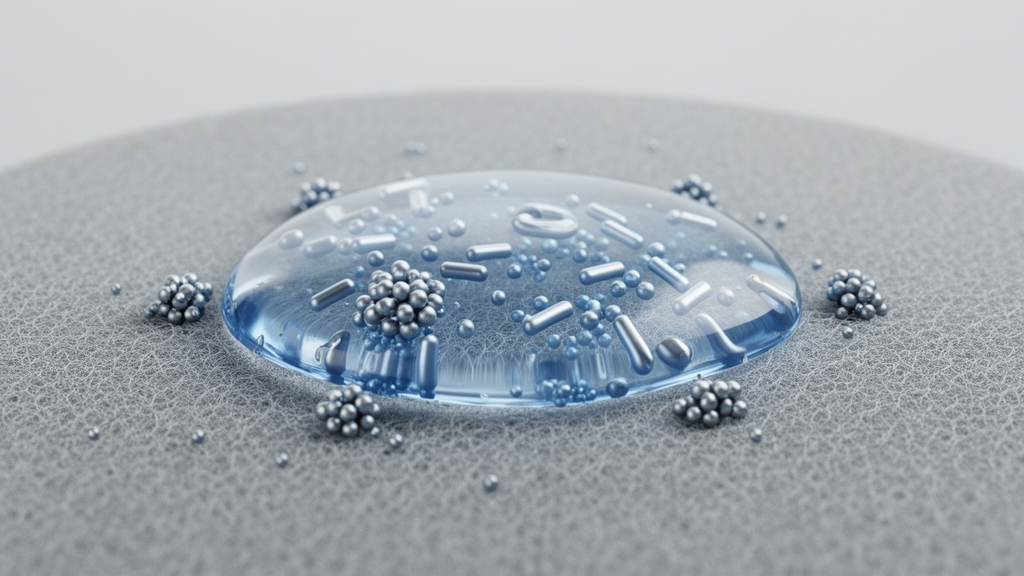
Nanotechnology has quietly become one of the most powerful tools in the global fight for clean water. Engineered nanomaterials—particles and structures measured in billionths of a meter—can snatch heavy metals, dyes, pharmaceuticals, pathogens, and other emerging pollutants from water with remarkable efficiency. From nano-adsorbents and catalytic membranes to magnetic separation materials, these technologies are now embedded in water and wastewater treatment systems around the world. But a new review published in Environmental Monitoring and Assessment argues that the field has been celebrating only half the story. What happens after the treatment is done, the researchers contend, has been severely underdiscussed—and it may be creating a new form of pollution that occurs downstream of the very systems designed to prevent it.
The review, led by Lovepreet Singh of the Thapar Institute of Engineering and Technology in India alongside colleagues from Delhi Technological University, Maharishi Markandeshwar Deemed to Be University, Gombe State University in Nigeria, and Amity University, introduces and consolidates the concept of “secondary nanowaste”—the nanomaterials and nano-derived residues that are released, transformed, or accumulated during the operation, regeneration, disposal, or reuse stages of nano-enabled water treatment. Drawing on research from the last decade, the authors argue that while most studies focus on removal efficiency and material performance, the post-treatment fate of these materials has received far less attention, leaving a critical blind spot in environmental risk assessment.
The problem is fundamentally one of material recovery. Nanomaterials used in water treatment are often not fully recoverable at the end of their service life. They can break down chemically, leach their constituent elements, accumulate in treatment sludge, or escape directly into the environment. Each of these pathways generates what the researchers call post-treatment pollution—a category of contamination that emerges not from the original wastewater being treated, but from the treatment technology itself. The review identifies several major routes of secondary nanowaste formation: the buildup of nanoparticles in sludge, the aging and degradation of nanocomposite membranes, the loss of catalytic materials during advanced oxidation processes, and the incomplete recovery of magnetic or immobilized nanoparticles after repeated use cycles.
The scale of the challenge becomes clear when considering the diversity of nanomaterials now deployed in water treatment. Nano-adsorbents—including carbon nanotubes, graphene oxide, metal-organic frameworks, layered double hydroxides, and clay-based nanocomposites—are prized for their enormous surface areas and tunable surface chemistry. Photocatalytic systems built on titanium dioxide, zinc oxide, bismuth oxyhalides, and graphitic carbon nitride can degrade organic pollutants under light activation. Magnetic nanomaterials such as iron oxide spinels and ferrites enable rapid separation from treated water. Membranes embedded with silver nanoparticles, MXenes, or metal-organic frameworks offer both filtration and antimicrobial function. Each of these material classes carries its own distinct profile of potential release, transformation, and environmental persistence once the treatment cycle ends.
Once released, secondary nanowaste does not simply vanish. The review traces its environmental fate across water, soil, and sediment systems, where nanomaterials can undergo agglomeration, dissolution, surface transformation, or interaction with natural organic matter—processes that alter their mobility, bioavailability, and toxicity. In aquatic environments, engineered nanoparticles have been shown to affect microbes, algae, invertebrates, and fish, with documented impacts on cellular function, growth, and reproduction. In soil and sediment, accumulated nanomaterials can persist and potentially enter food webs. The authors also highlight concerns for drinking water safety, noting that nanomaterials that leach from treatment systems may themselves become contaminants in the very water they were designed to purify.
The ecotoxicological evidence reviewed by the team is sobering. Studies on silver and zinc oxide nanoparticles, for instance, demonstrate toxic effects across multiple trophic levels in aquatic ecosystems. Research on cerium oxide nanoparticles has revealed impacts on gene expression in aquatic organisms such as Daphnia magna. The interaction of engineered nanoparticles with microplastics and other co-existing pollutants adds another layer of complexity, as sorption and co-transport can amplify exposure in ways that single-substance toxicity tests fail to capture. The review emphasizes that these effects are not merely laboratory curiosities—they represent plausible real-world exposure scenarios as nano-enabled treatment systems scale up globally.
What makes the situation particularly urgent, the authors argue, is the mismatch between the pace of nanomaterial deployment and the pace of environmental monitoring. Long-term toxicity data remain sparse, and exposure assessment methodologies for nanomaterials in real environmental matrices are still immature. Standard analytical techniques struggle to detect and characterize engineered nanoparticles at environmentally relevant concentrations, especially once they have undergone transformation in complex matrices like sludge, sediment, or natural waters. Without robust monitoring frameworks, regulators and operators have limited ability to track secondary nanowaste as it moves through the environment, making it difficult to establish safe operating thresholds or design effective mitigation strategies.
The review does not simply catalogue the problem—it also surveys emerging solutions. The authors discuss safe-by-design approaches that aim to minimize secondary nanowaste generation from the outset, including strategies to immobilize nanomaterials more securely within treatment matrices, improve recovery rates through magnetic or other separation mechanisms, and design materials that degrade into benign end products after their useful life. Regeneration technologies for saturated adsorbents, which allow nanomaterials to be reused rather than discarded, represent another important avenue. The researchers also point to the potential of post-use recovery strategies that capture nanoparticles before they can enter the environment, transforming what would otherwise be waste into a recoverable resource.
Looking forward, the review calls for a fundamental shift in how nano-enabled water treatment is evaluated and regulated. Rather than assessing these technologies solely on their pollutant-removal performance during operation, the authors argue that lifecycle thinking must become standard practice—accounting for what happens to nanomaterials during regeneration, disposal, and environmental release. They advocate for the development of risk-informed monitoring strategies that can detect secondary nanowaste in real time, coupled with sustainable design principles that prioritize both treatment efficacy and environmental safety across the full technology lifecycle. Such an approach, they contend, is essential for the responsible deployment of nanotechnology in water treatment at global scale.
The findings arrive at a moment when water scarcity and pollution are intensifying worldwide, driving rapid investment in advanced treatment technologies. Nano-enabled systems promise to address contaminants that conventional treatment cannot touch—from pharmaceutical residues and per- and polyfluoroalkyl substances to microplastics and antibiotic-resistant genes. But the review serves as a timely reminder that every technological solution carries its own environmental footprint. As the global water treatment sector accelerates its adoption of nanomaterials, understanding and managing the afterlife of these materials may prove just as important as the pollutants they were designed to remove. The researchers hope their synthesis will catalyze the development of comprehensive monitoring protocols, standardized risk assessment frameworks, and design guidelines that ensure nano-enabled water treatment delivers on its promise without creating a new generation of environmental problems in the process.
Subject of Research: Environmental monitoring and risk assessment of secondary nanowaste generated by nano-enabled water and wastewater treatment technologies
Article Title: Environmental monitoring and risk assessment of secondary nanowaste in nano-enabled water treatment systems
Article References: Singh, L., Pathak, J., Arora, J., Shehu, Z., Michael, E., & Jain, H. (2026). Environmental monitoring and risk assessment of secondary nanowaste in nano-enabled water treatment systems. Environmental Monitoring and Assessment, 198(9), Article 1011. https://doi.org/10.1007/s10661-026-15852-7
Image Credits: AI Generated
DOI: 10.1007/s10661-026-15852-7
Keywords: nanotechnology, water treatment, secondary nanowaste, environmental monitoring, ecotoxicity, nanomaterials, wastewater, risk assessment, safe-by-design, environmental fate, sludge, membranes
Cite Scienmag News
Charles Cole. (October 19, 2026). The Hidden Afterlife of Water-Cleaning Nanomaterials: Scientists Warn of Secondary Nanowaste. Scienmag. https://scienmag.com/the-hidden-afterlife-of-water-cleaning-nanomaterials-scientists-warn-of-secondary-nanowaste/
Charles Cole. "The Hidden Afterlife of Water-Cleaning Nanomaterials: Scientists Warn of Secondary Nanowaste." Scienmag, 19 October 2026, https://scienmag.com/the-hidden-afterlife-of-water-cleaning-nanomaterials-scientists-warn-of-secondary-nanowaste/. Accessed 19 October 2026.
Charles Cole. "The Hidden Afterlife of Water-Cleaning Nanomaterials: Scientists Warn of Secondary Nanowaste." Scienmag. October 19, 2026. https://scienmag.com/the-hidden-afterlife-of-water-cleaning-nanomaterials-scientists-warn-of-secondary-nanowaste/


