


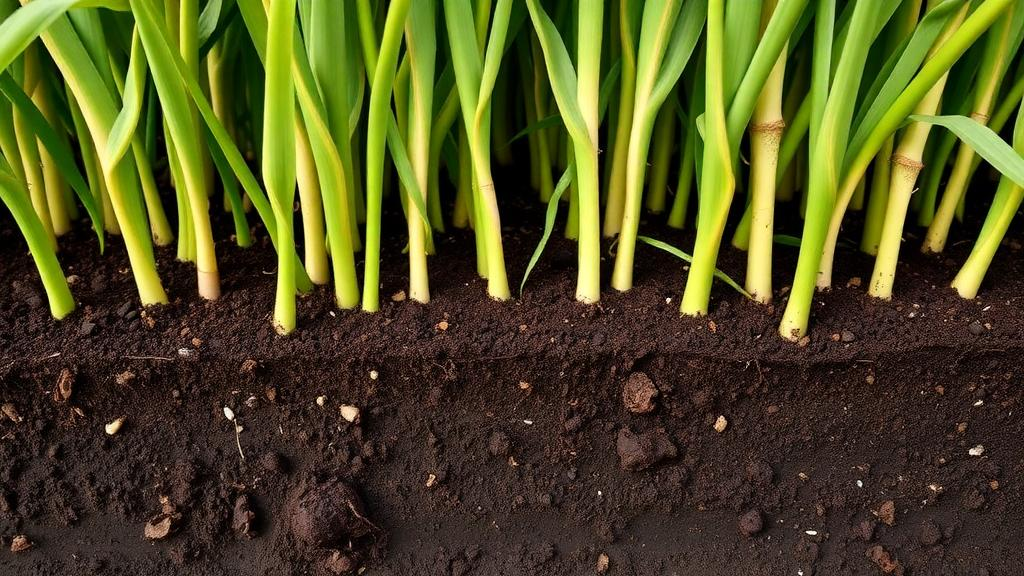
Long-term fertilization has long been assumed to leave a clear chemical fingerprint on the microbes that live around crop roots. A new study of sugarcane grown in Cuban brown sialitic soils suggests something subtler: after nearly a quarter century of continuous, treatment-specific fertilizer applications, the types of bacteria and fungi surrounding the roots remain remarkably stable, yet the web of interactions connecting them shifts in ways that track the specific nutrients applied. The findings, published in the journal SOIL, come from one of the longest-running fertilization trials available for tropical sugarcane systems, and they point to a hidden layer of soil ecology that conventional diversity metrics simply cannot see.
The research team, led by Leonardo Zamora-Leiva of the Bionostra Chile Research Foundation together with colleagues at Universidad Andrés Bello and the University of Chile, sampled a trial established in 1998 at the Sugar Cane Research Institute in Santiago de Cuba. The experiment spans eleven fertilizer treatments varying nitrogen, phosphorus, and potassium, from plots receiving no nitrogen at all to those receiving very high doses of a single macronutrient. Because the fertilization regimes assigned to each plot have been maintained without interruption since the trial began, the soils sampled in 2022 carry the cumulative legacy of 24 years of continuous nutrient management, making the site an unusually clean natural laboratory for asking how sustained inputs shape the rhizosphere microbiome.
Using high-throughput sequencing of the bacterial 16S rRNA gene and the fungal internal transcribed spacer region, the researchers identified 421 bacterial and 471 fungal genera from 5,741 amplicon sequence variants across the treatments. The dominant bacterial phyla were Actinomycetota, Pseudomonadota, and Acidobacteriota, which together accounted for roughly 60 percent of relative abundance, while fungal communities were overwhelmingly dominated by Ascomycota, which exceeded 69 percent across all plots. These core lineages appeared in similar proportions regardless of whether a plot had been drenched in nitrogen for decades or left without it, and statistical tests for differences in alpha and beta diversity, along with differential abundance analyses using LEfSe and ANCOM-BC2, found no significant treatment effects on community composition.
The physicochemical data help explain why. Soil pH remained nearly constant across the site, ranging from 6.4 to 6.5 in potassium chloride and 7.7 to 7.9 in water, a stability the authors attribute to the massive buffering capacity conferred by consistently high reservoirs of exchangeable calcium and magnesium. Organic matter, available phosphorus, and potassium varied among plots, but those variations did not align with the theoretical fertilizer doses. The team argues that intense tropical rainfall and the leaching-prone clay matrix of sialitic soils, which are classified internationally as inceptisols or Cambisols, rapidly redistribute applied nutrients, homogenizing bulk soil chemistry and decoupling what farmers apply from what microbes actually experience.
Where the study becomes genuinely striking is in its network analysis. Rather than treating the bacterial and fungal datasets separately, the authors merged them into a single trans-domain co-occurrence network of 371 nodes and 747 edges, retaining only robust correlations with a Spearman coefficient above 0.6 and a false-discovery-rate-adjusted p-value below 0.01. The resulting architecture was highly modular, organized into 48 distinct structural modules, and overwhelmingly positive in sign: 99.8 percent of the correlations were cooperative or commensal rather than competitive. Fungal taxa, particularly Ascomycota and Basidiomycota, showed higher connectivity than bacteria, suggesting that fungi form the structural backbone of the rhizosphere interaction web in these soils.
Within that architecture, the vast majority of amplicon sequence variants, about 95 percent, behaved as peripheral nodes, while a small subset of highly connected connectors and module hubs, including taxa related to Pseudomonas, Steroidobacter, Gaiella, and Streptomyces, appeared to stabilize the whole system. A substantial fraction of the interacting taxa remained taxonomically unclassified, a reminder that tropical and Caribbean soil microorganisms are poorly represented in reference databases such as SILVA and UNITE. The authors suggest these unresolved lineages may include endemic or highly specialized microbes that contribute to the unique functioning of nutrient-leached tropical soils, and they call for expanding genomic reference databases to cover such environments.
The most ecologically revealing result came from an overlap analysis of which microbes appear under which fertilization regime. By intersecting presence-absence matrices across treatments, the team identified a universal core of 76 amplicon sequence variants shared across every nitrogen, phosphorus, and potassium gradient, a trans-domain alliance built on bacterial Bacillota and Pseudomonadota and fungal Ascomycota including genera such as Fusarium and Cladophialophora. This core appears to be the stable foundation of the sugarcane rhizosphere, resistant to profound nutritional fluctuations. Beyond it, each macronutrient recruited its own distinct satellite community: nitrogen variation recruited 18 exclusive specialists, predominantly fungal, while phosphorus addition recruited a much larger accessory cohort of 40 unique variants, heavily dominated by fungi including Talaromyces and various Basidiomycota. Potassium produced the most restricted response, with only six strict specialists.
This core-and-satellite assembly strategy has direct agronomic implications. Yield records from the trial show that fertilized plots consistently outperform unfertilized controls, but that yields plateau across a wide range of NPK doses, with the highest nitrogen treatments actually producing the lowest yields among fertilized plants. The new microbial data offer a possible explanation: once the universal core is in place, additional nutrients do not restructure the community but instead selectively recruit specialized accessory taxa to exploit available resources. Fertilization, in other words, may influence soil functioning by modulating specialized ecological niches rather than through broad taxonomic turnover, which is why diversity-based monitoring alone can miss the ecological consequences of management decisions.
The authors argue that trans-domain interaction networks provide crucial insights into how soils respond to long-term fertilization that are not evident from diversity or abundance data alone. In tropical sialitic soils, where leaching and rapid nutrient turnover render bulk chemistry erratic, physically protected rhizosphere microhabitats, formed by roots, fungal hyphae, and bacterial extracellular polymers, appear to act as ecological refuges that preserve microbial organization. Sustainable fertilization strategies, the study concludes, should aim to support these foundational microbial architectures while optimizing nutrient inputs, rather than assuming that more fertilizer simply means more of everything below ground. For sugarcane producers in Cuba and other tropical systems, the message is that the invisible network around the roots may matter as much as the nutrients themselves.
Subject of Research: Effects of long-term NPK fertilization regimes on sugarcane rhizosphere microbial diversity and bacterial-fungal co-occurrence networks in tropical sialitic soils
Article Title: Fertilizer regimes reshape microbial interaction networks without altering sugarcane rhizosphere diversity
Article References: Zamora-Leiva, L., Soto, J., Ramos-Tapia, I., & Paneque, M. (2026). Fertilizer regimes reshape microbial interaction networks without altering sugarcane rhizosphere diversity. SOIL, 12(2), 999-1019. https://doi.org/10.5194/soil-12-999-2026
Image Credits: AI Generated
Keywords: sugarcane, rhizosphere, soil microbiome, fertilization, co-occurrence networks, 16S rRNA, ITS sequencing, Ascomycota, nutrient leaching, inceptisols, tropical agriculture, soil ecology
Cite Scienmag News
Morgan Morrow. (October 19, 2026). Fertilizer regimes reshape microbial interaction networks without altering sugarcane rhizosphere diversity. Scienmag. https://scienmag.com/fertilizer-regimes-reshape-microbial-interaction-networks-without-altering-sugarcane-rhizosphere-diversity/
Morgan Morrow. "Fertilizer regimes reshape microbial interaction networks without altering sugarcane rhizosphere diversity." Scienmag, 19 October 2026, https://scienmag.com/fertilizer-regimes-reshape-microbial-interaction-networks-without-altering-sugarcane-rhizosphere-diversity/. Accessed 19 October 2026.
Morgan Morrow. "Fertilizer regimes reshape microbial interaction networks without altering sugarcane rhizosphere diversity." Scienmag. October 19, 2026. https://scienmag.com/fertilizer-regimes-reshape-microbial-interaction-networks-without-altering-sugarcane-rhizosphere-diversity/


