


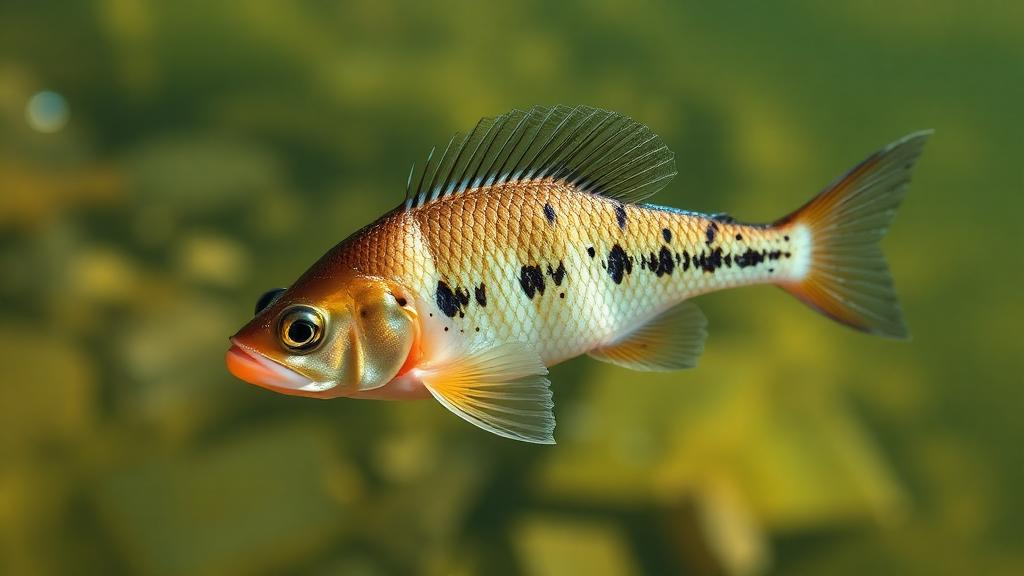
In the coastal wetlands of northeastern Spain, a quiet physiological battle is underway between one of the world’s worst invasive fish species and an endangered endemic struggling to hold its ground. A new study published in NeoBiota has dissected that contest at its most fundamental level, measuring how the invasive eastern mosquitofish (Gambusia holbrooki) and the threatened Spanish toothcarp (Aphanius iberus) differ in their aerobic metabolism, movement behaviour, and the links between the two across an experimentally manipulated salinity gradient. The findings reveal a surprising asymmetry: salinity erodes the invasive species’ metabolic ceiling, yet its behaviour barely flinches, while the native fish’s movement is tightly bound to its baseline energy budget.
Salinity acts as a key environmental filter in aquatic systems, mediating whether invasive species can establish and how biotic interactions unfold. For fish, the primary impact arises from the physiological costs of maintaining osmotic balance through active regulation. Those costs lower aerobic scope, the energy left over after basic maintenance, limiting what is available for movement, growth, and reproduction. Evolutionary history shapes the salinity range over which a species maintains osmotic comfort, and that in turn can influence invasion outcomes. Previous work on the invasive round goby showed reduced metabolic performance under elevated salinity compared to native European perch, hinting that abiotic stress can sometimes favour natives.
The research team captured both species using minnow traps in February 2021 from the La Pletera and Rubina saltmarshes in Baix and Alt Empordà, northeastern Spain, where the water salinity measured 15 on the practical salinity scale at the time of capture. Fish were housed in separate aquaria by species, sex, and salinity treatment, with water temperature maintained at 20 ± 0.5 °C and a 12-hour photoperiod. Two weeks after collection, salinity was gradually adjusted to create four treatments: freshwater (0.26), 15, 25, and 40, achieved by adding artificial sea salt or diluting with water. Fish then acclimatised to their target salinity for two weeks before testing.
Metabolic rates were quantified using intermittent-flow respirometry, a technique in which oxygen consumption is measured from the decline in oxygen concentration within sealed chambers between flush cycles. Each fish was chased by hand to exhaustion before being transferred to a respirometry chamber, where it remained overnight for approximately 23 hours of monitoring. Maximum metabolic rate (MMR) was calculated from the initial three-minute post-chase period, when oxygen consumption typically peaks, while standard metabolic rate (SMR) was determined by averaging the ten lowest oxygen uptake values recorded over the entire monitoring period. Aerobic scope was expressed both as absolute (AAS = MMR − SMR) and factorial (FAS = MMR / SMR) measures. Microbial respiration was accounted for by measuring empty chambers before and after each trial.
Behavioural trials followed the next day in square arenas fitted with sand substrate, pebbles, and two patches of artificial plants as refuge. Raspberry Pi cameras filmed each trial at 20 frames per second, and custom tracking software employing background subtraction determined each fish’s coordinates frame by frame. From the trajectories, the researchers computed median speed, proportion of time stationary, turning speed, sharp turning, time near arena edges, proportion of arena visited, and the coefficient of variation of arena use. The arena was divided into a 20 × 20 grid of bins to quantify exploration. Behavioural trials were conducted only at the two lowest salinity treatments, 0.26 and 15.
The metabolic results were striking. Mixed models explained 65 to 80 percent of the variation in metabolic traits, with fish mass the dominant factor. After accounting for mass, salinity treatment and its interaction with species were the most important sources of variation. Toothcarp, particularly females, showed overall higher SMR and MMR than mosquitofish. While toothcarp exhibited higher SMR at both the lowest and highest salinity levels tested, mosquitofish showed decreasing SMR and MMR with increasing salinity. Crucially, toothcarp maintained a stable aerobic scope across salinity treatments, whereas invasive mosquitofish exhibited a markedly lower aerobic scope at moderate salinity, primarily due to a decline in maximum metabolic rate.
Notably, this stress response was not linked to increased osmoregulatory costs, because baseline metabolism actually decreased at salinity 15, which is closer to the iso-osmotic point where osmoregulatory work is minimal. The reduced absolute aerobic scope therefore results from a markedly low MMR, indicating constraints beyond osmotic maintenance. One potential explanation is that at higher salinities, fish gills reduce permeability to minimise water loss, thereby limiting oxygen uptake and constraining MMR. However, this idea conflicts with findings in the closely related western mosquitofish, which exhibits high gill plasticity and sustains metabolic function under elevated salinities. Whether eastern mosquitofish share this trait remains uncertain, and the authors call for further research into gill permeability and plasticity among populations, especially given the species’ worldwide invasive distribution and high genetic variability.
Behaviourally, the two species differed consistently in routine locomotion. Mosquitofish spent more time in a moving state, had a higher median turning speed, and visited a larger proportion of the arena in a more uniform way, as indicated by a lower coefficient of variation of arena use. Toothcarp showed more stop-go behaviour and remained more stationary overall, patterns consistent with poor swimming efficiency and a high cost of transport. To conserve energy, toothcarp may rely on intermittent locomotion characterised by bursts of activity followed by recovery pauses, an approach that suits species with limited capacity for sustained movement but results in patchy distributions, which could explain their restricted home ranges and vulnerability to habitat fragmentation. Salinity had little effect on most behavioural variables except turning tendency, with both species exhibiting fewer sharp turns at higher salinity.
The integration of metabolic and behavioural data revealed distinct patterns for each species. In toothcarp, redundancy analysis explained 19.1 percent of behavioural variation, with SMR the only significant predictor. The effect was driven by a negative association between SMR and the proportion of arena visited, and positive associations with spatial variability and time spent near tank walls, indicating that individuals with higher baseline metabolic costs showed more restricted and edge-oriented behaviour. Additionally, factorial aerobic scope was positively related to median speed and negatively related to time spent stationary, suggesting individuals with greater aerobic capacity tended to swim faster and remain active longer. These relationships were not attributable to body mass differences. In mosquitofish, although salinity affected metabolic capacities, this effect was not reflected in their movement, indicating a weak relationship between metabolism and behaviour, likely supported by trait flexibility. Only median speed correlated with MMR, suggesting routine speed depends more on their metabolic ceiling than on baseline costs.
The authors suggest that the ability of mosquitofish to operate near aerobic limits may help explain their consistent movement under moderate salinity despite reduced aerobic scope. Energetically costly actions such as female aggression in this species have been linked to aerobic scope rather than SMR and can be sustained even under physiological stress such as late-stage pregnancy. More broadly, plasticity in energy allocation may account for the weak relationship between metabolism and behaviour, and previous work has shown these relationships can vary across mosquitofish populations depending on ecological context, highlighting the flexibility of trait integration in this species. The mismatch between physiological constraint and behavioural consistency, which was not observed in toothcarp, underscores the importance of integrating metabolic and behavioural traits to forecast invasion outcomes under environmental change.
Several limitations should be noted. Mosquitofish were tested only at the lower salinities in the respirometry assays, and behavioural trials for both species were conducted exclusively at those two treatments. Only female mosquitofish were included because males from the study site exhibited extremely low tolerance to salinity. Trials were also conducted in two separate experimental phases across seasons and populations, which limits direct comparability. Future work could examine movement responses under higher salinities and assess sex-specific tolerance across a wider salinity range, as sex-specific traits may influence invasion outcomes.
Overall, the study demonstrates that salinity changes, such as those occurring in coastal wetlands, can alter competitive dynamics between invasive and native species by modifying aerobic metabolism and functional capacity. Toothcarp maintained stable metabolism across all treatments, whereas mosquitofish showed lower aerobic capacity at moderate salinity driven by a lower MMR, indicating that salinity can constrain performance without increasing osmoregulatory costs. The two species also exhibited contrasting movement patterns reflecting differences in dispersal potential and microhabitat use. Trait-based approaches that link physiology and behaviour more explicitly provide a basis for assessing invasive species performance relative to native taxa across environmental stressors, and for predicting how changing conditions such as rising salinity in inland waters will reshape ecological impacts of invasive taxa.
Subject of Research: Ecology
Article Title: Metabolism, movement behaviour, and salinity responses of invasive mosquitofish compared with a threatened toothcarp
Article References: Butler-Margalef, M., Rubio-Gracia, F., García-Berthou, E., Jolles, J. W., & Vila-Gispert, A. (2026). Metabolism, movement behaviour, and salinity responses of invasive mosquitofish compared with a threatened toothcarp. NeoBiota, 105, 131-152. https://doi.org/10.3897/neobiota.105.170980
Image Credits: AI Generated
DOI: 10.3897/neobiota.105.170980
Keywords: invasive species, mosquitofish, toothcarp, salinity, metabolism, aerobic scope, respirometry, movement behaviour, NeoBiota, coastal wetlands, movement, behaviour
Cite Scienmag News
Daisy Hatcher. (October 19, 2026). Invasive mosquitofish lose aerobic power in saltier water while threatened toothcarp hold steady. Scienmag. https://scienmag.com/invasive-mosquitofish-lose-aerobic-power-in-saltier-water-while-threatened-toothcarp-hold-steady/
Daisy Hatcher. "Invasive mosquitofish lose aerobic power in saltier water while threatened toothcarp hold steady." Scienmag, 19 October 2026, https://scienmag.com/invasive-mosquitofish-lose-aerobic-power-in-saltier-water-while-threatened-toothcarp-hold-steady/. Accessed 19 October 2026.
Daisy Hatcher. "Invasive mosquitofish lose aerobic power in saltier water while threatened toothcarp hold steady." Scienmag. October 19, 2026. https://scienmag.com/invasive-mosquitofish-lose-aerobic-power-in-saltier-water-while-threatened-toothcarp-hold-steady/


