


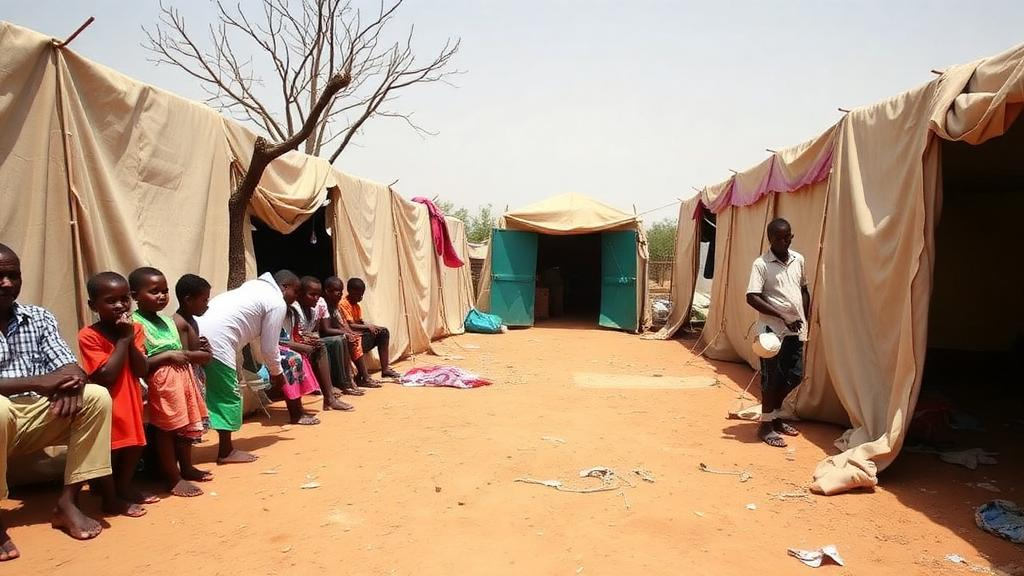
Tuberculosis remains the deadliest infectious companion of HIV, and nowhere is that partnership more dangerous than in refugee camps, where displaced populations face crowded housing, interrupted care, and limited access to diagnostics. A new case-control study from Gambella, Western Ethiopia, published in BMC Infectious Diseases, has now identified the specific factors that determine whether TB/HIV co-infected patients in refugee camp health facilities survive their treatment or join the ranks of those who fail, die, or disappear from follow-up. The findings carry weight for one of the 30 countries designated by the World Health Organization as carrying a high combined TB/HIV burden.
The research team, led by Buay Mathew Jock and colleagues at Jimma University’s Department of Epidemiology and Biostatistics, conducted an unmatched case-control study among TB/HIV co-infected patients receiving care in refugee camp health facilities in Gambella between January 2022 and January 2025. Cases were patients who experienced poor TB treatment outcomes, defined in accordance with national TB program guidelines as treatment failure, death, or loss to follow-up. Controls were patients who achieved successful treatment outcomes. Using simple random sampling, the investigators selected a total of 306 participants, split evenly between 153 cases and 153 controls, and extracted clinical and demographic data from medical records.
Analysis was performed using Stata version 17, with descriptive statistics summarizing the study variables. The team then applied a two-stage regression strategy common to observational epidemiology: bivariable logistic regression screened candidate variables at a liberal threshold of p less than 0.25, and multivariable logistic regression then isolated independent determinants. Both crude odds ratios and adjusted odds ratios were reported with 95 percent confidence intervals, and statistical significance was declared at p less than 0.05. This approach adjusts for confounding between variables, ensuring that each identified factor reflects an independent contribution rather than a statistical shadow of another.
The results are stark. Patients with no formal education faced nearly ten times the odds of a poor TB treatment outcome compared with those who had schooling, with an adjusted odds ratio of 9.83 and a confidence interval ranging from 1.75 to 55.20. Daily labourers carried even greater risk, with an adjusted odds ratio of 12.27 and a confidence interval of 3.63 to 21.06, suggesting that the economic precarity of day-wage work, with its irregular income and limited ability to take time off for clinic visits, directly undermines the sustained engagement that TB treatment demands.
Documented TB drug resistance emerged as another independent determinant, nearly tripling the odds of poor outcomes with an adjusted odds ratio of 2.94 and a confidence interval of 1.38 to 6.24. This finding underscores a well-established biological reality: when Mycobacterium tuberculosis strains resist first-line anti-TB drugs, standard regimens lose their bactericidal punch, allowing persistent bacilli to drive treatment failure. In refugee settings, where drug susceptibility testing may be limited and treatment interruption can fuel resistance, this factor takes on added significance for public health planning.
Immunological status proved equally decisive. Patients with a CD4 count below 200 cells per cubic millimetre faced more than three times the odds of a poor treatment outcome, with an adjusted odds ratio of 3.46 and a confidence interval of 1.47 to 8.11. CD4 cells, the immune coordinators targeted and destroyed by HIV, are central to the body’s ability to contain TB infection. When counts fall below 200, the immune system’s capacity to support anti-TB therapy collapses, increasing vulnerability to disseminated disease and death. This threshold aligns with WHO guidance on advanced HIV disease, which recognizes severe immunosuppression as a marker of heightened mortality risk.
Against these risk factors, one protective factor stood out with remarkable clarity. Good adherence to antiretroviral therapy was significantly associated with reduced odds of poor TB treatment outcomes, with an adjusted odds ratio of 0.16 and a confidence interval of 0.09 to 0.30. In practical terms, this represents an 84 percent reduction in the likelihood of a poor outcome among patients who consistently took their ART. The mechanism is biologically coherent: sustained viral suppression preserves CD4 cell counts, restores immune function, and thereby strengthens the body’s capacity to support anti-TB treatment. ART adherence, in this framing, is not merely an HIV intervention but a TB survival strategy.
The study’s conclusions synthesize these findings into a clear message: poor TB treatment outcomes among TB/HIV co-infected patients in refugee camps were significantly associated with low CD4 count, poor ART adherence, TB drug resistance, and educational status. Each of these determinants points toward a specific intervention lever. Educational support and health literacy programs may help patients understand and navigate treatment. Economic protections for daily labourers could reduce the structural barriers that force treatment interruption. Expanded drug susceptibility testing would identify resistant strains earlier, allowing regimen adjustments before failure occurs. And strengthened ART adherence support, including counseling and community-based follow-up, offers the single largest measured protective effect.
Ethical approval for the study was obtained from the Jimma University Institutional Review Board under reference number JUIH/IRB/283/25, with permission secured from the Gambella Regional Health Bureau and the respective refugee camp health facilities. Because the research relied on retrospective review of de-identified medical records, the requirement for informed consent was waived, and no personal identifiers were collected or recorded. The study was reported in accordance with the Strengthening of Observational Studies in Epidemiology guidelines, ensuring transparent documentation of methods and findings.
For a refugee population already carrying the burdens of displacement, the study’s implications extend beyond Gambella. Ethiopia hosts one of the largest refugee populations in Africa, and TB/HIV co-infection remains a leading cause of morbidity and mortality across the country’s camp health facilities. The identification of modifiable determinants, particularly ART adherence, offers camp health systems a measurable target for reducing preventable deaths. As the authors note, co-infection compromises immune function and thereby increases the risk of poor treatment outcomes and death, but the 84 percent reduction in odds associated with good ART adherence demonstrates that this risk is not fixed. With targeted interventions addressing education, economic precarity, drug resistance, and immunological monitoring, refugee camp TB programs can move from simply documenting poor outcomes to actively preventing them.
Subject of Research: Epidemiology of TB/HIV co-infection in refugee settings
Article Title: Determinants of tuberculosis treatment outcomes among TB/HIV co-infected patients in Gambella refugee camps, Western Ethiopia: a case–control study
Article References: Jock, B. M., Merera, A. M., Serba, H. A., Abreham, A., & Merga, H. (2026). Determinants of tuberculosis treatment outcomes among TB/HIV co-infected patients in Gambella refugee camps, Western Ethiopia: a case–control study. BMC Infectious Diseases. https://doi.org/10.1186/s12879-026-14450-9
Image Credits: AI Generated
DOI: 10.1186/s12879-026-14450-9
Keywords: tuberculosis, HIV, co-infection, refugee camps, Ethiopia, treatment outcomes, ART adherence, CD4 count, drug resistance, case-control study, Gambella, public health
Cite Scienmag News
Courtney Benton. (October 19, 2026). No Formal Education, Daily Labour, and Low CD4 Counts Drive Poor TB Outcomes in Refugee Camps. Scienmag. https://scienmag.com/no-formal-education-daily-labour-and-low-cd4-counts-drive-poor-tb-outcomes-in-refugee-camps/
Courtney Benton. "No Formal Education, Daily Labour, and Low CD4 Counts Drive Poor TB Outcomes in Refugee Camps." Scienmag, 19 October 2026, https://scienmag.com/no-formal-education-daily-labour-and-low-cd4-counts-drive-poor-tb-outcomes-in-refugee-camps/. Accessed 19 October 2026.
Courtney Benton. "No Formal Education, Daily Labour, and Low CD4 Counts Drive Poor TB Outcomes in Refugee Camps." Scienmag. October 19, 2026. https://scienmag.com/no-formal-education-daily-labour-and-low-cd4-counts-drive-poor-tb-outcomes-in-refugee-camps/


