


The invasive rust fungus Austropuccinia psidii, commonly known as myrtle rust, poses a severe threat to biodiversity across the Southern Hemisphere. Originating in Central and South America, this pathogen has rapidly expanded its range, with significant detections in Australia, South Africa, and New Zealand over the last decade. It infects more than 500 species within the Myrtaceae family, a group of plants that is ecologically and culturally vital, particularly in Australia where a substantial portion of endemic vegetation is at risk. In many affected regions, the infection has led to localized dieback, reproductive failure, and population collapse, prompting urgent national biosecurity interventions and heightened conservation concerns among ecologists and policymakers.
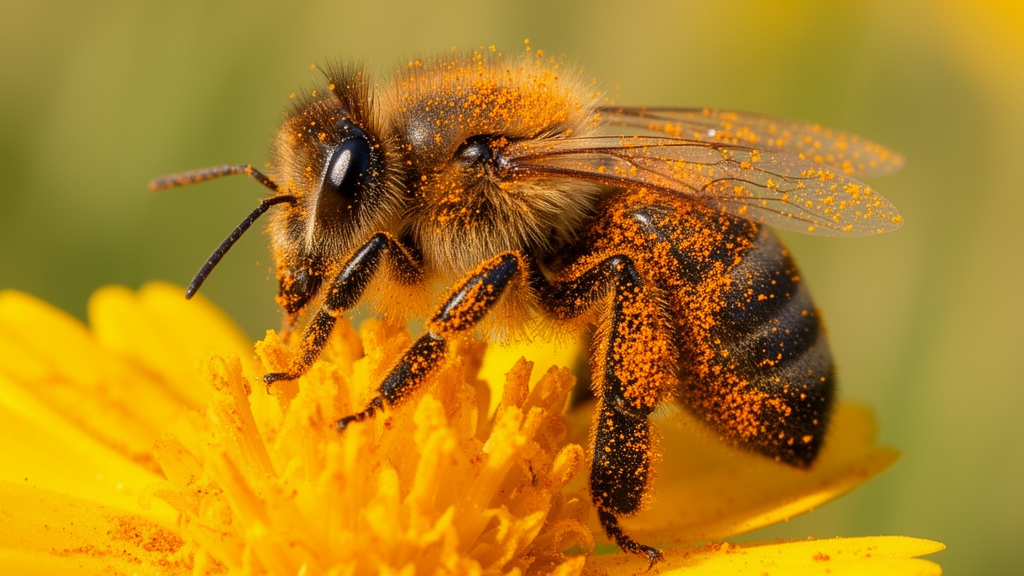
Traditionally, rust fungi are understood to disperse primarily through wind or water, relying on the production of vast quantities of small, lightweight urediniospores adapted for aerial transport. However, recent field observations have challenged this singular view of abiotic dispersal. Researchers have documented Western honey bees, Apis mellifera, actively collecting urediniospores of A. psidii from infected host plants. These foragers store the spores in their pollen baskets and return them to the hive in a manner that is visually and behaviorally indistinguishable from standard pollen foraging. This behavior suggests a potential novel mutualistic interaction between two alien species, where the fungus gains a new mode of dispersal and the bee may obtain an alternative source of nutrition.
To validate this hypothesis, researchers investigated two critical conditions required for such a mutualism to function: whether the spores remain viable after entering the hive environment and whether they provide a nutritional benefit to the pollinator. The study focused on the persistence of A. psidii urediniospores within honey bee colonies and their nutritional composition. By testing these factors, the team aimed to determine if spore foraging is a viable strategy for honey bees rather than an aberration, and if this interaction could facilitate the long-distance dispersal of the pathogen.
The results indicated that A. psidii spores remain viable for at least nine days within honey bee colonies. In controlled trials, spores placed in hives maintained germination rates comparable to initial levels, showing no significant decline in viability over the nine-day period. This persistence is particularly concerning given that commercial hives are frequently transported over long distances for agricultural pollination services, typically within a three-to-seven-day window. The survival of viable spores during this timeframe suggests that managed hives could act as a significant vector for the pathogen, a pathway not currently incorporated into existing biosecurity frameworks.
Nutritional analysis revealed that A. psidii urediniospores match or exceed the nutritional quality of known high-protein pollens. The spores contained 22.5% protein, which is comparable to willow pollen and significantly higher than other fungal spores tested. Furthermore, the spores contained all ten essential amino acids required for honey bee development in amounts above the minimum thresholds for full protein absorption. These findings suggest that the spores are not merely contaminants but a potentially valuable dietary resource for the bees, especially in environments where floral resources are scarce due to drought, habitat loss, or the rust infection itself.
Artificial rearing trials further demonstrated that A. psidii spores support normal development and survival in honey bee brood. Larvae fed diets containing the rust spores developed at rates and achieved weights similar to those fed high-quality pollen sources. While survival rates were slightly lower than those on kiwifruit pollen, they remained well above the minimum thresholds for colony health. In contrast, larvae fed spores from a different rust species, Melampsora sp., showed reduced survival and lower body weight, indicating that not all fungal spores are equal in their nutritional value to bees. The specific amino acid balance in A. psidii spores appears to be key to their suitability as a food source.
This interaction exemplifies an “invasional mutualism,” a phenomenon where introduced species facilitate each other’s success, often exacerbating the speed and scale of invasion. In this case, the rust gains a new mode of urediniospore dispersal, while the bee obtains an alternative source of protein. This dynamic could create a positive ecological feedback loop: as myrtle rust reduces floral resources, bees may increasingly turn to fungal spores for nutrition, thereby enhancing the pathogen’s spread and further depleting the floral resources that support pollinator networks. Such a cycle could destabilize plant-pollinator interactions and forest regeneration, particularly in regions with high Myrtaceae endemism.
The implications for biosecurity are significant. Current national and regional strategies, such as the Australian Myrtle Rust Action Plan and New Zealand surveillance plans, do not yet include the potential of apiculture in the spread of plant pathogens. Recognizing pollinators as potential vectors is essential for developing more effective containment strategies. Integrating pollinator movement into management plans could help limit the geographic expansion of A. psidii and protect biodiversity in vulnerable areas. Future research should experimentally test the final condition for mutualism: successful infection of a new host following pollinator-mediated dispersal. Quantifying the relative contribution of insect-mediated versus windborne dispersal across different landscapes and seasons will be vital for forecasting future spread and designing evidence-based interventions.
Subject of Research: Honey bees as potential vectors of the invasive rust pathogen Austropuccinia psidii: nutritional mutualism and implications for pathogen spread
Article Title: Honey bees as potential vectors of the invasive rust pathogen Austropuccinia psidii : nutritional mutualism and implications for pathogen spread
Article References: Shin-Clayton, S., Mortensen, A. N., Beggs, J. R., Buxton, M. N., Hauxwell, C., Bateson, M. F., Jochym, M., Pegg, G. S., & Pattemore, D. E. (2026). Honey bees as potential vectors of the invasive rust pathogen Austropuccinia psidii: nutritional mutualism and implications for pathogen spread. NeoBiota, 106, 75-90. https://doi.org/10.3897/neobiota.106.169027
Image Credits: AI Generated
DOI: 10.3897/neobiota.106.169027
Keywords: Honey, bees, potential, vectors, invasive, rust, pathogen, Austropuccinia, psidii, nutritional, mutualism, implications
Cite Scienmag News
Daisy Hatcher. (October 18, 2026). Honey Bees May Spread Invasive Myrtle Rust via Nutritional Mutualism. Scienmag. https://scienmag.com/honey-bees-may-spread-invasive-myrtle-rust-via-nutritional-mutualism/
Daisy Hatcher. "Honey Bees May Spread Invasive Myrtle Rust via Nutritional Mutualism." Scienmag, 18 October 2026, https://scienmag.com/honey-bees-may-spread-invasive-myrtle-rust-via-nutritional-mutualism/. Accessed 18 October 2026.
Daisy Hatcher. "Honey Bees May Spread Invasive Myrtle Rust via Nutritional Mutualism." Scienmag. October 18, 2026. https://scienmag.com/honey-bees-may-spread-invasive-myrtle-rust-via-nutritional-mutualism/


