


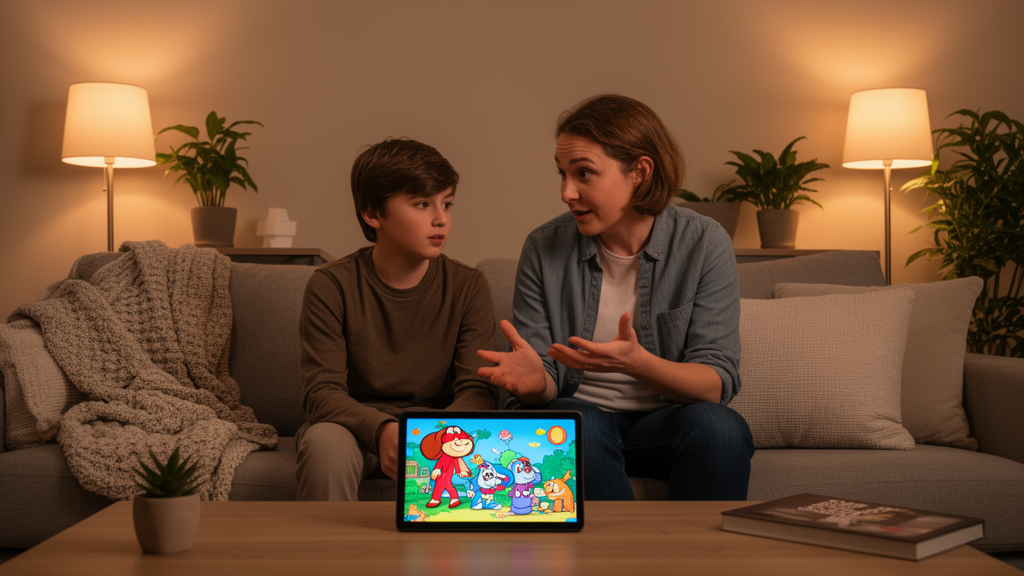
Parents play a decisive role in shaping how children come to understand sexual orientation and gender identity, yet many say they lack the confidence, vocabulary, or trustworthy resources to start those conversations at all. A new study from the University of Alberta, published in BMC Pediatrics, suggests that a pair of short animated videos may be enough to move the needle. In a mixed-methods evaluation, the researchers found that brief, story-driven animations significantly improved parents’ understanding of gender diversity, their comfort discussing these topics, and their confidence in responding to children’s questions, with all measured changes reaching statistical significance.
The research team, led by Neelam Punjani, Amber Hussain, and Shannon D. Scott at the Faculty of Nursing, set out to address a persistent gap in child health communication. Comprehensive sexuality education has long been recognized as a protective factor for young people, but its effectiveness depends heavily on what happens at home. When parents avoid or fumble conversations about sexual orientation and gender identity, children may be left to piece together information from less reliable sources. The team’s response was to build digital knowledge translation tools: short, animated, narrative-based videos designed specifically for parents rather than for children or clinicians.
Knowledge translation, often abbreviated as KT in health research, refers to the disciplined process of turning scientific evidence into formats that real audiences can actually absorb and act on. For sensitive or stigmatized subjects, traditional written guidance often falls short, because the material can feel clinical, judgmental, or simply overwhelming. Arts-based approaches, including animation and visual storytelling, have shown promise in these contexts by lowering emotional defenses and creating a sense of narrative safety. Viewers can watch characters navigate difficult moments without feeling personally interrogated, which makes the format particularly well suited to topics that many adults find awkward to discuss.
To build the videos, the researchers followed the ARCHE-ECHO KT Tool Development Cycle, a structured framework developed at the Alberta Research Centre for Health Evidence as part of the Evidence in Child Health to enhance Outcomes program. The cycle emphasizes user-centred, iterative refinement: content is drafted from primary qualitative research, reviewed with intended end users, revised, and tested again rather than released as a one-shot product. In this case, the two videos were grounded in earlier qualitative work with Canadian parents, ensuring that the scenarios, language, and emotional beats reflected the actual concerns and uncertainties parents had voiced rather than assumptions made by the research team.
The evaluation used a sequential explanatory mixed-methods design, meaning quantitative results were collected first and then explored in greater depth through qualitative follow-up. Twenty-four parents completed structured usability testing that included the System Usability Scale, a widely used ten-item instrument that scores perceived ease of use on a scale from zero to one hundred, along with knowledge translation evaluation subscales and four pre-post visual analogue scale items. Those VAS items captured self-rated changes in understanding of gender diversity, comfort discussing sexual orientation and gender identity, confidence responding to children’s questions, and the likelihood of initiating such conversations at home.
The numbers were striking. The two videos earned mean System Usability Scale scores of 82.4 and 79.8, both comfortably above the 68-point threshold conventionally interpreted as above-average usability. Paired t-tests comparing pre- and post-viewing ratings showed significant improvements across every outcome measured, with p-values below .001 for all four VAS items. In practical terms, parents did not merely find the videos pleasant to watch; they reported measurable gains in comprehension, emotional readiness, and self-assessed willingness to open conversations with their own children.
Eight of the participants then joined focus group discussions, and the thematic analysis of those conversations revealed five major themes. Parents described increased confidence and knowledge after viewing the animations. They attributed their emotional and cognitive engagement to the arts-based design, noting that narrative and visual elements made abstract concepts feel concrete and relatable. They also expressed a desire for ongoing support and community resources beyond the videos themselves, underscoring that a two-minute animation can open a door but cannot sustain a lifelong dialogue on its own. A fourth theme highlighted the value of inclusive representation, with participants responding positively to seeing diverse families and identities reflected on screen. The final theme captured areas for improvement, including concrete suggestions for future iterations.
Those suggestions carried real design weight. Participants recommended adding multilingual captions so that the tools could serve families whose first language is not English, and they called for age-specific adaptations, recognizing that a conversation with a six-year-old differs fundamentally from one with a teenager. The researchers acknowledge these limits in their conclusions, noting that future work should examine the long-term effects of the tools and develop multilingual, culturally responsive versions to broaden accessibility. The study also involved a relatively small sample of twenty-four usability testers, which is appropriate for a formative usability evaluation but leaves questions about generalizability and behavioral follow-through for larger trials.
What makes the findings notable beyond this specific topic is the methodological template they offer. Sensitive child health subjects, from mental health to bullying to substance use, often stall at the same bottleneck: parents who care deeply but feel unequipped. The combination of a rigorous development cycle, standardized usability metrics, and mixed-methods evaluation provides a reproducible pathway for building and validating communication tools in other domains. The authors suggest that arts-based knowledge translation tools may complement existing sexuality education efforts and strengthen culturally responsive public health communication more broadly, positioning animation not as a gimmick but as a serious instrument for evidence dissemination.
The study, conducted with ethics approval from the University of Alberta Research Ethics Board and carried out in accordance with the Declaration of Helsinki, arrives at a moment when demand for accessible, evidence-based parenting resources on gender and sexuality continues to grow. Its core message is deceptively simple: when parents are given the right narrative tools, their confidence and willingness to engage rise measurably, and the hardest conversations become a little easier to start. As the research team looks toward multilingual versions and longitudinal testing, the videos stand as an early demonstration that visual storytelling, rigorously tested, can translate complex evidence into everyday family conversation.
Subject of Research: Development and usability testing of animated digital knowledge translation tools for parents on sexual orientation and gender identity
Article Title: Development and usability testing of digital knowledge translation tools for parents on sexual orientation and gender identity
Article References: Punjani, N., Hussain, A., & Scott, S. D. (2026). Development and usability testing of digital knowledge translation tools for parents on sexual orientation and gender identity. BMC Pediatrics. https://doi.org/10.1186/s12887-026-07622-8
Image Credits: AI Generated
DOI: 10.1186/s12887-026-07622-8
Keywords: sexual orientation, gender identity, knowledge translation, animated videos, usability testing, parenting, sexuality education, child health, arts-based methods, digital health tools, BMC Pediatrics, public health communication
Cite Scienmag News
Ophelia Keating. (October 18, 2026). Animated Videos Help Parents Talk About Sexual Orientation and Gender Identity. Scienmag. https://scienmag.com/animated-videos-help-parents-talk-about-sexual-orientation-and-gender-identity/
Ophelia Keating. "Animated Videos Help Parents Talk About Sexual Orientation and Gender Identity." Scienmag, 18 October 2026, https://scienmag.com/animated-videos-help-parents-talk-about-sexual-orientation-and-gender-identity/. Accessed 18 October 2026.
Ophelia Keating. "Animated Videos Help Parents Talk About Sexual Orientation and Gender Identity." Scienmag. October 18, 2026. https://scienmag.com/animated-videos-help-parents-talk-about-sexual-orientation-and-gender-identity/


