


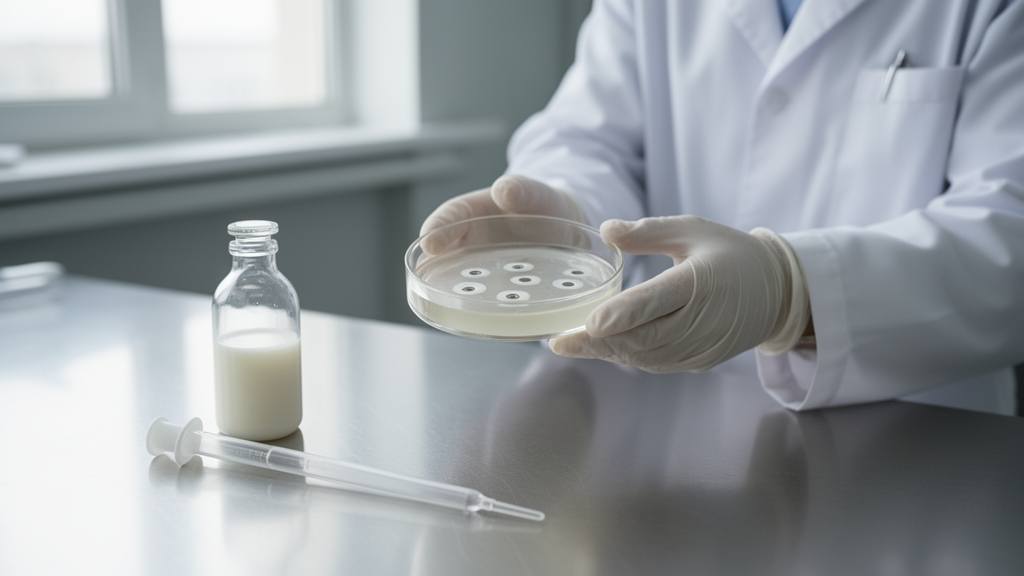
Antimicrobial resistance has quietly become one of the most consequential threats in modern medicine, and a new laboratory study from Armenia adds an intriguing twist to the search for solutions. Researchers have isolated and purified postbiotics—bioactive molecules produced by lactic acid bacteria—from six endemic strains preserved in the country’s national microbial depository, and tested them head-to-head against conventional antibiotics across three major groups of human pathogens. The findings, published in the journal Pharmacia, suggest that certain bacteriocins derived from fermented milk bacteria can inhibit both antibiotic-susceptible and multidrug-resistant bacteria with remarkable consistency, even where last-line drugs falter.
The research team worked with strains of Enterococcus and Lactobacillus originally isolated from traditional fermented dairy products, including Enterococcus faecium KE5, Enterococcus durans KE6, Lactobacillus rhamnosus 2012, and Lactobacillus helveticus KG5. These strains were cultivated in a specialized curd whey medium under anaerobic conditions, and their cell-free supernatants were concentrated five-fold before the active compounds were separated. Bacteriocins—ribosomally synthesized antimicrobial peptides classified as Generally Regarded As Safe—were purified by gel filtration on Sephadex columns, while exopolysaccharides, high-molecular-weight carbohydrate polymers, were precipitated with ethanol and likewise purified chromatographically. High-performance liquid chromatography confirmed that the exopolysaccharide fractions were heteropolysaccharides composed primarily of glucose and galactose.
To benchmark the postbiotics against clinical reality, the team assembled a demanding test panel drawn from internationally recognized culture collections, including the American Type Culture Collection and the UK’s National Collection of Type Cultures. The panel deliberately included both susceptible control strains and notorious resistant phenotypes: an ESBL- and AmpC-producing Klebsiella pneumoniae, a multidrug-resistant Pseudomonas aeruginosa, an OXA-48 carbapenemase-producing Acinetobacter baumannii, methicillin-resistant Staphylococcus aureus, and resistant strains of Streptococcus pneumoniae and Enterococcus faecalis. Resistance mechanisms were confirmed phenotypically through double-disk synergy and modified Hodge tests, and carbapenemase genes including KPC, NDM, and OXA were verified by polymerase chain reaction.
The initial screening established a standardized effective dose of 5 milligrams per milliliter against the model organism Salmonella typhimurium G-38, determined by the serial dilution method. This concentration was then applied across the broader pathogen panel using agar diffusion assays, allowing direct comparison with standard antibiotic discs interpreted according to EUCAST clinical breakpoints. The stepwise design meant that every postbiotic preparation and every antibiotic faced the same targets under the same conditions, a comparison the authors argue is rarely attempted at this scale for both Gram-positive and Gram-negative resistant strains.
Concentration-dependence emerged as a defining theme. All exopolysaccharide preparations achieved nearly complete growth inhibition at 100 milligrams per milliliter, but their activity fell away steeply at lower doses, with the exception of the preparation from E. faecium KE5, which retained measurable effects down to 1 milligram per milliliter. Bacteriocins told a similar but sharper story: all preparations inhibited 95 to 100 percent of growth at 10 to 50 milligrams per milliliter, yet only the bacteriocin from E. faecium KE5 sustained substantial activity at 5 milligrams per milliliter, a property the researchers describe as dose sustainability. L. rhamnosus 2012 stood apart for producing two distinct bacteriocins of different molecular weights, 1.42 and 0.60 kilodaltons, which broadened its inhibitory spectrum.
The comparative results against antibiotics revealed what the authors call an erosion of susceptibility among resistant isolates. The ESBL- and AmpC-producing K. pneumoniae strain showed complete resistance to beta-lactams and only 5 percent susceptibility to carbapenems, while remaining fully susceptible to fluoroquinolones and aminoglycosides. Among the non-fermenting Gram-negatives, the resistant P. aeruginosa strain and the OXA-48-positive A. baumannii resisted most antibiotic classes, with the Pseudomonas control strain itself showing only 10 percent susceptibility to beta-lactams and none to fluoroquinolones. Resistant Gram-positive cocci fared little better, with the resistant S. pneumoniae strain showing just 28.5 percent susceptibility to beta-lactams and complete resistance to fluoroquinolones and aminoglycosides.
Against this backdrop of patchy antibiotic performance, the purified bacteriocins from L. rhamnosus 2012 and E. faecium KE5 delivered the study’s most striking result: 100 percent inhibitory activity against every tested reference strain, regardless of resistance phenotype. Whether a pathogen carried ESBL enzymes, carbapenemase genes, or methicillin resistance made no difference to the bacteriocins’ performance under the experimental conditions. The exopolysaccharides, by contrast, showed far weaker and more variable effects, with most Enterobacteriaceae isolates classified as resistant to them. The authors attribute the disparity to fundamental biochemical differences: bacteriocins are thought to kill directly by permeabilizing bacterial membranes and forming pores, whereas exopolysaccharides act more indirectly, potentially by interfering with adhesion or biofilm formation.
That mechanistic interpretation comes with important caveats. The researchers acknowledge that the proposed membrane-disruption pathways remain hypotheses, since no direct membrane permeability assays or electron microscopy imaging were performed. Diffusion-based assays also carry inherent limitations for large molecules, and the exopolysaccharides, at molecular weights of 10 to 44 kilodaltons, may simply diffuse poorly through agar, understating their true activity. The authors also stress that the narrower spectrum of the postbiotics, while potentially advantageous for preserving the host microbiome, means they cannot simply replace broad-spectrum antibiotics across the board.
Even so, the case for bacteriocins as complementary agents is compelling on several fronts. Unlike antibiotics that suppress bacterial metabolism and synthesis, bacteriocins tend to damage target cell structures directly, which the authors argue reduces the likelihood of resistance emerging. They are active at very low concentrations, are completely metabolized in the human body, and generally show low toxicity. Previous work by the same group indicated that bacteriocins and exopolysaccharides from these strains can inhibit pneumonia-causing pathogens, and the current data open the possibility of combination preparations—bacteriocins paired with exopolysaccharides or with conventional drugs—that could enhance efficacy while lowering antibiotic doses and resistance pressure.
The study’s authors frame their endemic Armenian strains as a valuable reservoir for next-generation antimicrobials, with potential applications spanning nutrition, prevention, and eventually therapy. They are careful, however, to position the findings as preliminary in vitro observations. Before any clinical translation, in vivo efficacy and toxicological studies will be required to establish whether the dose sustainability and uniform activity seen on agar plates survive the far harsher conditions of a living host. For now, the message is that the microscopic inhabitants of traditional fermented foods may hold molecules that drug-resistant bacteria have not yet learned to defeat.
Subject of Research: Antimicrobial activity of bacteriocins and exopolysaccharides from lactic acid bacteria against multidrug-resistant human pathogens
Article Title: Antimicrobial properties of postbiotics of different LAB against multidrug resistance bacteria
Article References: Tkhruni, F., Danova, S., Melik-Andreasyan, G., Aleksanyan, N., & Israyelyan, A. (2026). Antimicrobial properties of postbiotics of different LAB against multidrug resistance bacteria. Pharmacia, 73, Article e189800. https://doi.org/10.3897/pharmacia.73.e189800
Image Credits: AI Generated
DOI: 10.3897/pharmacia.73.e189800
Keywords: antimicrobial resistance, postbiotics, bacteriocins, exopolysaccharides, lactic acid bacteria, multidrug-resistant bacteria, probiotics, Enterococcus faecium, Lactobacillus rhamnosus, ESBL, carbapenemase, fermented milk
Cite Scienmag News
Ophelia Keating. (October 18, 2026). Fermented Milk Peptides Show 100% Activity Against Drug-Resistant Superbugs. Scienmag. https://scienmag.com/fermented-milk-peptides-show-100-activity-against-drug-resistant-superbugs/
Ophelia Keating. "Fermented Milk Peptides Show 100% Activity Against Drug-Resistant Superbugs." Scienmag, 18 October 2026, https://scienmag.com/fermented-milk-peptides-show-100-activity-against-drug-resistant-superbugs/. Accessed 18 October 2026.
Ophelia Keating. "Fermented Milk Peptides Show 100% Activity Against Drug-Resistant Superbugs." Scienmag. October 18, 2026. https://scienmag.com/fermented-milk-peptides-show-100-activity-against-drug-resistant-superbugs/


