


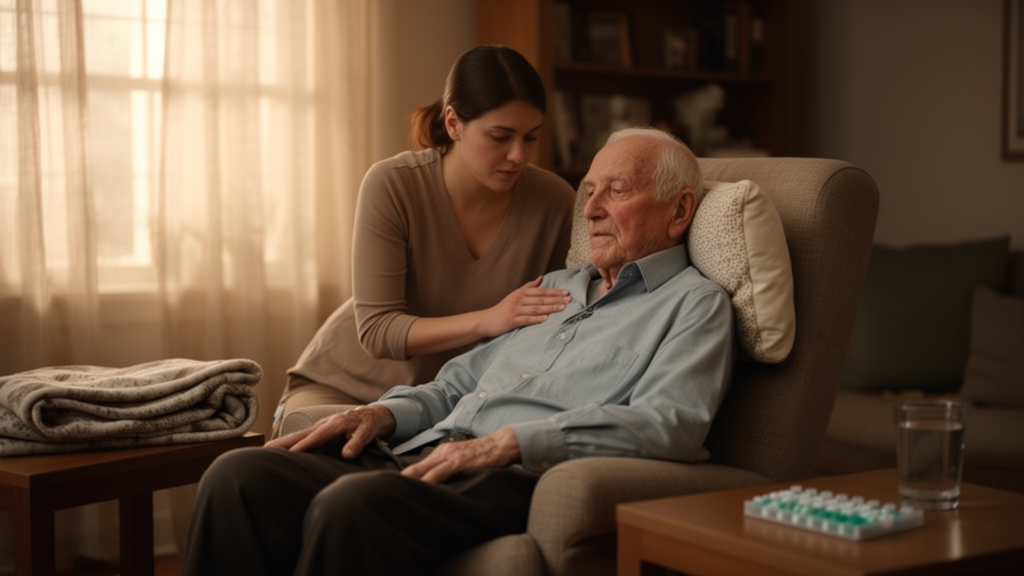
Every year, millions of people undergo coronary artery bypass graft surgery, one of the most common and demanding procedures in modern cardiac medicine. While surgeons repair the blocked vessels of the heart, the recovery that follows unfolds largely at home, where an often invisible workforce takes over: family caregivers. These spouses, children, and relatives manage medications, monitor wounds, prepare special diets, and absorb the emotional turbulence of a loved one’s recovery from open-heart surgery. New research published in BMC Nursing by a team at Shiraz University of Medical Sciences in Iran offers a rare, detailed look at what happens when these caregivers are given structured support, and the findings carry technical and practical weight for anyone designing programs to protect this vulnerable population.
The study formed the qualitative phase of a larger mixed-methods research project, conducted as part of a doctoral nursing dissertation and funded by Shiraz University of Medical Sciences. The research team, including Zahra Molazem, Fatemeh Beheshtaeen, Majid Najafi Kalyani, Zinat Mohebbi, and Elham Mirshah, had previously implemented a caregiver burden reduction program for families of patients recovering from bypass surgery. Quantitative instruments such as the Caregiver Burden Inventory, the Adult Carer Quality of Life Questionnaire, and the General Health Questionnaire can measure whether such a program shifts scores on paper. What numbers alone cannot explain is how caregivers actually experience the intervention, which components they find useful, and what contextual barriers derail implementation in real homes. That explanatory gap is precisely what this qualitative evaluation was designed to close.
Methodologically, the researchers turned to criterion-based purposive sampling, a technique in which participants are deliberately selected because they meet predefined criteria relevant to the research question. Nine family caregivers of patients who had undergone coronary artery bypass graft surgery and had participated in the caregiver burden reduction program were recruited. Each caregiver took part in an in-depth interview, which was audio recorded with informed consent and then transcribed verbatim. The transcripts were analyzed using the content analysis method developed by Ulla Graneheim and Berit Lundman, a widely used qualitative framework that moves through careful reading, meaning-unit identification, condensation, coding, and the iterative grouping of codes into subcategories and categories. This systematic pathway allows researchers to distill lived experience into structured themes while remaining anchored in participants’ own words.
The analysis produced a rich hierarchical structure: twenty-one sub-subcategories, seven subcategories, and three main categories. The three main categories were health promotion, efficient care, and challenges in implementing the program. This architecture matters because it separates what caregivers gained personally, what they gained professionally in their unpaid caregiving role, and what stood in the way of the program working as intended. In other words, the evaluation captured benefits, competencies, and barriers in a single analytical sweep, giving program designers a multidimensional feedback loop rather than a one-sided satisfaction survey.
Within the health promotion category, caregivers described improvements across three subcategories: physical health improvement, psychological health enhancement, and the development of social activities. This triad mirrors established models of health in which physical, mental, and social well-being are inseparable. Caregivers of cardiac surgery patients frequently neglect their own bodies, skipping exercise and sleep while managing someone else’s recovery. The program apparently helped them reclaim physical routines, and the psychological dimension was equally significant, since chronic caregiving stress is associated with elevated risks of depression, anxiety, and even cardiovascular events themselves. The reported return to social activities suggests the program counteracted the isolation that so often accompanies long-term caregiving, a finding that resonates with decades of research linking social engagement to caregiver resilience.
The second main category, efficient care, contained four subcategories: strengthening caregiving knowledge, personal growth, development of caregiving competencies, and improvement of patient outcomes. This is where the technical logic of psycho-educational interventions becomes visible. When caregivers receive structured education about wound care, medication schedules, warning signs of complications, and rehabilitation exercises, their knowledge base expands. That knowledge translates into competencies, the practical skills needed to deliver safe care at home. Caregivers also reported personal growth, describing a sense of mastery and confidence that qualitative researchers often link to self-efficacy, the belief in one’s own capability to execute tasks and manage demands. Crucially, the caregivers connected their own development to better outcomes for the patients themselves, suggesting that investing in the caregiver is simultaneously an investment in the patient’s recovery trajectory.
The third main category, challenges in implementing the program, revealed two subcategories: inadequate internet infrastructure and patients’ physical limitations. These barriers are technically revealing. If a caregiver burden reduction program relies on digital delivery, whether through online educational modules, telehealth follow-ups, or virtual support sessions, then its effectiveness is hostage to connectivity. In regions where internet infrastructure is unreliable, digital health interventions can widen rather than narrow disparities, because the caregivers who most need support may be the least able to access it. The second barrier, patients’ physical limitations, highlights the interdependent nature of the caregiving dyad. When a recovering cardiac patient cannot mobilize easily or perform self-care, the physical demands on the caregiver escalate, and educational content alone cannot lift the weight of a body that needs to be moved, washed, and supported. Effective programs must therefore account for the patient’s functional status, not just the caregiver’s knowledge deficit.
Synthesizing these findings, the researchers concluded that caregivers generally evaluated the burden reduction program as useful, citing perceived improvements in their own health and increased caregiving efficiency. The study points toward four components that may be important in caregiver support: educational content, behavioral strategies, individualized follow-up, and support for task organization. Educational content builds the knowledge base; behavioral strategies convert knowledge into sustainable daily routines; individualized follow-up allows adjustments tailored to each family’s circumstances; and task organization support helps caregivers distribute or structure the workload so that it does not collapse onto a single person. Together, these elements sketch a blueprint for interventions that treat caregivers as active partners in cardiac rehabilitation rather than passive recipients of discharge instructions.
The authors are careful about the limits of their evidence. With only nine participants, a single study center, and purposively selected participants, the findings should be interpreted as exploratory. Qualitative studies of this kind do not aim for statistical generalization; instead, they offer transferability, meaning readers can judge how well the themes might apply to their own settings. The researchers suggest that the results may inform the design and refinement of future caregiver interventions, and the identified barriers, particularly the internet infrastructure problem, provide concrete targets for adaptation in low-connectivity environments. The study received ethical approval from the Institutional Ethics Committee at Shiraz University of Medical Sciences, was conducted in accordance with the Declaration of Helsinki, and all participants provided informed consent for participation, audio recording, and the publication of anonymized quotations.
What makes this research travel far beyond a single hospital in southern Iran is the universality of its message. Cardiovascular disease remains the leading cause of death worldwide, and as surgical populations age and hospital stays shorten, the burden on family caregivers will only intensify. Programs like the one evaluated here demonstrate that supporting caregivers is not charity; it is a clinical strategy with measurable consequences for patient recovery and family well-being. The voices of these nine caregivers, distilled through rigorous content analysis, show that when families are equipped with knowledge, skills, and genuine support, the invisible workforce at the heart of cardiac care becomes stronger, healthier, and far better prepared for the long road after surgery.
Subject of Research: Nursing and caregiver health research
Article Title: Experiences of family caregivers of patients undergoing coronary artery bypass graft surgery regarding the caregiver burden reduction program: a qualitative study
Article References: Molazem, Z., Beheshtaeen, F., Kalyani, M. N., Mohebbi, Z., & Mirshah, E. (2026). Experiences of family caregivers of patients undergoing coronary artery bypass graft surgery regarding the caregiver burden reduction program: a qualitative study. BMC Nursing. https://doi.org/10.1186/s12912-026-05522-x
Image Credits: AI Generated
DOI: 10.1186/s12912-026-05522-x
Keywords: caregiver burden, coronary artery bypass graft, cardiac surgery recovery, qualitative research, nursing, psycho-educational programs, family caregivers, cardiovascular disease, Experiences, family, caregivers, patients
Cite Scienmag News
Ophelia Keating. (October 18, 2026). Family Caregivers Reveal What Really Eases the Strain of Heart Surgery Recovery. Scienmag. https://scienmag.com/family-caregivers-reveal-what-really-eases-the-strain-of-heart-surgery-recovery/
Ophelia Keating. "Family Caregivers Reveal What Really Eases the Strain of Heart Surgery Recovery." Scienmag, 18 October 2026, https://scienmag.com/family-caregivers-reveal-what-really-eases-the-strain-of-heart-surgery-recovery/. Accessed 18 October 2026.
Ophelia Keating. "Family Caregivers Reveal What Really Eases the Strain of Heart Surgery Recovery." Scienmag. October 18, 2026. https://scienmag.com/family-caregivers-reveal-what-really-eases-the-strain-of-heart-surgery-recovery/


