


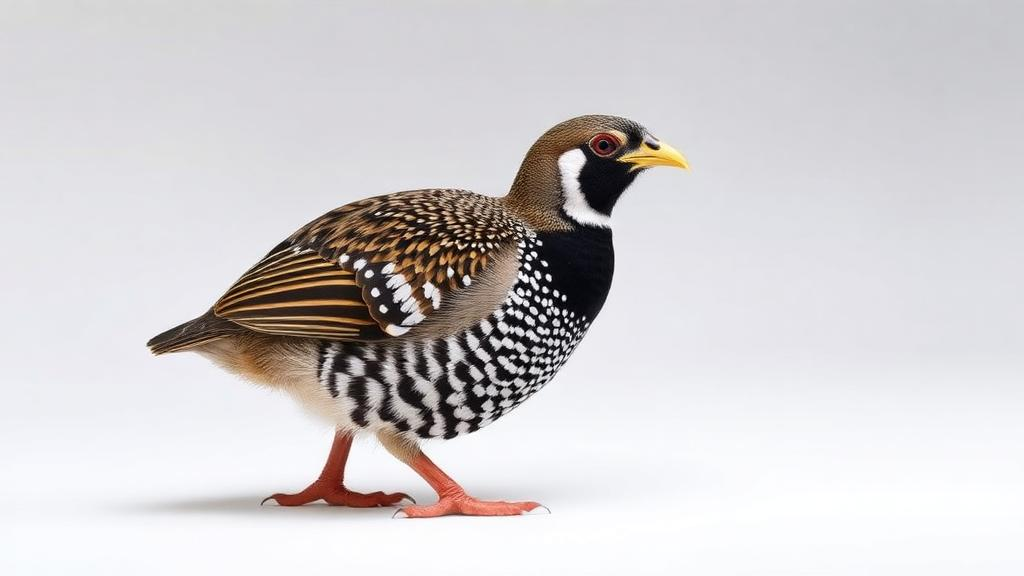
For more than five years, the chicken held a lonely distinction in avian genetics: it was the only bird whose ribosomal DNA repeat unit had ever been fully deciphered, from the start of the external transcribed spacer to the far end of the intergenic spacer. That monopoly has now ended. A research team working at Saint Petersburg State University has assembled and annotated the complete ribosomal gene cluster of the Japanese quail (Coturnix japonica), producing a continuous 21,166-base-pair sequence that reveals, in unprecedented detail, how the genetic machinery for building ribosomes is organized in a second bird species. The achievement, published in the journal Comparative Cytogenetics, matters far beyond poultry science, because ribosomal DNA sits at the heart of some of the most stubborn problems in genome assembly and chromosome evolution.
Ribosomal DNA is deceptively simple in concept and notoriously difficult in practice. In every animal cell, the genes encoding the 18S, 5.8S and 28S ribosomal RNAs sit together in a cluster, separated by internal transcribed spacers and flanked by external transcribed spacers. This cluster is repeated in long tandem arrays at the nucleolar organizer regions of one or more chromosome pairs, and these arrays are transcribed by RNA polymerase I into a single precursor molecule that is subsequently cut into the three mature rRNAs. Between the repeat units lies the intergenic spacer, a non-coding stretch that carries the promoter and terminator signals controlling pre-rRNA synthesis, along with enhancer elements, replication origins and replication fork barriers that keep the transcription and replication machineries from colliding. While the rRNA genes themselves are among the most conserved sequences in the genome, the spacers evolve rapidly through substitutions, insertions and duplications, which makes them valuable markers for molecular systematics and species identification.
The technical obstacle that has kept most avian rDNA out of reach is its chemical composition. In birds, the transcribed spacers are extraordinarily rich in guanine and cytosine, and the intergenic spacer is built from complex high-order repeats. Conventional short-read sequencing technologies, whether Sanger or next-generation platforms, simply cannot generate reads long enough to span these repetitive, GC-dense regions, and targeted sequencing with site-specific primers is practically impossible even with reagents designed for GC-rich templates. The chicken rDNA sequence was only obtained in 2019 by applying Pacific Biosciences long-read sequencing to a bacterial artificial chromosome clone carrying an rDNA insert. The Japanese quail team took a different long-read route, using Oxford Nanopore Technology on a MinION device to read the quail genome in fragments long enough to cross the entire repeat unit.
The researchers added a clever twist to overcome the stickiness of the target molecules. Because DNA fragments enriched in GC pairs and internal repeats tend to form complex secondary structures and intermolecular connections, the team used a barcoded adapter from a rapid barcoding kit to dilute the GC-rich quail DNA to one tenth of the flow cell load, mixing it with non-targeted DNA of lower GC content. Although this reduced overall coverage, it improved the proportion of reads with complex secondary structure that could be successfully sequenced. From 36,524 raw nanopore reads, 74 aligned to the 18S to 28S rDNA region, and these were assembled into 13 contigs, one of which reached 19,964 base pairs and contained partial external transcribed spacer sequences plus the complete set of rRNA genes. A single read of 21,166 base pairs ultimately covered the entire intergenic spacer, allowing the team to close the gap that had defeated previous attempts.
Validation came from independent sources. The team first mined publicly available Illumina data from the NCBI database, selecting 510 reads that aligned to conserved chicken rDNA sequences and assembling them into three contigs overlapping the 18S to 28S region. Comparison between the nanopore assembly and these Illumina contigs showed similarities of 88.7 percent for the 5-prime ETS to ITS1 region, 90.3 percent for ITS1, and 88.4 percent for the 28S gene, confirming the quality of the consensus. The final rRNA gene sequences were then corrected against the Illumina data and checked with GATK Haplotype Caller algorithms. Cross-checking against raw reads from an alternative sequencing project maintained by the French National Institute for Agriculture, Food, and Environment showed homology of up to 90.6 percent and coverage of up to 99 percent. The complete sequence was deposited in GenBank under accession OK523374.
The architecture of the quail repeat unit mirrors the general plan established in the chicken but with telling differences. The 21,166-base-pair unit comprises a 5-prime external transcribed spacer of 1,779 base pairs, the 18S gene of 1,823 base pairs, ITS1 of 2,047 base pairs, the 5.8S gene of 157 base pairs, ITS2 of 658 base pairs, the 28S gene of 4,185 base pairs, a 3-prime external transcribed spacer of 639 base pairs, and an intergenic spacer of 9,878 base pairs. The coding genes proved highly conserved relative to chicken: 99.5 percent identity for 18S, complete identity for 5.8S, and 85.7 percent for 28S. The two species, which belong to the same family Phasianidae and diverged roughly 35 million years ago, share the same chromosome number and show no interchromosomal rearrangements, making the differences in their spacers all the more informative about the pace of rDNA evolution.
Those differences are concentrated in the non-coding portions. Every spacer region of the quail rDNA carries a slightly lower GC content than its chicken counterpart: 74.1 percent versus 74.9 percent in the 5-prime ETS, 72.1 percent versus 79.4 percent in the 3-prime ETS, 76.8 percent versus 82.1 percent in ITS1, 78.0 percent versus 82.2 percent in ITS2, and 66.3 percent versus 69.2 percent in the intergenic spacer. The quail ITS1 is 401 base pairs shorter than the chicken version, and ITS2 is 76 nucleotides shorter. More striking is the abundance of bendable DNA elements. The quail spacers are saturated with polypurine and polypyrimidine tracts capable of forming non-canonical secondary structures, including the H-form of DNA, and the repeat element GAGGGG may promote the formation of G-quadruplexes. Dispersed inverted repeats such as (CGG)92 and (GCC)78 in the 5-prime ETS, along with an array of microsatellites throughout ITS1, ITS2 and the IGS, suggest that these sequences can adopt sticky, structurally unusual conformations in the cell.
The biological significance of these bendable elements may lie in the peculiar karyotype of the Japanese quail itself. Unlike most birds, which carry a single pair of nucleolar organizer chromosomes, the quail has three pairs. One sits on the microchromosome orthologous to chicken chromosome 16, near the major histocompatibility complex, while the other two are terminal organizers on the short arms of unidentified acrocentric microchromosomes. Remarkably, these two microchromosomes are absent from the current chromosome-level genome assembly of the quail, with no molecular markers or defined gene linkage groups described for them. The authors suggest that the bendable, sticky DNA in the spacers may play a role in nucleolus formation by bringing together nucleolar organizers from different chromosomes, and that transposons previously implicated in relocating rRNA gene clusters to microchromosome termini may explain why the clusters themselves show no significant sequence differences between chromosomal locations.
Beyond comparative genomics, the work touches on questions of genome stability and cell physiology. Ribosomal DNA copy number and conformation influence chromatin stability, sensitivity to damage and the pace of cellular aging, and inactive rDNA copies can sequester proteins unconnected to ribosome biogenesis. The human rDNA repeat unit, the best studied of any species, spans about 43 kilobases in 100 to 500 copies per cell and contains terminator sites, pseudogenes and binding sites for regulatory proteins. Building a comparable reference for every major taxonomic group, the authors argue, is essential for understanding both the conserved and species-specific aspects of nucleolar biology. For birds, the quail sequence now provides the second anchor point, and the team hopes that continued advances in long-read sequencing will eventually pin down the two elusive GC-rich microchromosomes and complete the picture of how avian ribosomal DNA evolves across the genome.
Subject of Research: Complete structure of the ribosomal DNA repeat unit in the Japanese quail genome
Article Title: Description of the complete rDNA repeat unit structure of Coturnix japonica Temminck et Schlegel, 1849 ( Aves )
Article References: Zhukova, A., Zakharov, G., Pavlova, O., & Saifitdinova, A. (2024). Description of the complete rDNA repeat unit structure of Coturnix japonica Temminck et Schlegel, 1849 (Aves). Comparative Cytogenetics, 18, 183-198. https://doi.org/10.3897/compcytogen.18.127373
Image Credits: AI Generated
DOI: 10.3897/compcytogen.18.127373
Keywords: ribosomal DNA, Japanese quail, Coturnix japonica, intergenic spacer, Oxford Nanopore sequencing, nucleolar organizer, comparative cytogenetics, GC-rich sequences, genome assembly, avian genomics, transcribed spacers, chromosome evolution
Cite Scienmag News
Juliet Wilcox. (October 18, 2026). Scientists Decode the Second Complete Bird Ribosomal DNA Sequence in the Japanese Quail. Scienmag. https://scienmag.com/scientists-decode-the-second-complete-bird-ribosomal-dna-sequence-in-the-japanese-quail/
Juliet Wilcox. "Scientists Decode the Second Complete Bird Ribosomal DNA Sequence in the Japanese Quail." Scienmag, 18 October 2026, https://scienmag.com/scientists-decode-the-second-complete-bird-ribosomal-dna-sequence-in-the-japanese-quail/. Accessed 18 October 2026.
Juliet Wilcox. "Scientists Decode the Second Complete Bird Ribosomal DNA Sequence in the Japanese Quail." Scienmag. October 18, 2026. https://scienmag.com/scientists-decode-the-second-complete-bird-ribosomal-dna-sequence-in-the-japanese-quail/


