


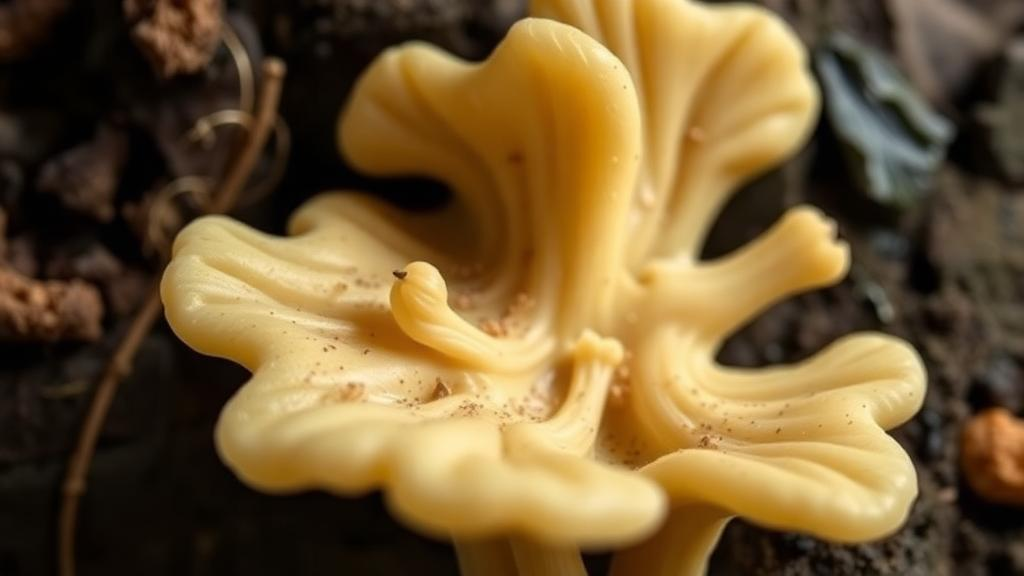
Deep in the forests of North America, a small yellow fungus shaped like a tongue pushes through the soil. It has long fascinated mycologists because it seems to have changed very little over hundreds of millions of years. Now, Neolecta irregularis has delivered another surprise: hidden inside its genome is a fully functional enzyme for making betalains, the vivid pigments that color beets, cacti, and bougainvilleas, even though the fungus itself produces none of these molecules. The discovery, published in IMA Fungus, stretches the known evolutionary reach of the betalain pathway far beyond the plants where it was first described.
Betalains are water-soluble, nitrogen-containing pigments responsible for the yellow-orange to red-violet hues in most species of the plant order Caryophyllales, which includes beetroot, quinoa, and prickly pear. Beyond their visual role, these compounds attract attention for their antioxidant, anti-inflammatory, chemopreventive, and neuroprotective properties, fueling a search for new natural sources and better production methods. Two classes exist: yellow betaxanthins and violet betacyanins, both built around a shared core molecule called betalamic acid. The enzyme that creates this core is 4,5-DOPA-extradiol-dioxygenase, known as DODA, which cleaves the amino acid L-DOPA in a way that lets betalamic acid form spontaneously before condensing with amines or amino acids to make betaxanthins, or with cyclo-DOPA to make betacyanins.
Until recently, betalain biosynthesis was documented almost exclusively in Caryophyllales plants, with scattered reports in a handful of fungi such as Amanita, Hygrocybe, and Hygrophorus, in bacteria including Gluconacetobacter diazotrophicus and Escherichia coli, in the cyanobacterium Anabaena cylindrica, and, strikingly, in the tardigrade Hypsibius henanensis. Neolecta irregularis occupies a uniquely basal position within the Ascomycota, the phylum that contains most known fungi. As one of the very few surviving members of the subphylum Taphrinomycotina and the only genus in the Neolectomycetes, it retains morphological and genomic features considered ancestral, sitting in an intermediate zone between filamentous fungi and yeasts. Its rarity and the inability to cultivate it have long blocked functional studies of its physiology.
The research team, working with two specimens preserved at the Denver Botanic Gardens fungarium, first extracted pigments from the yellow tongue-shaped fruiting bodies and analyzed them by high-performance liquid chromatography coupled to mass spectrometry. They screened for a full panel of fungal betalains, including muscaflavin and numerous amino-acid-derived betaxanthins, but none were detected. Instead, the main pigment turned out to be riboflavin, vitamin B2, identified by its retention time and exact mass of m/z 377.1464, matching the standard at m/z 377.1456. Fluorescence imaging under blue excitation confirmed the assignment, revealing the characteristic yellow-green glow of riboflavin. This finding matters because riboflavin production is a hallmark of certain fungi and bacteria, where it protects spores from ultraviolet radiation and supports flavin cofactor synthesis and redox defense.
The pigment analysis created a puzzle. RNA sequencing, performed for the first time on this species, showed that the fungus actively expresses the gene encoding a DODA enzyme, along with a cytochrome P450, yet the pathway appears incomplete. The researchers found no expression of prephenate dehydrogenase or tyrosine aminotransferase, the enzymes needed to make L-tyrosine de novo, which is the precursor to L-DOPA. Without this substrate, the betalain machinery cannot run in vivo, explaining why the fungus stays yellow from riboflavin rather than from betalains. The transcriptomic data, deposited in the NCBI Gene Expression Omnibus under accession GSE300630, revealed 24 genes related to riboflavin metabolism, underscoring the pigment’s physiological importance in this lineage.
To test whether the encoded enzyme actually works, the team cloned the NiDODA gene, optimized its sequence for expression in E. coli, and purified the resulting protein using cobalt affinity chromatography. The enzyme emerged as a monomer of 33.4 kilodaltons, confirmed by gel filtration and mass spectrometry. Structural modeling with AlphaFold showed a compact fold resembling the only crystallized betalamic-acid-forming protein, YgiD from E. coli, with which NiDODA shares just 25.2 percent sequence identity. Three conserved histidine residues, His10, His48, and His230, coordinate a metal ion at the active site, mirroring the arrangement in the bacterial enzyme. Inductively coupled plasma mass spectrometry identified iron as the likely cofactor, and supplementing purification buffers with iron boosted activity up to 8.5-fold.
Kinetic characterization revealed remarkable properties. The enzyme operates optimally at pH 6.0, notably more acidic than the pH 8.0 to 8.5 optima reported for DODAs from Amanita muscaria, beetroot, and E. coli. Most strikingly, NiDODA binds L-DOPA with a Km of 0.8 millimolar, the highest affinity ever recorded for any DODA enzyme. For comparison, the Amanita enzyme has a Km of 4.2 millimolar, beetroot 6.9, quinoa 1.5, and the cyanobacterial version a staggering 53,000 millimolar. This makes NiDODA the most efficient L-DOPA converter among all known betalain-forming dioxygenases, capable of producing betalamic acid, muscaflavin, and dopaxanthin from the same substrate.
Phylogenetic analysis placed NiDODA within a distinct fungal branch separate from plant, bacterial, and animal sequences. Ascomycota sequences clustered together, while the tardigrade enzyme branched off before the radiation of plants, fungi, and microorganisms, acting as an outgroup. The team found that Ascomycota genomes contain numerous uncharacterized proteins with similarity to NiDODA, all retaining the conserved histidine triad, suggesting that more fungal betalain-producing enzymes await discovery. This pattern supports convergent evolution, where similar catalytic solutions arise independently in distant lineages, a phenomenon already documented within Caryophyllales plants, where DODA activity emerged at least three times through gene duplication and neofunctionalization.
The broader implication is that betalain biosynthesis may have far deeper roots than previously appreciated. Rather than being a plant-specific innovation, the capacity to cleave L-DOPA into betalamic acid appears scattered across the tree of life, from fungi and bacteria to cyanobacteria and animals. Whether these enzymes represent an ancestral metabolic capacity predating eukaryotic diversification, or the result of horizontal gene transfer and convergent evolution, remains unresolved. The biological role of betalain-producing enzymes in non-plant organisms is also unknown, and the possibility that they serve functions beyond pigment formation, particularly in species that never make betalains, adds another layer of mystery.
For Neolecta irregularis itself, the study provides the first transcriptomic analysis of a species that has resisted cultivation and remains scarce in nature. It confirms that the fungus carries the genetic framework for betalain synthesis but cannot execute the pathway because it lacks the ability to produce L-tyrosine de novo. The identification of NiDODA as the second fungal betalain-producing enzyme characterized to date, and the first monomeric one, expands the known phylogenetic scope of the pathway and opens the door to exploring whether other Ascomycota species harbor similar dormant capacities. As researchers continue to probe these ancient lineages, enzymes like NiDODA may reveal how metabolic innovations emerge, persist, or vanish across evolutionary time, offering a rare glimpse into the biochemical toolkit of early fungal life.
Subject of Research: Betalain biosynthesis enzyme evolution in the early-diverging fungus Neolecta irregularis
Article Title: A functional betalain-producing dioxygenase in Neolecta irregularis reveals an expanded evolutionary origin of the pathway
Article References: Martínez-Rodríguez, P., Guerrero-Rubio, M. A., Henarejos-Escudero, P., Hernández-García, S., & Gandía-Herrero, F. (2026). A functional betalain-producing dioxygenase in Neolecta irregularis reveals an expanded evolutionary origin of the pathway. IMA Fungus, 17, Article e184549. https://doi.org/10.3897/imafungus.17.184549
Image Credits: AI Generated
DOI: 10.3897/imafungus.17.184549
Keywords: betalains, Neolecta irregularis, DODA enzyme, Ascomycota, riboflavin, L-DOPA dioxygenase, betalamic acid, convergent evolution, Taphrinomycotina, fungal pigments, heterologous expression, enzyme kinetics
Cite Scienmag News
Roger Howard. (October 18, 2026). Living Fossil Fungus Hides an Ancient Betalain Enzyme. Scienmag. https://scienmag.com/living-fossil-fungus-hides-an-ancient-betalain-enzyme/
Roger Howard. "Living Fossil Fungus Hides an Ancient Betalain Enzyme." Scienmag, 18 October 2026, https://scienmag.com/living-fossil-fungus-hides-an-ancient-betalain-enzyme/. Accessed 18 October 2026.
Roger Howard. "Living Fossil Fungus Hides an Ancient Betalain Enzyme." Scienmag. October 18, 2026. https://scienmag.com/living-fossil-fungus-hides-an-ancient-betalain-enzyme/


