


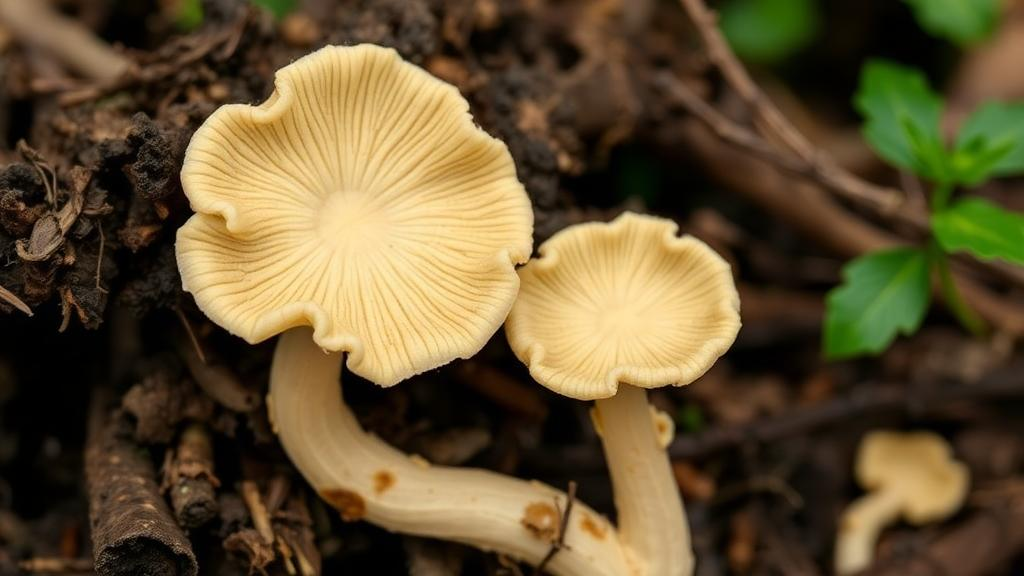
Deep in the forests of Chiang Rai Province in northern Thailand, two microscopic fungi have been quietly decomposing dead plant stems, entirely unknown to science. A new study published in MycoKeys has now formally introduced them to the world: Anastomitrabeculia chiangraiensis, recovered from the dead stem of an unidentified woody host, and Roussoella chiangraiensis, isolated from decaying bamboo stems. Both species were collected on the premises of Mae Fah Luang University, a reminder that extraordinary biological discoveries can begin on the doorstep of a university campus.
The order Pleosporales, to which both newcomers belong, is the largest order within the fungal class Dothideomycetes, and it is one of the most taxonomically complex groups known to mycology. Its members occupy an astonishing range of ecological niches: some live as saprobes that recycle nutrients and break down organic matter in terrestrial ecosystems, others act as plant pathogens responsible for leaf spots, blights and stem diseases in crops and natural forests, and still others persist as endophytes or epiphytes, colonising living plant tissue without causing visible harm. Some lineages have even adapted to freshwater and marine substrates. This ecological versatility is matched by enormous morphological and genetic diversity, which is precisely why new species continue to emerge from under-examined tropical regions.
Northern Thailand has long been recognised as a hotspot for microfungal diversity. The region’s extensive bamboo forests and mixed deciduous vegetation provide abundant dead stems and other substrates that saprobic fungi colonise. Yet many of these organisms produce fruiting bodies that are immersed or semi-immersed within the host tissue, rendering them nearly invisible during routine field surveys. The two species described in the new study exemplify this problem: both were found only through careful laboratory examination of collected material, not through any conspicuous field appearance.
The research team, led by Gomdola, Zaw Lin Tun and Yong Wang, collected dead stems in plastic bags and brought them to the laboratory for detailed analysis. Using a Motic SMZ-168 stereomicroscope, they documented the macroscopic and microscopic features of the fungi, capturing images with a Canon 750D camera mounted on a Nikon ECLIPSE E600 compound microscope under bright-field illumination. Measurements of fungal structures were taken in Tarosoft Image Framework, and photoplates were assembled in Adobe Photoshop. Interestingly, single-spore isolation attempts failed, as no spores germinated on artificial media, meaning the researchers had to work directly with the material collected from the field.
To resolve the evolutionary relationships of these fungi, the team extracted genomic DNA directly from ascomata, the sexual fruiting bodies of the fungi. Between fifteen and twenty ascomata were picked from the substrates with a sterile needle for each extraction. They then amplified five gene regions: the internal transcribed spacer (ITS), the large subunit (28S), the small subunit (18S), the RNA polymerase II gene (rpb2), and translation elongation factor 1-alpha (tef1-α). These regions were sequenced and deposited in the NCBI GenBank database, providing permanent molecular records for future researchers.
Phylogenetic analyses combined all five gene regions into a single concatenated alignment of 4,305 aligned characters, of which 1,888 were distinct patterns and 1,373 were parsimony-informative. Maximum Likelihood analysis was performed on the IQ-TREE webserver with 1,000 ultrafast bootstrap replicates, while Bayesian Inference was conducted in MrBayes with four parallel chains. The resulting phylogeny, rooted with Tubeufia hainanensis and Berkleasmium longisporum as outgroups, yielded an optimal log-likelihood value of -36250.874 and provided robust support for the distinctiveness of both new species.
Anastomitrabeculia chiangraiensis forms a distinct lineage within the family Anastomitrabeculiaceae, clustering as a sister taxon to A. didymospora with 89% ML bootstrap support. The species is characterised by bitunicate, fissitunicate asci that are cylindrical to clavate, and hyaline, one-septate, broadly fusiform ascospores surrounded by a mucilaginous sheath. Critically, the new species lacks the longitudinal striations on its ascospores that are present in A. didymospora, providing a clear morphological point of differentiation. Genetic distances further reinforce this separation: 19.1% divergence in ITS, 4.6% in 28S, and 15.4% in rpb2 between the new species and its closest relative. This represents only the third species ever described in the genus Anastomitrabeculia.
Roussoella chiangraiensis, by contrast, belongs to the much larger genus Roussoella, which currently comprises around 70 species. The new species was collected from dead bamboo stems and forms a sister clade to R. aseptata with maximum support of 100% ML and 1.00 Bayesian posterior probability. While no nucleotide differences were detected in the 18S region, significant divergences of 3.9% in ITS and 0.24% in 28S distinguish the two species. Morphologically, R. chiangraiensis produces superficial, carbonaceous ascomata rather than the raised, semi-immersed to immersed ascostromata typical of many Roussoella species, and its ascospores bear longitudinal striations, becoming pale brown to brown at maturity.
The striking disparity in species richness between the two genera raises interesting ecological and taxonomic questions. The authors suggest that the low diversity recorded for Anastomitrabeculia may partly reflect insufficient sampling rather than true biological scarcity, as its immersed ascomata and conidiomata are often inconspicuous on the host surface. In contrast, Roussoella species frequently colonise bamboo, a widespread and taxonomically diverse host group in Asia, and their more visible ascostromata increase detectability during routine surveys. The structural complexity and rapid turnover of bamboo culms create numerous microhabitats suitable for saprobic colonisation.
The discovery of these two species underscores the value of comprehensive sampling combined with multigene phylogenetic analysis for resolving species boundaries in morphologically conserved genera. It also reinforces the importance of bamboo-rich ecosystems as reservoirs of fungal biodiversity and highlights northern Thailand as a promising region for further fungal discovery. As the authors note, continued research on decaying plant substrates, including less conspicuous microhabitats, is likely to yield additional taxa and refine our understanding of fungal distribution patterns across Southeast Asia.
Subject of Research: Taxonomic description of two new Pleosporales fungal species from northern Thailand
Article Title: Two new species of Pleosporales from northern Thailand: Anastomitrabeculia chiangraiensis sp. nov. ( Anastomitrabeculiaceae ) and Roussoella chiangraiensis sp. nov. ( Roussoellaceae )
Article References: Xiao, Y., Tun, Z. L., Wang, Y., Gomdola, D., & Yu, L.-F. (2026). Two new species of Pleosporales from northern Thailand: Anastomitrabeculia chiangraiensis sp. nov. (Anastomitrabeculiaceae) and Roussoella chiangraiensis sp. nov. (Roussoellaceae). MycoKeys, 138, 193-208. https://doi.org/10.3897/mycokeys.138.189855
Image Credits: AI Generated
DOI: 10.3897/mycokeys.138.189855
Keywords: Pleosporales, Anastomitrabeculia chiangraiensis, Roussoella chiangraiensis, Dothideomycetes, fungal taxonomy, northern Thailand, saprobic fungi, multigene phylogeny, bamboo fungi, biodiversity, species, northern
Cite Scienmag News
Roger Howard. (October 18, 2026). Two New Fungal Species Unearthed in Northern Thailand’s Dead Stems. Scienmag. https://scienmag.com/two-new-fungal-species-unearthed-in-northern-thailands-dead-stems/
Roger Howard. "Two New Fungal Species Unearthed in Northern Thailand’s Dead Stems." Scienmag, 18 October 2026, https://scienmag.com/two-new-fungal-species-unearthed-in-northern-thailands-dead-stems/. Accessed 18 October 2026.
Roger Howard. "Two New Fungal Species Unearthed in Northern Thailand’s Dead Stems." Scienmag. October 18, 2026. https://scienmag.com/two-new-fungal-species-unearthed-in-northern-thailands-dead-stems/


