


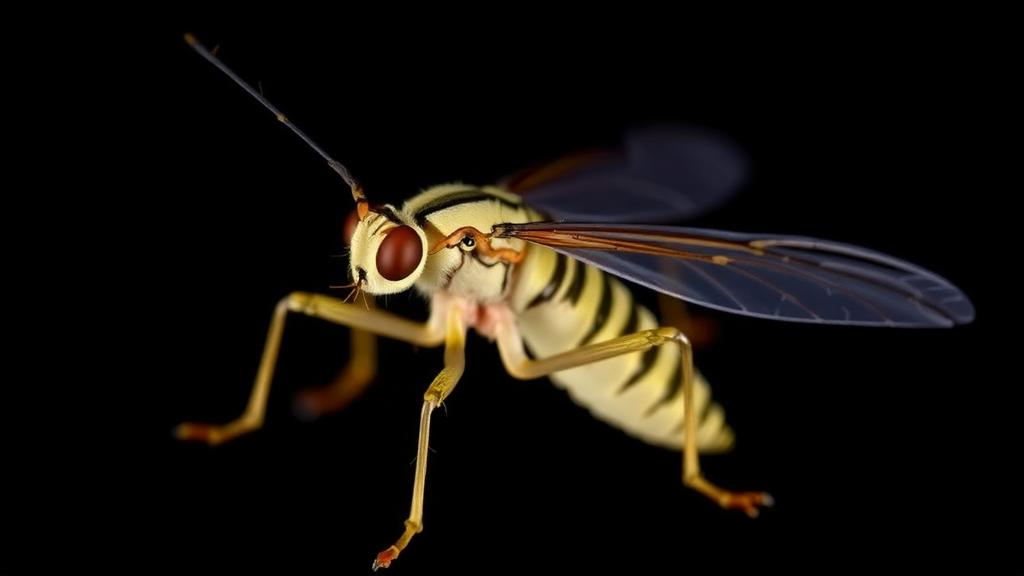
Deep in the rivers of Siberia, a modest aquatic insect is rewriting what scientists know about the evolution of sex chromosomes. The stonefly Skwala compacta, a predatory member of the order Plecoptera that spends its nymphal stages clinging to stony riverbeds, has become the first stonefly species ever to have its chromosomes photographed and analyzed with modern molecular cytogenetic techniques. The findings, published in the journal Comparative Cytogenetics, break a seventy-year silence in stonefly chromosome research and offer tantalizing clues about one of the most puzzling sex determination systems in the insect world.
Stoneflies are amphibiotic insects found on every continent except Antarctica, with roughly 3,700 described species across 17 families. Despite their ecological importance as indicators of clean water and their role as prey for fish and other predators, stoneflies remain among the most poorly studied insect groups at the chromosomal level. Before this new investigation, karyotypes had been described for only sixteen species worldwide, and the last new data on stonefly chromosomes dated all the way back to 1947. For more than seven decades, reviews of sex chromosome evolution have repeatedly pointed to stoneflies as insects with remarkably diverse karyotypes and chromosomal sex determination mechanisms, yet always in speculative tones because fresh comparative material simply was not forthcoming.
A research team based in Novosibirsk, Russia, led by investigators with extensive experience in grasshopper sex chromosome evolution, set out to change this. They collected approximately 100 larvae of Skwala compacta from the Izdrevaya River, which flows through the city of Novosibirsk, during spring and autumn seasons between 2020 and 2022. The gonads of these larvae—both testes and ovarioles—served as the primary material for chromosome preparation. The team injected a dilute colchicine solution into the abdomens of the larvae to arrest cells in metaphase, then removed the gonads and treated them in sodium citrate before fixing them in a classic ethanol-acetic acid fixative. Fixed gonads were dissected on glass slides in acetic acid, and cells were spread on a heated plate to achieve satisfactory chromosome spreading.
The karyotype analysis revealed that both males and females of Skwala compacta possess 12 pairs of autosomes, giving a diploid chromosome number of 26. Three pairs of large autosomes and four pairs of medium-sized autosomes are subacrocentric, meaning their centromeres sit close to one end. The remaining five pairs are small, with unclear morphology. Using C-banding—a staining technique that selectively darkens constitutive heterochromatin—the researchers identified pericentromeric C-bands in all autosomes. This represents the first time in the entire history of stonefly cytogenetics that the localization of constitutive heterochromatin has been mapped in any species of the order.
The sex chromosomes proved particularly intriguing. In males, two heterosomes differ in morphology and size. The large heterosome is two-armed, with one arm entirely heterochromatic and the other predominantly euchromatic. The second heterosome is subacrocentric, with one arm morphologically homologous to the large arm of the first heterosome and a smaller arm that is completely heterochromatic. In females, there are 13 pairs of chromosomes, one pair of which carries a large heterochromatic arm in each homologue. Comparative analysis of these structures confirmed that the sex determination mechanism in Skwala compacta is XY in males and XX in females—a finding that carries significant implications for how scientists interpret previously described stonefly karyotypes.
Fluorescence in situ hybridization (FISH) with telomeric (TTAGG)n DNA probes revealed strong hybridization signals at the terminal regions of all chromosomes. This pattern is in full agreement with earlier findings in the stonefly Perla burmeisteriana and is typical for insect chromosomes generally. The (TTAGG)n repeat is considered the ancestral telomeric motif in insects, and its conservation across diverse lineages suggests it has been maintained throughout insect evolution. Only in some cases do telomeric repeats appear in interstitial positions, indicating possible inversions or translocations during karyotypic evolution.
The most striking result came from FISH with an 18S ribosomal DNA probe. Clusters of rDNA were detected exclusively on the X and Y chromosomes—specifically occupying the entire short arm and the proximal part of the long arm in both sex chromosomes. In the X chromosome, the rDNA cluster is larger than in the Y. The researchers suggest that these rDNA-rich arms are likely regions of the nucleolus organizer (NOR), the chromosomal site where ribosomal RNA genes are transcribed and nucleoli form. Notably, the relative sizes of these heterochromatic arms varied considerably at different stages of the cell cycle, likely reflecting different degrees of rDNA amplification. Such heteromorphism, observed for example in amphibians, is often considered a feature that allows chromosomes to be identified as sex chromosomes.
During prophase of male meiosis, chromosomes form 13 bivalents. Twelve are symmetrical autosomal bivalents, with large and medium autosomes forming one to two chiasmata and small bivalents forming only one. The sex chromosomes are usually joined by the terminal regions of their long arms, and they remain adjacent throughout meiotic prophase, suggesting that conjugation between X and Y is conserved. The sex chromosomes also display negative heteropycnosis during meiotic prophase—they appear less condensed than autosomes—a peculiarity first noted by the famous cytogeneticist M.J. White in the mid-twentieth century.
The confirmation of an XY/XX mechanism in Skwala compacta underscores the critical importance of studying both males and females when determining sex chromosome mechanisms. Based on the presence of two heterosomes in males alone, the researchers could have interpreted the mechanism as X1X20, which would imply a female karyotype of 28 chromosomes. Only the analysis of the female karyotype, which showed 26 chromosomes, allowed the team to reliably determine the mechanism as XX/XY. This finding casts doubt on several previously described stonefly sex determination systems that were reconstructed from male meiosis alone, including ten species reported as X1X20, three as X0, and two as X1X2X3.
As the first paper in a planned series, this study opens a new chapter in stonefly cytogenetics. The chromosome preparation technique developed by the team—a modification of methods used for grasshopper embryos—proved effective for obtaining well-spread cells from larval gonads, enabling multiple staining approaches on the same material. The researchers emphasize that without new comparative material, the evolutionary pathways of sex determination mechanisms in stoneflies cannot yet be reconstructed. However, the application of modern chromosomal analysis techniques to this neglected order promises to illuminate a problem that has intrigued cytogeneticists since White lamented in 1973 that the evolutionary history of stonefly sex chromosomes could hardly be guessed at on the basis of available evidence. With Skwala compacta now serving as a model species, the stage is set for a systematic re-examination of chromosomal diversity across the Plecoptera.
Subject of Research: Cytogenetics
Article Title: New insights into the chromosomes of stoneflies: I. Karyotype, C-banding and localization of ribosomal and telomeric DNA markers in Skwala compacta (McLachlan, 1872) ( Polyneoptera , Plecoptera , Perlodidae ) from Siberia
Article References: Bugrov, A., Karamysheva, T., & Buleu, O. (2024). New insights into the chromosomes of stoneflies: I. Karyotype, C-banding and localization of ribosomal and telomeric DNA markers in Skwala compacta (McLachlan, 1872) (Polyneoptera, Plecoptera, Perlodidae) from Siberia. Comparative Cytogenetics, 18, 15-26. https://doi.org/10.3897/compcytogen.18.115784
Image Credits: AI Generated
DOI: 10.3897/compcytogen.18.115784
Keywords: insights, chromosomes, stoneflies, Karyotype, C-banding, localization, ribosomal, telomeric, markers, Skwala, compacta, McLachlan
Cite Scienmag News
Gavin Prescott. (October 18, 2026). Siberian Stonefly Chromosomes Reveal Secrets of Insect Sex Determination. Scienmag. https://scienmag.com/siberian-stonefly-chromosomes-reveal-secrets-of-insect-sex-determination/
Gavin Prescott. "Siberian Stonefly Chromosomes Reveal Secrets of Insect Sex Determination." Scienmag, 18 October 2026, https://scienmag.com/siberian-stonefly-chromosomes-reveal-secrets-of-insect-sex-determination/. Accessed 18 October 2026.
Gavin Prescott. "Siberian Stonefly Chromosomes Reveal Secrets of Insect Sex Determination." Scienmag. October 18, 2026. https://scienmag.com/siberian-stonefly-chromosomes-reveal-secrets-of-insect-sex-determination/


