


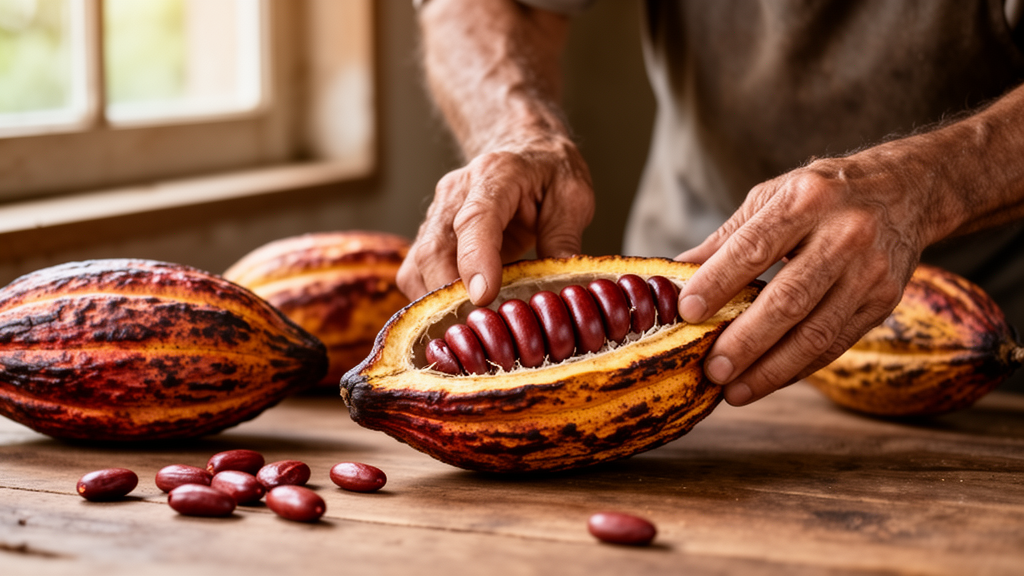
Cocoa, the tree behind every bar of chocolate, has been called the food of the gods since antiquity, yet the fine-grained biology of what makes one pod better than another remains surprisingly murky. A new two-year investigation from the ICAR-Central Plantation Crops Research Institute in Vittal, India, published in Innovations in Agriculture, has now mapped the variation in pod and bean traits across twenty cocoa genotypes grown in the humid tropics of southern India—and delivered a result that will unsettle conventional fertilization thinking: the leaf nutrient status of the trees showed no significant association with any of the pod or bean characteristics that matter most to the chocolate industry.
The study, led by researchers examining four released hybrids and their parents, one clone planted in 2005, and eight Upper Amazon genotypes planted in 2007, measured everything from single pod weight and husk weight to fresh bean weight, bean count per pod, single dry bean weight, nib recovery, and shell percentage. Cocoa pods, which take five to six months to mature after pollination and contain twenty to forty seeds, were harvested as they ripened during the main April–July season in both 2019 and 2020. The wet beans were fermented in small perforated trays for six days and then oven-dried at 55 °C before the industry-critical traits were recorded.
The scale of genetic variation was striking. In 2019, single pod weight ranged from 189 grams in genotype VTLC 156 to 379 grams in VTLC 66, with husk weights following the same pattern at 130 and 265 grams respectively. In 2020, the genotype VTLC 30A stood out with a significantly higher single pod weight of 593 grams and a husk weight of 437 grams. Fresh bean weight per pod peaked at 152 grams in VTLCH 3 in 2019 and 156 grams in VTLC 30A in 2020. Bean count per pod, a character known to be gene-controlled but also modulated by ovule fertility, self-compatibility, and natural pollination conditions, ranged from as few as 24 beans in VTLC 148 in 2020 to as many as 52 in VTLC 185 the same year.
For the chocolate industry, however, the numbers that really count are the single dry bean weight and the nib recovery—the percentage of the dried bean that remains after the shell is broken away. Processing units favor beans weighing one gram or more, because small beans are difficult to process and carry a greater shell content. In this study, single dry bean weight ranged from 0.62 grams in VTLC 156 in 2019 to 1.11 grams in VTLC 151 in 2020, with the Upper Amazon genotype VTLC 151 consistently delivering the boldest beans at around 1.10 grams across both years. Nib recovery, meanwhile, reached 85.1 percent in VTLC 11 in 2019 and 86.3 percent in VTLC 148 in 2020, while the lowest values hovered near 79.4 percent.
The correlation analysis revealed the architecture of these traits with technical clarity. Single dry bean weight was significantly and positively associated with husk weight (r = 0.57) and pod weight (r = 0.53), confirming that heavier pods with thicker husks tend to produce heavier beans. But the relationship ran the other way with bean count: single dry bean weight decreased significantly as the number of beans per pod increased (r = -0.63). The researchers attribute this to competition among developing beans within the pod, an effect previously documented in studies dating back to Enriquez and Soria in 1968 and confirmed more recently by Doare and colleagues in 2020.
Even more consequential for breeders is the tight link between bean size and nib recovery. Pearson’s correlation coefficient showed that single dry bean weight and nib recovery were significantly associated (r = 0.64), meaning bolder beans yield more of the valuable nib and less of the discarded shell. Shell percentage was significantly lower in genotypes with high nib recovery and vice versa. This makes single dry bean weight a doubly important selection criterion: it is a trait with high heritability, and it simultaneously predicts the processing efficiency that determines how much saleable cocoa material each tonne of beans delivers.
Then comes the surprise. Leaf nutrient analysis is the standard method for assessing the nutritional state of cocoa trees, and mineral nutrients are known to play a major role in cocoa yield and quality. Earlier work by the same group found that calcium had a significant association with fruit set percentage, and boron application has been shown to increase bean count while reducing the occurrence of flat beans. Yet in this study, Pearson’s correlation coefficients indicated no tangible association between any of ten leaf nutrients—nitrogen, phosphorus, potassium, calcium, magnesium, iron, manganese, copper, zinc, and boron—and the single dry bean weight, nib recovery, or shell percentage of the harvested beans.
The researchers extended the analysis to nutrient ratios, testing whether the balance between elements rather than their absolute concentrations might influence pod and bean traits. Again, the answer was largely negative. Of the eleven ratios examined, only two showed significant associations: the potassium-to-phosphorus ratio (K/P) was significantly linked with husk weight per pod (r = 0.44), and the calcium-to-boron ratio (Ca/B) was significantly associated with the number of pods per tree (r = -0.44). Every other ratio, including the widely discussed N/K, N/P, K/Ca, and K/Mg, showed no tangible influence on the pod and bean characteristics measured.
The finding aligns with an earlier Malaysian study by Noordiana and colleagues, who observed no significant effect of nutrient treatments on pod weight, shell weight, bean count, or single dry bean weight in two cocoa clones. Taken together, the evidence suggests that within the range of nutrient status represented in these twenty genotypes, the genetic makeup of the tree—not its leaf chemistry—governs the physical traits of the harvest. Different genotypes possess unique combinations of genes influencing pod development, seed formation, and growth, and environmental factors including climate and soil conditions further modulate the expression of these traits.
For a crop grown on more than 10 million hectares across 58 countries and producing over 5.2 million tonnes of dry beans annually, the practical implications are considerable. In India, where cocoa is cultivated on 103,376 hectares primarily as a component crop in arecanut and palm-based cropping systems across Karnataka, Kerala, Tamil Nadu, and Andhra Pradesh, breeders now have a clearer signal: selecting for heavier pods and moderate bean counts, rather than chasing fertilization regimes, is the more reliable path to the bold, high-nib-recovery beans the industry demands. The study also confirms that a higher bean count is not an unqualified virtue—pods packed with more beans produce lighter beans, undermining the very trait processors prize. As cocoa cultivation expands into non-traditional regions, this genotype-first perspective may reshape how the next generation of varieties is selected.
Subject of Research: Agricultural Science
Article Title: Variability in the pod and bean characteristics and their relationship with leaf nutrient content in cocoa ( Theobroma cacao L.)
Article References: Bhavishya, Bhat, R., Apshara, S. E., Pushpa, T. N., Srikantaprasad, D., Nayana, H., Thube, S. H., Pandian, R. T. P., & Ramesh, S. V. (2024). Variability in the pod and bean characteristics and their relationship with leaf nutrient content in cocoa (Theobroma cacao L.). Innovations in Agriculture, 7, 1-7. https://doi.org/10.3897/ia.2024.126141
Image Credits: AI Generated
Keywords: Variability, bean, characteristics, relationship, leaf, nutrient, content, cocoa, Theobroma, cacao, scientific research
Cite Scienmag News
Juliet Wilcox. (October 18, 2026). Cocoa Genetics, Not Leaf Nutrients, Drive the Bean Traits Chocolate Makers Prize Most. Scienmag. https://scienmag.com/cocoa-genetics-not-leaf-nutrients-drive-the-bean-traits-chocolate-makers-prize-most/
Juliet Wilcox. "Cocoa Genetics, Not Leaf Nutrients, Drive the Bean Traits Chocolate Makers Prize Most." Scienmag, 18 October 2026, https://scienmag.com/cocoa-genetics-not-leaf-nutrients-drive-the-bean-traits-chocolate-makers-prize-most/. Accessed 18 October 2026.
Juliet Wilcox. "Cocoa Genetics, Not Leaf Nutrients, Drive the Bean Traits Chocolate Makers Prize Most." Scienmag. October 18, 2026. https://scienmag.com/cocoa-genetics-not-leaf-nutrients-drive-the-bean-traits-chocolate-makers-prize-most/


