


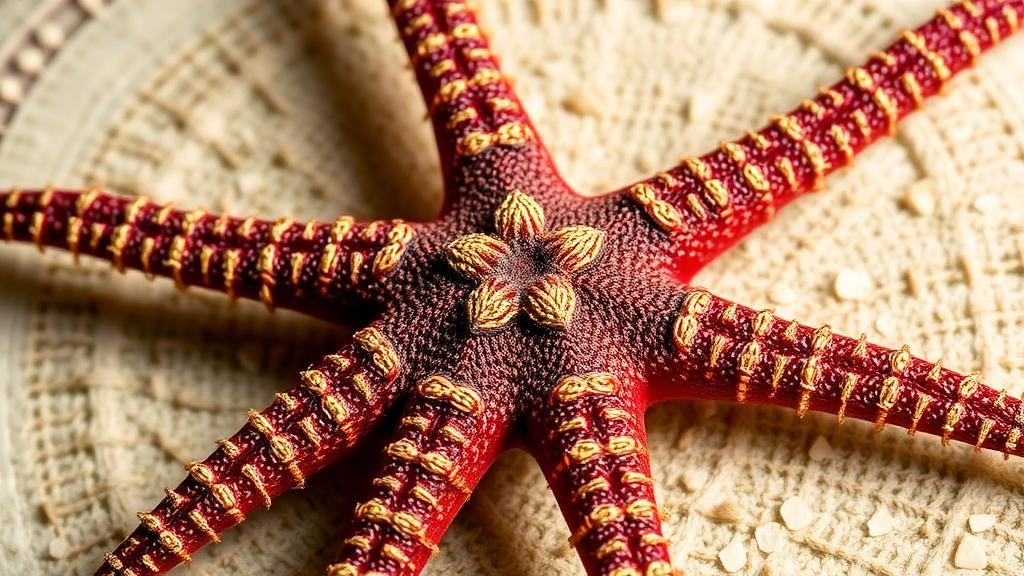
Brittle stars are among the most successful animals in the ocean, with more than 2,000 described species crawling across the seafloor from tropical shallows to the crushing darkness of the abyss. Yet despite their ecological prominence, the family tree of these echinoderms has long been tangled by conflicting genetic signals, and the way they conquered the deep sea has remained largely mysterious. A new study published in Zoosystematics and Evolution now untangles much of this evolutionary knot by assembling the most comprehensive mitochondrial genome dataset for brittle stars to date, adding four newly sequenced deep-sea species to a total of 56 complete mitogenomes spanning 18 families.
The research team, led by scientists working on deep-sea echinoderms, sequenced the mitochondrial genomes of four brittle star species collected from deep-sea environments: Ophioctenella acies, a hydrothermal vent dweller; Ophiura cf. irrorata and Ophiactis profundi, both from non-reduced deep-sea habitats; and Ophiocreas nudusoralis. Notably, the mitochondrial genome of O. acies represents the first ever reported from a hydrothermal vent ophiuroid, filling a significant gap in our understanding of how life thrives at these chemically extreme undersea hot springs.
Mitochondrial genomes are compact circular DNA molecules inherited maternally, making them powerful tools for reconstructing evolutionary relationships. Using next-generation sequencing on an Illumina NovaSeq 6000 platform, the researchers extracted genomic DNA from specimens preserved in ethanol, assembled the circular mitogenomes with the NOVOPlasty assembler, and annotated them with the MITOS2 toolset. The four new genomes ranged in length from 15,850 to 16,326 base pairs and contained the standard set of 37 mitochondrial genes, including 13 protein-coding genes, two ribosomal RNA genes, and 22 transfer RNA genes.
With these new sequences in hand, the team employed maximum likelihood and Bayesian inference approaches to reconstruct the phylogeny of the entire class. The resulting trees, generated independently by three different methods, consistently supported the monophyly of the two major clades within Ophiuroidea, Ophintegrida and Euryophiurida, as well as the four major orders: Ophiurida, Euryalida, Amphilepidida, and Ophiacanthida. This is a significant achievement, as the monophyly of Amphilepidida and Ophiacanthida had remained controversial in previous analyses, with different datasets and methods yielding up to nine distinct topologies among 18 generated trees in earlier work.
The improved phylogenetic resolution also clarified previously unstable family-level relationships. Within Euryalida, the study confirmed that Asteronychidae clusters with Gorgonocephalidae rather than occupying a basal position, consistent with some prior molecular studies. Within Ophiurida, the relationships among species in the families Ophiuridae and Ophiopyrgidae remain complicated, with the genus Ophiura showing some conflicts with earlier classifications. The authors suggest that an integrated review combining morphological and molecular evidence is urgently needed to fully resolve these remaining uncertainties.
Beyond phylogeny, the study delved into the temporal history of brittle star evolution. Using BEAST software with seven fossil-based calibration points and an uncorrelated relaxed molecular clock, the researchers estimated that the common ancestor of all Ophiuroidea originated around the Permian-Triassic boundary, approximately 255 million years ago, coinciding with the most severe mass extinction event in Earth’s history. The four major orders radiated at different times: Ophiacanthida and Amphilepidida emerged during the Triassic, Ophiurida during the Jurassic, and Euryalida more recently in the Cretaceous.
The ancestral state reconstruction revealed a fascinating pattern of bidirectional habitat transitions between shallow and deep waters. Ophiacanthida and Euryalida appear to have originated in the deep sea and repeatedly colonized shallow environments, while Ophioleucida and Ophiurida expanded from shallow waters into the deep. These transitions were particularly concentrated during the Jurassic and Cretaceous periods, coinciding with major geological events such as plate tectonic movements, the formation of new marine basins, rising deep-sea temperatures that reduced the thermal gradient between surface and bottom waters, and significant sea level rise. The mid-Cretaceous divergences may be linked to repeated oceanic anoxic events and warm geological intervals that reshaped ocean chemistry and ecology.
One of the most intriguing findings concerns the colonization of chemosynthetic ecosystems, such as hydrothermal vents and cold seeps, which are oases of life in the otherwise food-scarce deep sea. The study found that among four chemosynthetic species analyzed, three experienced significant fluctuations in marine sulfate levels just prior to their divergence, suggesting a possible link between sulfur chemistry and the evolution of vent and seep fauna. The cold-seep species Histampica haimaensis was the first to diverge in the mid-Jurassic, followed by Amphiura sp. in the early Cretaceous, while Ophiophthalmus serratus and Ophioctenella acies diverged in the early Paleogene.
When the researchers examined adaptive evolution at the molecular level, they found a surprising contrast between the hydrothermal vent species and the cold-seep species. The three cold-seep brittle stars showed clear evidence of mitochondrial gene rearrangements and positive selection on specific genes, including ATP6, ATP8, ND2, COX1, and COX2, consistent with adaptive responses to the toxic, oxygen-poor conditions of their environments. However, the hydrothermal vent species O. acies showed no gene rearrangements and no positive selection signals, instead exhibiting the lowest nucleotide substitution rates among the four species, suggesting it may have adapted through strong purifying selection that minimizes the accumulation of harmful mutations rather than through the evolution of new molecular functions.
This finding challenges the assumption that extreme environments universally drive positive selection in mitochondrial genomes and highlights the diversity of evolutionary strategies that organisms can employ when colonizing harsh habitats. The study also revealed that mitochondrial gene rearrangement patterns and selective pressures varied markedly between lineages rather than correlating with habitat type or depth, with the clade Ophintegrida showing higher structural plasticity than the more conserved Euryophiurida. By establishing the most comprehensive mitochondrial genome framework for brittle stars to date, this research provides a robust foundation for future investigations into echinoderm diversification, biogeographic dispersal, and the molecular mechanisms that enable life to flourish in some of the most extreme environments on our planet.
Subject of Research: Mitochondrial genome phylogenetics and deep-sea adaptive evolution of brittle stars (Ophiuroidea)
Article Title: Mitochondrial genomes resolve phylogenetic conflicts and lineage-specific adaptive dynamics in Ophiuroidea : insights from deep-sea lineages
Article References: Xu, W., Na, J., Gao, K., Gu, X., Zhou, Y., Zhang, R., Sun, J., & Zhang, D. (2026). Mitochondrial genomes resolve phylogenetic conflicts and lineage-specific adaptive dynamics in Ophiuroidea: insights from deep-sea lineages. Zoosystematics and Evolution, 102(2), 687-699. https://doi.org/10.3897/zse.102.163746
Image Credits: AI Generated
Keywords: brittle stars, Ophiuroidea, mitochondrial genomes, deep sea, hydrothermal vents, cold seeps, phylogenetics, adaptive evolution, echinoderms, gene rearrangement, positive selection, divergence time
Cite Scienmag News
Gavin Prescott. (October 17, 2026). Mitochondrial Genomes Resolve Brittle Star Family Tree and Reveal Deep-Sea Evolutionary Secrets. Scienmag. https://scienmag.com/mitochondrial-genomes-resolve-brittle-star-family-tree-and-reveal-deep-sea-evolutionary-secrets/
Gavin Prescott. "Mitochondrial Genomes Resolve Brittle Star Family Tree and Reveal Deep-Sea Evolutionary Secrets." Scienmag, 17 October 2026, https://scienmag.com/mitochondrial-genomes-resolve-brittle-star-family-tree-and-reveal-deep-sea-evolutionary-secrets/. Accessed 17 October 2026.
Gavin Prescott. "Mitochondrial Genomes Resolve Brittle Star Family Tree and Reveal Deep-Sea Evolutionary Secrets." Scienmag. October 17, 2026. https://scienmag.com/mitochondrial-genomes-resolve-brittle-star-family-tree-and-reveal-deep-sea-evolutionary-secrets/


