


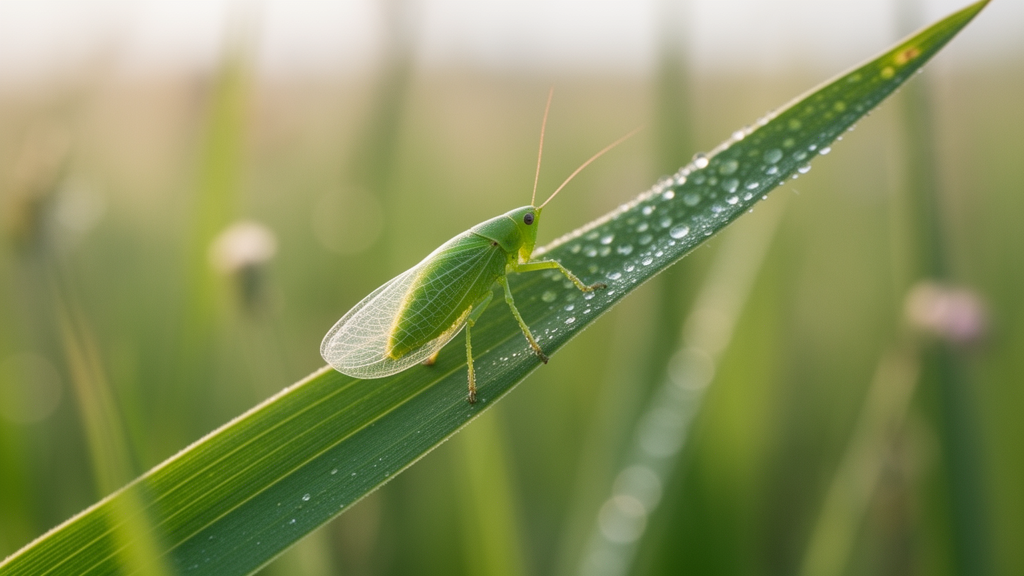
Leafhoppers are among the most familiar insects on Earth, small sap-sucking bugs that jump from plant to plant in gardens and fields worldwide. Yet behind their unassuming appearance lies a taxonomic puzzle that has frustrated entomologists for decades. Now, a new study published in ZooKeys has sequenced the complete mitochondrial genomes of two leafhopper species from the tribe Evacanthini, providing fresh molecular evidence that reshapes our understanding of this agriculturally significant group and exposes a genus whose species do not belong together.
The research team, working from specimens collected in Guilin City in China’s Guangxi Zhuang Autonomous Region, focused on two representative species: Taperus fasciatus and an unnamed Onukia species. These insects belong to the subfamily Evacanthinae, an early-diverging and morphologically diverse lineage within the leafhopper family Cicadellidae. The tribe Evacanthini is considered a core lineage of this subfamily, encompassing multiple genera that show pronounced variation in external appearance, wing venation, and male genital structures. These morphological traits have historically complicated efforts to resolve evolutionary relationships within the tribe, making molecular approaches essential.
Mitochondrial genomes have proven highly effective tools for untangling complex relationships in insects. These small circular DNA molecules, inherited exclusively from the mother, mutate rapidly while retaining a conserved set of genes, making them ideal for reconstructing both deep and shallow evolutionary splits. The newly sequenced genomes of T. fasciatus and Onukia sp. are closed circular molecules measuring 15,262 and 15,572 base pairs respectively. Each contains the standard 37 mitochondrial genes found in most animals: 13 protein-coding genes, 22 transfer RNA genes, and 2 ribosomal RNA genes, along with a major non-coding control region. The gene arrangement was completely consistent with that of most published leafhopper species, with no rearrangements detected.
Both genomes exhibited a strong AT bias, a common feature of insect mitochondrial DNA. The overall A+T content was 79.4 percent for T. fasciatus and 78.2 percent for Onukia sp., with the control region showing the highest AT enrichment at over 85 percent. Codon usage patterns were highly similar between the two species and revealed a strong preference for codons ending in A or U, while those ending in C or G were significantly avoided. Phenylalanine, leucine, and isoleucine emerged as the most abundant amino acids in the mitochondrial proteins. The 22 transfer RNA genes could fold into the typical clover-leaf structure, with one exception: trnS1(AGN) formed a simplified secondary structure due to the lack of a complete DHU arm, a highly conserved feature across insect mitochondrial genomes.
To reconstruct the evolutionary history of Evacanthini, the researchers assembled a concatenated dataset comprising the sequences of all 13 protein-coding genes and two ribosomal RNA genes from 38 Evacanthini species and two outgroup species from the related tribe Nirvanini. They analyzed this dataset using two independent phylogenetic methods: maximum likelihood and Bayesian inference. Both approaches produced highly congruent topologies with generally strong node support, indicating robust phylogenetic inference. The results strongly confirmed the monophyly of Evacanthini, meaning the tribe forms a single cohesive evolutionary lineage descended from a common ancestor. The outgroup was consistently placed at the base of the trees, confirming its basal position relative to the tribe.
Within Evacanthini, all major genera formed independent, well-supported monophyletic clades, indicating that the tribe constitutes a coherent and evolutionarily distinct lineage. Multi-species genera such as Apphia and Evacanthus formed strongly supported monophyletic groups with stable internal topologies. However, the newly sequenced species occupied separate branches and did not form a sister-group relationship with each other. T. fasciatus was closely associated with the genus Convexana, supporting a close relationship between Taperus and Convexana. In contrast, Onukia sp. exhibited a relatively unstable phylogenetic position, recovered outside the clade containing Taperus and Convexana. This topology received low support in the maximum likelihood analysis but relatively high Bayesian posterior probability, suggesting that the precise placement of Onukia sp. requires further investigation.
An unexpected finding emerged from the analysis: Carinata rufipenna clustered with several Apphia species in both trees, whereas the remaining Carinata species formed a well-supported monophyletic group. This atypical pattern may reflect multiple factors, including conserved or convergent mitochondrial sequences, ancestral mitochondrial polymorphism, early rapid radiation events, or minor sampling and taxonomic uncertainties. The placement of C. rufipenna among Apphia species highlights the complex evolutionary history and interlaced lineages within Evacanthini, revealing that genus-level boundaries in this tribe may be more porous than current classifications suggest.
To further test a hypothesis proposed by earlier researchers that the genus Onukia is not monophyletic, the team constructed an additional maximum likelihood tree based on partial cox1 sequences from 36 species. The resulting tree showed that species of Onukia do not form a single monophyletic clade but are instead distributed across multiple branches in proximity to different genera. This finding provides additional molecular support for the hypothesis that the current classification of Onukia may not accurately reflect its evolutionary history. The inclusion of the newly sequenced Onukia species did not alter this pattern, with different Onukia species scattered among multiple lineages rather than forming a single cohesive group.
The study is not without limitations. Due to the scarcity of complete mitochondrial genomes for Onukia, only partial cox1 sequences could be used in the additional analysis, which may not fully capture deeper phylogenetic signals or resolve complex relationships among closely related species. Mitochondrial datasets alone may also not fully resolve deeper evolutionary relationships or complex diversification patterns. Future studies should integrate additional mitochondrial and nuclear genomic data together with broader taxon sampling to improve phylogenetic resolution and account for incomplete lineage sorting.
Despite these caveats, the research lays critical molecular foundations for future taxonomic revisions and phylogenetic investigations of this ecologically and agriculturally important leafhopper tribe. The newly sequenced mitochondrial genomes represent the first complete mitogenomes for the genus Onukia, providing a basis for more precise assessments of phylogenetic relationships within this problematic lineage. As leafhoppers remain significant agricultural pests capable of transmitting plant pathogens, understanding their evolutionary history is not merely an academic exercise but a practical necessity for managing the threats these insects pose to crops worldwide.
Subject of Research: Complete mitochondrial genomes of two Evacanthini species (Hemiptera, Cicadellidae, Evacanthinae) with phylogenetic implications
Article Title: Complete mitochondrial genomes of two Evacanthini species ( Hemiptera , Cicadellidae , Evacanthinae ) with phylogenetic implications
Article References: Li, Y., Jiang, L., Jiang, S., Guo, Y., Li, R., Xing, J., Zhang, B., & Li, Y. (2026). Complete mitochondrial genomes of two Evacanthini species (Hemiptera, Cicadellidae, Evacanthinae) with phylogenetic implications. ZooKeys, 1292, 243-260. https://doi.org/10.3897/zookeys.1292.197902
Image Credits: AI Generated
DOI: 10.3897/zookeys.1292.197902
Keywords: Complete, mitochondrial, genomes, Evacanthini, species, Hemiptera, Cicadellidae, Evacanthinae, phylogenetic, implications, scientific research
Cite Scienmag News
Drew Townsend. (October 17, 2026). Leafhopper Mitochondrial Genomes Expose a Broken Genus. Scienmag. https://scienmag.com/leafhopper-mitochondrial-genomes-expose-a-broken-genus/
Drew Townsend. "Leafhopper Mitochondrial Genomes Expose a Broken Genus." Scienmag, 17 October 2026, https://scienmag.com/leafhopper-mitochondrial-genomes-expose-a-broken-genus/. Accessed 17 October 2026.
Drew Townsend. "Leafhopper Mitochondrial Genomes Expose a Broken Genus." Scienmag. October 17, 2026. https://scienmag.com/leafhopper-mitochondrial-genomes-expose-a-broken-genus/


