


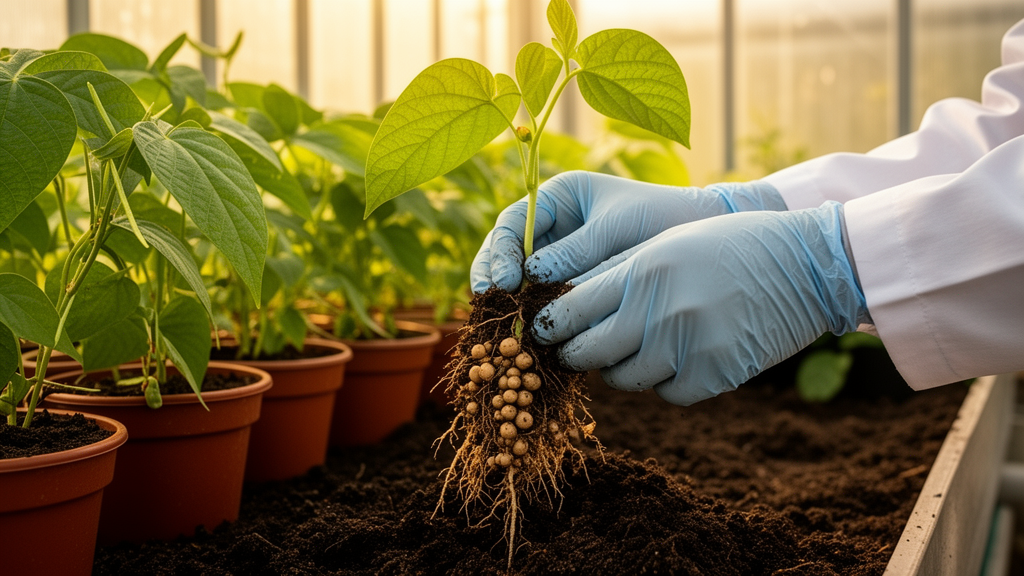
Tropical forests are full of quiet architects. Among them, one plant family stands out for its sheer abundance and diversity: the legumes, known scientifically as Fabaceae. For decades, ecologists have tried to understand why these trees dominate so many tropical landscapes, and the answer has almost always centered on one remarkable ability. Many legumes can fix nitrogen from the atmosphere through a symbiotic partnership with bacteria housed in specialized structures on their roots. This talent has shaped how scientists model nutrient cycles, forest recovery, and even climate change feedbacks across the tropics. But a new perspective argues that this single trait, however important, tells only part of the story.
In a synthesis published in the journal Biogeochemistry, Jennifer S. Powers of the University of Minnesota, Sarah A. Batterman of the Cary Institute of Ecosystem Studies and the University of Leeds, and Catherine Hulshof of Virginia Commonwealth University propose that the field has been too narrowly focused. Their work suggests that legumes differ from neighboring plant species in far more ways than their capacity for nitrogen fixation. Wood architecture, leaf chemistry, seed size, and the timing of leaf drop all vary widely across the family, and these additional characteristics may hold the key to understanding where legumes live and what they do to their environments. By widening the lens to include a fuller suite of plant traits, the researchers believe scientists can finally explain legume distributions across latitude, continent, climate, and successional time.
The significance of this argument is hard to overstate. Fabaceae is one of the largest and most ecologically influential plant families on Earth, with evolutionary origins rooted in the tropics. Its members range from towering canopy trees to sprawling lianas and diminutive herbs, and they appear in nearly every tropical habitat imaginable. Because so many species carry the nitrogen-fixing symbiosis, biogeochemists have long treated the family as a coherent functional group, one that injects fresh nitrogen into ecosystems and accelerates forest growth after disturbance. This framing has produced decades of valuable research on nutrient cycling, soil fertility, and carbon storage. Yet it has also created a blind spot, one that flattens the extraordinary diversity of legumes into a single ecological role.
That blind spot matters because nitrogen fixation alone cannot explain the patterns scientists observe in the field. Legumes thrive in some tropical environments but are scarce in others, and their abundance shifts dramatically along gradients of rainfall, soil type, and forest age. If nitrogen fixation were the whole answer, we might expect these trees to be uniformly dominant wherever nitrogen is limiting. Instead, their distributions are patchy and context-dependent, varying across continents and even within single landscapes. Powers and her colleagues argue that these patterns only make sense when we consider the full range of functional traits that legumes possess, traits that influence everything from drought tolerance to seed dispersal to growth rate.
Consider wood, for example. The density and structure of legume timber vary enormously across the family, and these variations carry direct consequences for water transport, mechanical strength, and carbon storage. Dense wood, common in many tropical legumes, allows trees to withstand drought by resisting cavitation, the dangerous formation of air bubbles in the water-conducting vessels of the stem. Lighter wood, by contrast, supports rapid growth and quick occupation of forest gaps. These differences mean that two legume species sharing the same nitrogen-fixing ability may behave completely differently in a drying climate or a recovering forest. Wood traits thus provide a mechanistic bridge between plant physiology and biogeography, linking how a tree functions to where it can survive.
Leaf traits add another dimension to the picture. The chemistry and structure of legume foliage influence photosynthetic rates, herbivore defenses, and nutrient return to the soil through litterfall. Species with nutrient-rich leaves decompose quickly, fueling soil microbial communities and accelerating nutrient cycling, while those with tougher, chemically defended leaves slow decomposition and lock nutrients into organic matter for longer periods. Phenology, the timing of leaf production and shedding, further modulates these effects. Deciduous legumes that drop their leaves during dry seasons reduce water loss and time their growth to favorable conditions, whereas evergreen species maintain photosynthesis year-round at a different energetic cost. These strategies shape not only individual survival but also the seasonal rhythm of carbon and water fluxes across entire forests.
Seeds, too, tell a biogeographic story. Seed size and number influence how far and how successfully legumes disperse, which in turn shapes their ability to colonize new habitats and track shifting climates. Large-seeded species often establish well in shaded, mature forests but disperse slowly, while small-seeded pioneers produce vast numbers of offspring suited to open, disturbed ground. This trade-off between dispersal and establishment helps explain why legume communities differ so markedly between young secondary forests and old-growth stands. Along successional gradients, the trait composition of legumes shifts systematically, with fast-growing, light-wooded, small-seeded species dominating early stages and slower, denser-wooded species taking over as forests mature.
The ecosystem-level consequences of this trait diversity are profound. Nitrogen fixation by legumes already influences tropical carbon storage, because fresh nitrogen fuels tree growth and allows forests to sequester more carbon in biomass. But when fixation is combined with variation in wood density, leaf chemistry, and phenology, the picture becomes far richer. A forest dominated by dense-wooded, evergreen legumes stores carbon differently and cycles nutrients at a different pace than one dominated by deciduous, light-wooded species. These differences feed back into soil fertility, greenhouse gas emissions, and even the response of tropical forests to rising atmospheric carbon dioxide. Understanding which legume traits prevail where is therefore not just an academic exercise; it is essential for predicting how the tropics will function under climate change.
The trait-based approach championed by Powers, Batterman, and Hulshof represents a convergence of two research traditions that have often operated separately. Biogeochemistry, the study of chemical cycles through living systems, has focused on nitrogen and phosphorus flows, treating legumes as agents of nutrient enrichment. Biogeography, the study of where species live and why, has mapped distributions across continents and climates without always connecting them to underlying mechanisms. Functional traits provide the common language that unites these fields. By measuring traits such as wood density, leaf nutrient content, seed mass, and phenological strategy across legume species and relating them to environmental gradients, scientists can build predictive models that explain both pattern and process. This integration allows researchers to move from describing where legumes occur to understanding why they occur there and what they do to their surroundings.
The implications stretch across ecology, conservation, and Earth system science. Reforestation projects that select legume species for nitrogen enrichment may gain unexpected benefits or face unforeseen drawbacks depending on the wood, leaf, and seed traits of the species chosen. Climate models that represent tropical vegetation at coarse resolution may misrepresent carbon and nutrient dynamics if they treat all legumes as a single functional type. And as the tropics warm and rainfall patterns shift, the trait composition of legume communities may itself change, altering forest function in ways that current models cannot anticipate. The work by Powers and her colleagues, published as an open access article in Biogeochemistry, offers a roadmap for this next generation of research. By embracing the full functional diversity of one of the world’s most important plant families, scientists can finally connect the chemistry of ecosystems to the geography of life, and in doing so, better predict the fate of the tropical forests on which the planet depends.
Subject of Research: Biogeochemistry meets biogeography: how trait-based approaches can help us understand tropical legumes
Article Title: Biogeochemistry meets biogeography: how trait-based approaches can help us understand tropical legumes
Article References: Powers, J. S., Batterman, S. A., & Hulshof, C. (2026). Biogeochemistry meets biogeography: how trait-based approaches can help us understand tropical legumes. Biogeochemistry. https://doi.org/10.1007/s10533-026-01376-2
Image Credits: AI Generated
DOI: 10.1007/s10533-026-01376-2
Keywords: Biogeochemistry, meets, biogeography, trait-based, approaches, help, understand, tropical, legumes, scientific research
Cite Scienmag News
Chloe Pearson. (October 17, 2026). Beyond nitrogen: hidden traits could unlock the secrets of tropical legumes. Scienmag. https://scienmag.com/beyond-nitrogen-hidden-traits-could-unlock-the-secrets-of-tropical-legumes/
Chloe Pearson. "Beyond nitrogen: hidden traits could unlock the secrets of tropical legumes." Scienmag, 17 October 2026, https://scienmag.com/beyond-nitrogen-hidden-traits-could-unlock-the-secrets-of-tropical-legumes/. Accessed 17 October 2026.
Chloe Pearson. "Beyond nitrogen: hidden traits could unlock the secrets of tropical legumes." Scienmag. October 17, 2026. https://scienmag.com/beyond-nitrogen-hidden-traits-could-unlock-the-secrets-of-tropical-legumes/


