


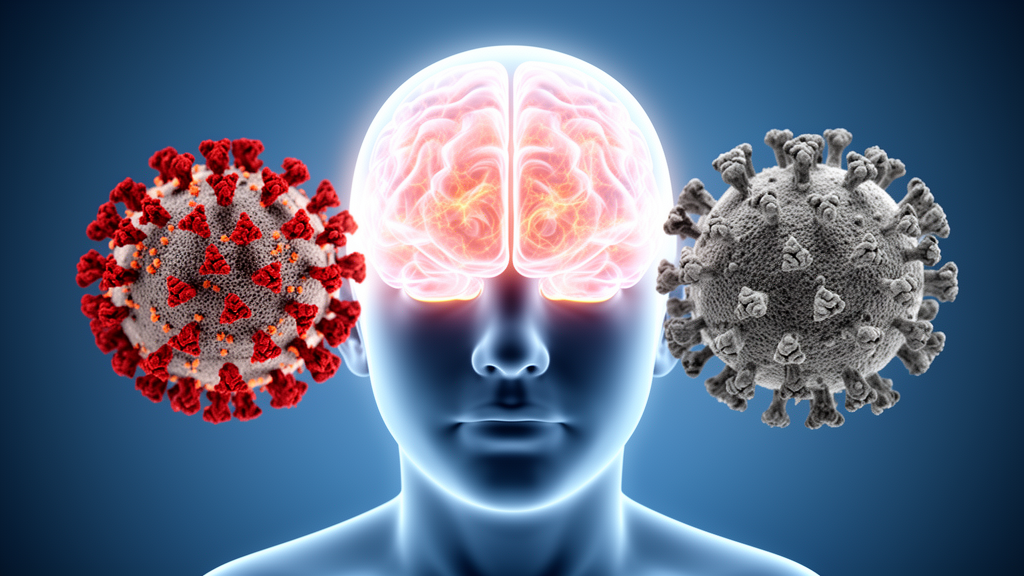
A rare and devastating brain condition that strikes previously healthy children in the days after a common respiratory infection has been given its most comprehensive clinical portrait to date. In a systematic review and meta-analysis published in Frontiers in Neurology, researchers from Guigang People’s Hospital in China synthesized data from fifteen studies covering 138 pediatric cases of acute necrotizing encephalopathy, or ANE, a disorder in which the brain’s deep structures rapidly swell and die following a viral illness. The analysis confirms that two respiratory viruses—influenza and SARS-CoV-2—account for nearly ninety percent of reported triggers, and it quantifies a mortality burden that has stubbornly persisted despite modern intensive care: roughly four in ten affected children do not survive.
Acute necrotizing encephalopathy was first characterized in East Asian pediatric populations and has since been recognized worldwide as a life-threatening complication of viral infection. The syndrome follows a grimly consistent script. A child develops fever and typical respiratory symptoms, and then, within days, neurological deterioration begins—seizures, loss of consciousness, and often deep coma. On magnetic resonance imaging, the hallmark is symmetric damage to both thalami, the paired relay structures deep in the brain, sometimes extending to the brainstem, basal ganglia, and cerebellum. Because the disease is so rare, the evidence base has long been fragmented into small case series and isolated reports, limiting the ability to draw firm conclusions about risk factors, treatment, and prognosis.
To address that gap, the research team led by Zhou Liang, Fei Long, Fengli Zheng, and Zhi Jun Tan followed the PRISMA 2020 reporting guidelines and searched PubMed/MEDLINE, Scopus, Web of Science, and Embase for studies published between January 2015 and March 2026. They included observational studies, case series, and case reports involving children under eighteen years of age who met established clinical-radiological criteria for ANE—acute encephalopathy during a febrile illness with characteristic symmetric bilateral thalamic lesions. From 312 initial records, screening and full-text review narrowed the field to fifteen studies, a mix of retrospective cohorts, multicenter case series, and individual case reports spanning Asia, North America, and Europe.
The pooled population tells a striking demographic story. The 138 cases ranged in age from nine months to seventeen years, but clustered in early childhood, and roughly three-quarters of the children had been previously healthy with no recorded neurological or systemic comorbidities. There was a slight female predominance, with 74 girls and 63 boys among those with reported sex. Genetic susceptibility factors, particularly mutations in the RANBP2 gene, which encodes a component of the nuclear pore and has been linked to familial or recurrent ANE, appeared in fewer than five percent of cases—rare, but clinically significant given their association with severe and repeated episodes.
The viral trigger distribution is perhaps the analysis’s most consequential finding. Influenza viruses, predominantly influenza A, were documented in 63 cases, or about 46 percent, while SARS-CoV-2 accounted for 58 cases, roughly 42 percent. The remaining 17 cases, about 12 percent, involved unspecified respiratory viral infections. The SARS-CoV-2 figure reflects the pandemic era: reports of COVID-19-associated ANE surged after 2020, with case series describing children who developed the classic bilateral thalamic imaging pattern during or shortly after infection. The authors note that the proposed mechanism for SARS-CoV-2-related ANE is immune-mediated inflammatory injury rather than direct viral invasion of the central nervous system, mirroring the hyperinflammatory model long proposed for influenza-associated disease.
Clinically, the syndrome presented with remarkable uniformity across geographies and viral eras. Altered consciousness or encephalopathy was documented in nearly 95 percent of patients, fever in about 93 percent, and seizures in roughly 69 percent, with status epilepticus occurring in nearly 29 percent. Systemic complications underscored the severity of the illness: about 36 percent of children developed respiratory failure requiring mechanical ventilation, and roughly 17 percent experienced circulatory shock. The rapid transition from febrile illness to profound neurological impairment is consistent with a cytokine storm mechanism, in which an exaggerated systemic inflammatory response disrupts the blood-brain barrier, drives cerebral edema, and produces necrotizing brain injury.
Neuroimaging reinforced the diagnostic signature. Bilateral thalamic lesions were present in nearly 95 percent of cases, confirming their status as the defining radiological feature. Brainstem involvement appeared in about 34 percent of patients, basal ganglia lesions in roughly 29 percent, and cerebellar lesions in about 18 percent. Hemorrhagic transformation within lesions, seen in approximately 16 percent of cases, signaled severe tissue damage and blood-brain barrier breakdown. Prior research has linked brainstem involvement and hemorrhagic changes to poorer outcomes, and the current synthesis is consistent with that association, suggesting that the extent of deep brain involvement may serve as a prognostic marker.
Treatment patterns reflected the inflammatory hypothesis of the disease but also its evidentiary limitations. High-dose corticosteroids were used in about 77 percent of patients, and intravenous immunoglobulin in roughly 52 percent, often in combination for children with rapidly progressive deterioration. Tocilizumab, an interleukin-6 receptor inhibitor, was administered in about 14 percent of cases, particularly those associated with SARS-CoV-2-related hyperinflammation, and plasma exchange was employed as rescue therapy in roughly 10 percent. More than two-thirds of patients required intensive care admission. The authors are careful to note that these figures describe clinical practice rather than established efficacy; because the underlying studies were retrospective and lacked untreated comparison groups, the relative benefits of individual therapies cannot be determined from the available data.
Outcomes remained sobering. Fifty-four of the 138 children died, yielding a crude mortality proportion of 39.1 percent, with a random-effects pooled estimate of 39.1 percent (95 percent confidence interval 29.8 to 49.8 percent). A sensitivity analysis excluding individual case reports produced a nearly identical figure—52 deaths among 132 patients, or 39.4 percent—indicating that the inclusion of case reports did not materially distort the mortality pattern. Among the 82 survivors, outcomes varied widely: 28 children, about 20 percent of the full cohort, achieved good functional recovery, while 54 survivors, roughly 41 percent, were left with moderate to severe neurological sequelae, including motor, cognitive, epileptic, and developmental impairments.
The authors emphasize that their pooled estimates should be read as descriptive summaries of reported cases rather than population-level incidence figures, given the dominance of retrospective designs and the inherent selection and publication biases of case-based literature. Heterogeneity in diagnostic criteria and treatment protocols further complicates outcome comparisons. Nevertheless, the synthesis distills a clinically recognizable high-risk phenotype: a young, previously healthy child with a recent febrile respiratory illness who develops abrupt encephalopathy or seizures, particularly when imaging reveals bilateral thalamic abnormalities. The authors argue that this pattern should prompt urgent neuroimaging, close neurological monitoring, and early intensive supportive care, while treatment selection remains individualized pending better evidence. They call for prospective multicenter studies with standardized diagnostic criteria and outcome measures to clarify the immunopathogenesis of ANE and determine whether specific therapeutic strategies can improve survival and long-term neurological outcomes in this rare but devastating condition.
Subject of Research: Respiratory viral triggers, clinical features, and outcomes of pediatric acute necrotizing encephalopathy
Article Title: Respiratory viral triggers and pediatric acute necrotizing encephalopathy: a systematic review and meta-analysis of risk, clinical phenotype, and outcomes
Article References: Liang, Z., Long, F., Zheng, F., & Tan, Z. J. (2026). Respiratory viral triggers and pediatric acute necrotizing encephalopathy: a systematic review and meta-analysis of risk, clinical phenotype, and outcomes. Frontiers in Neurology, 17, Article 1839145. https://doi.org/10.3389/fneur.2026.1839145
Image Credits: AI Generated
DOI: 10.3389/fneur.2026.1839145
Keywords: acute necrotizing encephalopathy, influenza, SARS-CoV-2, pediatric neurology, systematic review, meta-analysis, cytokine storm, thalamic lesions, RANBP2, tocilizumab, encephalopathy, mortality
Cite Scienmag News
Cassandra Pierce. (October 17, 2026). Flu and COVID-19 Emerge as Dominant Triggers of Deadly Childhood Brain Disease. Scienmag. https://scienmag.com/flu-and-covid-19-emerge-as-dominant-triggers-of-deadly-childhood-brain-disease/
Cassandra Pierce. "Flu and COVID-19 Emerge as Dominant Triggers of Deadly Childhood Brain Disease." Scienmag, 17 October 2026, https://scienmag.com/flu-and-covid-19-emerge-as-dominant-triggers-of-deadly-childhood-brain-disease/. Accessed 17 October 2026.
Cassandra Pierce. "Flu and COVID-19 Emerge as Dominant Triggers of Deadly Childhood Brain Disease." Scienmag. October 17, 2026. https://scienmag.com/flu-and-covid-19-emerge-as-dominant-triggers-of-deadly-childhood-brain-disease/


